In the dim glow of a home office screen at 10 p.m., a team leader watches a single line of text “Can we talk about priorities again?” ignite a chain reaction. What started as routine clarification soon becomes a thread laced with defensiveness, veiled accusations, and the quiet dread that tomorrow’s stand-up will feel like walking into a minefield. This isn’t isolated poor communication. It is the collision of ancient neural wiring with the fractured landscape of modern leadership. Conflict isn’t merely more frequent in leadership roles today; it has become structural, baked into the daily experience of guiding people through uncertainty, distance, and unrelenting pace.
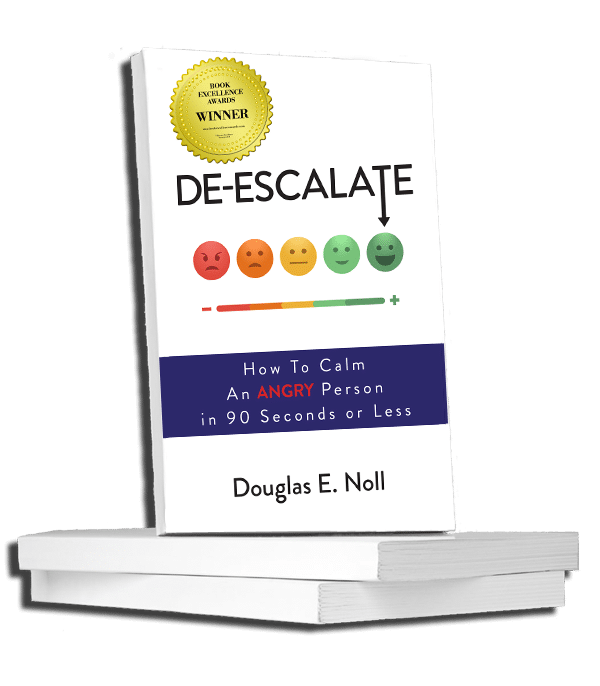
Emotional conflicts fracture teams and families. The ongoing tension breeds burnout, damages relationships, and hurts performance. The Noll Method’s 90-Second Power Move™ is a proven, neuroscience-based skill for restoring calm, tested from boardrooms to maximum-security prisons. Master this life-changing technique to transform chaos into collaboration. Book a no-obligation zoom call with Doug Noll today!
The Neurological Roots of Escalating Tension
The human brain remains exquisitely tuned to detect threats. A mechanism known as negativity bias ensures that criticism, ambiguity, or perceived rejection registers faster and more intensely than appreciation or alignment. In leadership contexts, this means a clipped reply in chat, a delayed acknowledgment, or a flat tone during a video call lands with disproportionate force. One negative signal can release a cascade of stress hormones that spread through a team via emotional contagion, the unconscious mirroring of feelings first documented through mirror-neuron research.
In traditional office settings, a quick smile, a casual “we’ll figure it out,” or shared eye-roll over coffee could short-circuit the spiral. Those small corrective signals are largely absent in distributed work. The result is asymmetry: negativity races ahead while trust and goodwill move at a walking pace. Leaders who do not account for this built-in tilt find themselves constantly managing fallout from exchanges that felt minor in the moment.
Why Hybrid Work Has Become Conflict’s Perfect Amplifier
Hybrid and remote arrangements promised flexibility; instead they exposed new pressure points. The informal moments that once humanized interactions hallway debriefs, overheard problem-solving, spontaneous recognition have evaporated. Without them, minor misunderstandings harden quickly. A leader’s visible frustration on camera can unintentionally set the emotional temperature for an entire project channel, while colleagues working from different time zones miss the reassuring context of facial micro-expressions or relaxed posture.
Psychological safety, the condition that lets people speak candidly and experiment without fear, suffers most in these environments. When the default mode becomes guarded digital text, team members hesitate to surface problems early. Issues that could have been resolved with a five-minute conversation now simmer until they erupt in formal complaints or sudden departures.
Leadership Under Siege: A Perfect Storm of Pressures
Today’s leaders navigate simultaneous headwinds: economic turbulence, rapid technology shifts, generational value clashes, and deepening societal polarization that spills into workplaces. Many emerging leaders step into roles with limited experience handling interpersonal friction, especially when teams are dispersed and trust is already fragile. Burnout among executives has climbed sharply, with surveys repeatedly showing that a meaningful share of senior leaders quietly contemplate leaving leadership altogether to protect their mental health.
This chronic strain amplifies the brain’s threat response. A fatigued leader is far more likely to default to reactive mode snapping off a terse message rather than pausing to clarify intent. Teams read the tone as disengagement or favoritism, particularly when proximity bias subtly privileges those who appear in the office. The cycle feeds itself: unresolved tension breeds distrust, distrust breeds more tension.
Market Signals: Organizations Are Investing to Contain the Damage
Companies have taken notice. Spending on workplace conflict management solutions, particularly in North America, is growing rapidly as organizations seek tools and expertise to address hybrid-era friction. Advanced digital platforms now offer real-time monitoring of communication patterns and AI-assisted early warnings of brewing disputes. Many firms are also funding customized programs designed specifically to strengthen collaboration and lower stress in distributed teams.
Mediation remains a cornerstone because it creates structured space for dialogue before positions calcify. Larger enterprises lead adoption, recognizing that unchecked conflict quietly erodes productivity, retention, and the willingness to innovate. The broader human resource consulting sector reflects the same urgency, with heavy investment driven by the need to redesign work for hybrid realities, meet stricter compliance requirements, and accelerate digital HR adoption. These trends signal a clear realization: conflict is expensive, but proactive management delivers measurable returns.
Emotional Intelligence as the Leader’s Strategic Advantage
The most effective countermeasure is emotional intelligence the practiced ability to recognize one’s own emotional state, read the undercurrents in a group, and respond deliberately rather than reflexively. Leaders who consistently model calm, clear communication disrupt the automatic spread of negativity. They create an environment where tension can be named without blame, reducing the likelihood that small frictions escalate.
Practical habits compound over time:
- Neutral acknowledgment of surfaced emotion “I can sense this topic is carrying some weight; let’s talk through it” lowers defenses.
- Explicit team agreements about tone, response expectations, and preferred channels prevent misreads.
- Regular, brief emotional check-ins during one-on-ones catch brewing issues before they spread.
- Deliberate investment in developing empathy and self-regulation across the leadership bench strengthens the entire system.
These practices are not luxuries. In a world where a single poorly worded message can derail momentum for days, they are essential operational discipline.
Turning Tension into Progress: A Path Forward
Conflict itself is not the enemy. Appropriately channeled, it clarifies priorities, uncovers blind spots, and drives better decisions. The real danger lies in letting low-level friction metastasize into chronic toxicity. Leaders who understand the neurological underpinnings of miscommunication, adapt intentionally to hybrid constraints, and treat emotional intelligence as core infrastructure give themselves and their teams the strongest chance to convert inevitable tension into forward motion.
The billions flowing into conflict-management tools and consulting services show that institutions increasingly view these capabilities as strategic necessities rather than nice-to-haves. For individual leaders, the stakes are more intimate. Master these dynamics and you do not merely endure the role you reshape what leadership can mean in fragmented, high-velocity times. Fail to adapt, and the next ambiguous thread may quietly fracture the very team you are trying to guide.
Frequently Asked Questions
Why is workplace conflict increasing in leadership roles today?
Conflict in leadership roles is rising due to a convergence of pressures economic turbulence, rapid technology shifts, generational value clashes, and the structural changes brought by hybrid and remote work. The brain’s negativity bias amplifies minor miscommunications, especially when informal, humanizing interactions like hallway chats and shared body language are no longer available. Without those small corrective signals, misunderstandings harden quickly and trust erodes.
How does hybrid and remote work increase conflict between leaders and their teams?
Hybrid and remote work removes the informal moments spontaneous recognition, overheard problem-solving, facial micro-expressions that once kept minor tensions from escalating. Without this context, a clipped Slack message or flat video call tone can trigger stress responses and spread negativity through a team via emotional contagion. Psychological safety suffers most in these environments, causing team members to withhold concerns until small issues become serious disputes.
What is the most effective leadership strategy for managing and reducing workplace conflict?
Emotional intelligence is widely regarded as the most powerful tool for conflict management in leadership. Leaders who model calm, deliberate communication using neutral acknowledgment of emotions, setting clear team agreements on tone and channels, and conducting regular one-on-one check-ins can interrupt the automatic spread of negativity. These habits are not soft skills; in high-velocity, distributed teams, they are essential operational discipline that protects productivity, retention, and innovation.
Disclaimer: The above helpful resources content contains personal opinions and experiences. The information provided is for general knowledge and does not constitute professional advice.
You may also be interested in: Leadership Development Focuses on Active Listening – Doug Noll
Emotional conflicts fracture teams and families. The ongoing tension breeds burnout, damages relationships, and hurts performance. The Noll Method’s 90-Second Power Move™ is a proven, neuroscience-based skill for restoring calm, tested from boardrooms to maximum-security prisons. Master this life-changing technique to transform chaos into collaboration. Book a no-obligation zoom call with Doug Noll today!
Powered by flareAI.co