Imagine a routine one-on-one meeting that begins with calm professionalism. The manager offers what feels like balanced feedback. Within minutes the employee’s posture changes shoulders rise, jaw sets, voice tightens. What was meant as guidance registers as criticism. The exchange that should have strengthened performance instead deepens a divide. Countless professionals have watched trust dissolve in moments like these and asked the same question: why does it unravel so fast when everyone started with good faith?
The explanation reaches beyond word choice or delivery. It lives inside the brain. Decades of neuroscience research reveal that trust and suspicion activate entirely different circuits. In moments of perceived safety the prefrontal cortex the region responsible for reasoning, empathy, perspective-taking, and creative problem-solving remains dominant. Introduce even a subtle sense of threat, however, and the amygdala surges forward, releasing stress hormones that narrow focus, heighten defensiveness, and suppress openness. In high-stakes workplace conversations this neurological pivot frequently occurs before either party consciously registers the shift.
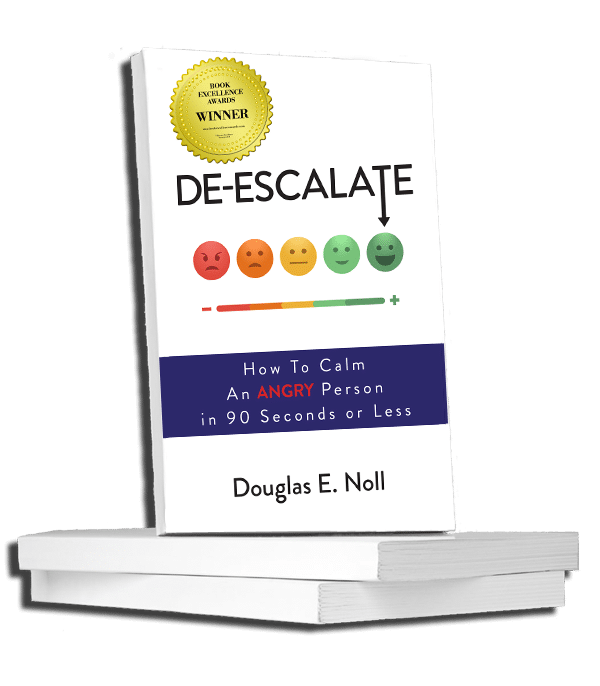
Emotional conflicts fracture teams and families. The ongoing tension breeds burnout, damages relationships, and hurts performance. The Noll Method’s 90-Second Power Move™ is a proven, neuroscience-based skill for restoring calm, tested from boardrooms to maximum-security prisons. Master this life-changing technique to transform chaos into collaboration. Book a no-obligation zoom call with Doug Noll today!
Recognizing Emotional Misalignment in Real Time
Emotional misalignment occurs whenever the feeling a speaker intends to transmit arrives distorted in the listener’s mind. Encouragement can land as condescension, curiosity as interrogation, concern as accusation. A manager who says “I want to make sure we’re aligned on priorities” may genuinely mean collaborative clarity, yet the employee hears an implied “You’re falling short.”
Each misfire accumulates. People begin to filter what they say, withhold unpopular views, and avoid topics that once sparked lively debate. Psychological safety the belief that one can take interpersonal risks without fear of punishment or humiliation slowly erodes. The damage appears in quiet ways: innovation slows because fresh ideas stay unspoken, collaboration weakens because candor feels risky, and resentment simmers beneath polite surfaces. Over months or years these patterns reshape entire team cultures.
How Distance Magnifies Misinterpretation
Face-to-face interaction gives us constant, mostly unconscious opportunities to repair emotional misreads. A furrowed brow prompts an immediate clarifying question; a hesitant tone invites reassurance; body language softens when someone sees the message has stung. Remote and hybrid environments remove the majority of those corrective channels.
Text lacks vocal inflection. Video flattens micro-expressions. Response delays invite speculation. A concise email intended as efficient can feel abrupt. An emoji omitted in haste can seem cold. Without shared physical context, receivers fill gaps with their own mood, fatigue, or past experiences. What might resolve in thirty seconds across a desk can fester for days or weeks in a chat thread. As distributed work becomes standard, organizations face not occasional communication glitches but persistent structural vulnerabilities.
Understanding and Influencing the Brain’s Trust Mechanisms
Central to this dynamic is oxytocin, frequently described as the “trust and bonding hormone.” When levels rise, the brain reduces fear responses, heightens empathy, and increases willingness to cooperate and take social risks. Simple actions reliably trigger its release: sincere appreciation, undivided attention during listening, transparent sharing of information, and small demonstrations of vulnerability from those in authority.
Conversely, ambiguity, perceived unfairness, abrupt criticism, or inconsistent behavior spike cortisol, locking the system into self-protective mode. In that state rational discussion becomes difficult; the brain prioritizes survival over collaboration. Forward-thinking leaders therefore treat trust-building as deliberate design work rather than an accidental byproduct of personality. They open difficult conversations by naming their own uncertainty, they ask more questions than they answer at the outset, and they consistently frame feedback as joint exploration rather than top-down evaluation.
Low-Effort Habits That Strengthen Emotional Alignment
Creating a workplace where difficult conversations stay productive does not demand sweeping cultural transformation or six-figure consulting contracts. Small, repeatable practices can dramatically lower the probability of breakdown and make recovery far easier when tension does arise.
- Start team meetings with a brief emotional check-in. A quick round “One word for how you’re arriving today” or “What’s the strongest feeling in your body right now?” surfaces hidden strain early and normalizes emotional transparency.
- Co-create simple feedback norms everyone agrees to follow: begin with “I” statements, describe observable actions rather than character traits, and pause to confirm understanding before defending or explaining. Shared rules reduce guesswork and defensiveness.
- Train managers in lightweight emotion-regulation tactics three slow breaths before responding, a quick mental reframe (“This person is protecting something important to them”), or an honest repair phrase such as “I sense this hit a nerve; help me understand what I’m missing.” These interventions short-circuit automatic escalation.
- Deploy lightweight, regular pulse checks anonymous one-question surveys or sentiment sliders that reveal morale trends before problems explode in meetings or exit interviews. Early signals allow leaders to intervene while issues remain manageable.
Individually modest, these habits compound into a powerful buffer that keeps conversations connected even under pressure.
Why Organizations Are Investing in Smarter Conflict Navigation
Business leaders increasingly recognize that unresolved friction carries measurable costs lower engagement, higher attrition, stalled projects and are responding with focused investment. Demand for structured conflict resolution solutions continues to climb as companies seek mediation, coaching, and online dispute resolution tools that prevent escalation and preserve relationships. In North America particularly, organizations are turning to AI-supported platforms that monitor patterns in real time and suggest timely interventions, especially in hybrid settings where emotional cues are harder to read.
Parallel growth appears in corporate training budgets. Companies are expanding programs that strengthen communication, emotional intelligence, and collaboration skills capabilities that directly address the breakdowns described here. Virtual formats have accelerated adoption, allowing consistent skill-building across distributed teams. The emphasis is practical: equip people to turn tension into progress rather than rupture.
Turning Awareness Into Lasting Change
Difficult conversations are inevitable. Disagreements arise, priorities clash, stress levels fluctuate. The neuroscience of trust does not promise friction-free workplaces; it offers something more valuable: the knowledge that most breakdowns are not failures of intent but predictable reactions of a brain wired for safety.
When leaders and teams internalize that reality, prevention becomes possible. They stop blaming individuals for “poor communication” and start redesigning the conditions that allow trust to form and endure. The reward extends far beyond civil meetings. Teams take smarter risks because they know candor will not be punished. Retention improves because people feel genuinely seen and heard. Innovation accelerates because diverse perspectives reach the table instead of staying locked in private doubts.
At its core the message is both humbling and empowering: most workplace conversations falter not because people lack care, but because ancient survival circuitry misinterprets modern signals. With informed intention and consistent small actions, we can guide that circuitry toward connection instead of defense and watch conversations that once collapsed begin to build something stronger.
Frequently Asked Questions
How does the brain affect trust during difficult workplace conversations?
When people feel safe, the prefrontal cortex stays active, supporting empathy, reasoning, and problem-solving. However, even a subtle perceived threat triggers the amygdala to release stress hormones, narrowing focus and heightening defensiveness. This neurological shift often happens before either party consciously notices it, which is why trust can break down so quickly despite good intentions.
What is emotional misalignment, and how does it damage team culture?
Emotional misalignment happens when the feeling a speaker intends to convey arrives distorted for example, encouragement landing as condescension, or curiosity feeling like interrogation. Over time, these misfires erode psychological safety, causing team members to withhold ideas, avoid candid discussion, and disengage. Left unaddressed, this quietly stalls innovation, weakens collaboration, and breeds resentment beneath polite surfaces.
What are some simple habits that can improve trust and communication at work?
Small, repeatable practices can significantly reduce communication breakdowns without requiring large-scale cultural change. These include starting meetings with a brief emotional check-in, co-creating shared feedback norms (such as using “I” statements), training managers in basic emotion-regulation techniques, and running regular anonymous pulse surveys to catch morale issues early. Individually modest, these habits compound into a strong buffer that keeps conversations productive even under pressure.
Disclaimer: The above helpful resources content contains personal opinions and experiences. The information provided is for general knowledge and does not constitute professional advice.
You may also be interested in: Instantly Defuse Defensive Prospects With These 4 Powerful De
Emotional conflicts fracture teams and families. The ongoing tension breeds burnout, damages relationships, and hurts performance. The Noll Method’s 90-Second Power Move™ is a proven, neuroscience-based skill for restoring calm, tested from boardrooms to maximum-security prisons. Master this life-changing technique to transform chaos into collaboration. Book a no-obligation zoom call with Doug Noll today!
Powered by flareAI.co