In the pressure-cooker environment of modern North American offices, a seemingly routine piece of feedback can instantly change the atmosphere. A manager suggests an alternative approach, and within seconds the recipient’s tone shifts defensive, clipped, protective. What begins as an attempt to improve performance frequently ends in tension, justification, or withdrawal. Many leaders still view this pattern as a personality quirk. Yet a growing body of evidence from psychology, neuroscience, and organizational behavior research reveals that defensive communication is far more systematic: it is a hardwired response to perceived threat.
When defensiveness dominates, the consequences ripple outward. Trust frays, decisions drag, innovation slows, and workplace conflict escalates. The rise of hybrid and remote work has intensified the issue; stripped of nonverbal cues, digital messages are especially prone to misinterpretation. Across the continent, forward-looking organizations are responding by treating defensiveness not as an individual failing but as a signal that requires thoughtful, evidence-based intervention.
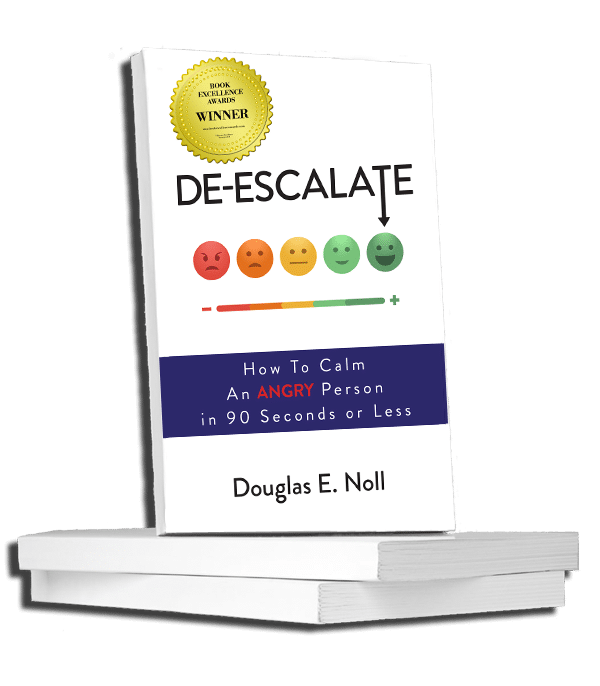
Emotional conflicts fracture teams and families. The ongoing tension breeds burnout, damages relationships, and hurts performance. The Noll Method’s 90-Second Power Move™ is a proven, neuroscience-based skill for restoring calm, tested from boardrooms to maximum-security prisons. Master this life-changing technique to transform chaos into collaboration. Book a no-obligation zoom call with Doug Noll today!
The Brain’s Threat-Response Machinery
Defensive reactions originate in the brain’s ancient survival circuitry. When criticism however constructive reaches the ears, the amygdala registers a potential danger signal. This triggers a cascade: cortisol surges, attention narrows, and the prefrontal cortex responsible for nuanced reasoning temporarily loses influence. The individual shifts into self-protection mode, prioritizing ego defense over learning.
Research conducted at North American universities consistently demonstrates that evaluation-heavy feedback settings activate these threat responses, reducing creative problem-solving and collaborative openness. Employees in such environments tend to justify past actions, deflect responsibility, or counterattack rather than explore new possibilities.
When Feedback Feels Like an Attack on Identity
Defensiveness spikes most sharply when people believe their competence, autonomy, or status is under siege. In hierarchical settings where career progression depends on perceived capability, even mild suggestions can register as existential threats to professional identity.
Extensive Gallup surveys show that psychological safety the conviction that one can take interpersonal risks without fear of embarrassment or punishment is the strongest predictor of willingness to accept feedback. Teams that score high on this dimension embrace critique as growth fuel; low-scoring teams default to guarded, protective exchanges. Google’s widely cited Project Aristotle, which studied hundreds of teams, reached the same conclusion: psychological safety ranked as the top driver of team effectiveness, eclipsing raw talent or domain expertise.
Evolving Norms and the Remote-Work Amplifier
Communication preferences continue to shift across North America. Data from the Pew Research Center indicate increasing emotional expressiveness in professional contexts, while Statistics Canada findings reveal clear generational contrasts younger cohorts generally prefer candid, authentic dialogue that can clash with more restrained traditional styles. When these expectations collide, defensiveness often follows.
Hybrid and remote arrangements magnify the risk. Text-based platforms eliminate tone of voice, facial expression, and immediate context, turning neutral statements into perceived hostility. The Centers for Disease Control and Prevention has linked persistently high workplace stress and burnout levels to greater sensitivity to interpersonal conflict patterns that became especially pronounced during and after the pandemic.
Psychological Safety Moves to the Leadership Dashboard
Leading North American organizations increasingly measure and manage psychological safety as a core performance indicator. Studies from institutions such as Harvard Business School and the University of Toronto position it as foundational to innovation, resilience, and adaptive capacity. Many companies now incorporate safety-related metrics into executive reviews, making the ability to cultivate open dialogue an explicit leadership competency.
This priority aligns with surging demand for mental health resources. Digital tools that help individuals manage stress, anxiety, and related conditions are seeing rapid adoption, reflecting broader recognition that unmanaged emotional load spills into workplace interactions. North America remains the dominant region for both telehealth services and mental health applications, underscoring the continent’s investment in accessible support that can reduce the conditions feeding defensive behavior.
Real-World Strategies Taking Root
Progressive companies are implementing practical countermeasures. Feedback literacy training teaches participants to approach input with curiosity instead of reflex defense simple techniques such as pausing to ask clarifying questions often prevent escalation. Structured response models help teams separate the message from the messenger.
In healthcare and public-sector environments, provincial and state programs document measurable improvements in team cohesion and even patient outcomes after communication coaching. University conflict-management laboratories are developing and testing scalable interventions that benefit faculty, staff, and students alike.
Technology is playing a growing role as well. AI-powered platforms now scan digital messages for tone, flag potential friction points, and propose softer rephrasings small nudges that encourage more intentional language in high-volume remote settings.
Persistent Barriers and Equity Dimensions
Meaningful change remains uneven. Quantifying defensiveness at scale is difficult; self-reported surveys carry bias, and cultural inertia can block reform efforts. Some leaders continue to interpret defensive patterns as character defects rather than symptoms of environment or process flaws.
Equity concerns loom large. Employees from historically marginalized groups may exhibit heightened defensiveness shaped by prior experiences of exclusion or bias. Multiple studies confirm that perceptions of psychological safety differ significantly across demographic lines, so one-size-fits-all approaches frequently fall short. Effective strategies require deliberate attention to these variations.
The Competitive Advantage of Lower Defensiveness
When defensive reflexes subside, the gains are substantial. Organizations with strong feedback cultures see accelerated innovation cycles, according to HR analytics. Targeted coaching lowers the financial and emotional cost of conflict resolution while improving retention. Cross-functional collaboration strengthens, crisis response becomes more agile, and overall trust metrics rise.
Experts anticipate that managing defensive communication will soon rank among the defining leadership challenges in North America. Academic programs are expanding behavioral science research in this domain, while advances in neuroscience and AI promise increasingly precise tools for intervention. Companies that treat defensiveness as a systemic indicator rather than an individual shortcoming position themselves to capture lasting improvements in performance, cohesion, and adaptability.
The central insight is both simple and profound: when leaders and teams understand the psychology driving defensive reactions, those reactions stop being roadblocks and start becoming diagnostic signals. Workplaces that respond accordingly turn feedback from a source of threat into a genuine engine of progress.
Frequently Asked Questions
Why do people get defensive when receiving feedback at work?
Defensiveness is a hardwired threat response rooted in the brain’s survival circuitry. When criticism is received, the amygdala triggers a stress cascade cortisol rises, reasoning narrows, and the mind shifts into self-protection mode. This is especially pronounced in workplaces where career advancement depends on appearing competent, making even mild feedback feel like an attack on professional identity.
What is psychological safety and why does it matter for workplace communication?
Psychological safety is the belief that you can take interpersonal risks like accepting feedback or admitting mistakes without fear of embarrassment or punishment. Gallup research and Google’s Project Aristotle both identify it as the single strongest predictor of team effectiveness, outranking talent or expertise. Teams high in psychological safety treat feedback as a growth opportunity rather than a threat, leading to better collaboration and innovation.
How does remote and hybrid work make defensive communication worse?
Without tone of voice, facial expressions, or real-time context, text-based communication is highly prone to misinterpretation neutral messages can easily read as hostile or critical. The CDC has also linked elevated workplace stress and burnout (which intensified during and after the pandemic) to greater sensitivity to interpersonal conflict. Together, these factors make remote and hybrid environments a breeding ground for defensive reactions if teams aren’t proactively building communication skills.
Disclaimer: The above helpful resources content contains personal opinions and experiences. The information provided is for general knowledge and does not constitute professional advice.
You may also be interested in: How to Respond to Insults Gracefully: 6 Powerful Psychological
Emotional conflicts fracture teams and families. The ongoing tension breeds burnout, damages relationships, and hurts performance. The Noll Method’s 90-Second Power Move™ is a proven, neuroscience-based skill for restoring calm, tested from boardrooms to maximum-security prisons. Master this life-changing technique to transform chaos into collaboration. Book a no-obligation zoom call with Doug Noll today!
Powered by flareAI.co