Quick Listen:
The first time someone explodes in anger during a meeting voice raised, face flushed, words flying like shrapnel you might think the room is about to implode. Most of us freeze, placate, or fire back, hoping the storm passes. But what if that moment isn’t the end of harmony, but the beginning of something better?
Conflict is an expressed struggle between interdependent parties who perceive incompatible goals, scarce resources, and interference from others in achieving those goals. Far from being rare or destructive by nature, it is an inevitable and normal part of enduring relationships, whether in workplaces across North America or beyond.
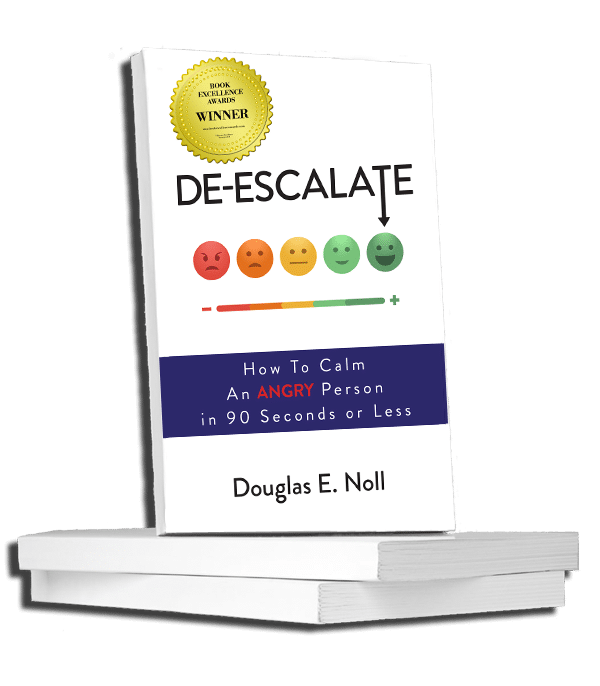
Yet many mishandle it due to persistent myths that trap us in outdated patterns. Doug Noll, a former trial lawyer turned peacemaker, offers a powerful alternative. His method, rooted in neuroscience and emotional intelligence, is detailed in his book De-Escalate: How to Calm an Angry Person in 90 Seconds or Less. Central to it is affect labeling ignoring the surface words, identifying the underlying emotion, and reflecting it back with simple “you” statements like “You’re really frustrated right now” or “You feel completely disrespected.” Backed by groundbreaking research showing it reduces activity in the brain’s emotional centers while activating rational control, this technique can de-escalate anger in under 90 seconds, transforming confrontation into genuine connection.
Noll honed these skills in extreme settings, including teaching de-escalation to prison inmates through his Prison of Peace project. The result is a practical approach that empowers ordinary people to manage their own conflicts, prioritizing emotional awareness over prolonged negotiation or external intervention.
Emotional conflicts fracture teams and families. The ongoing tension breeds burnout, damages relationships, and hurts performance. The Noll Method’s 90-Second Power Move™ is a proven, neuroscience-based skill for restoring calm, tested from boardrooms to maximum-security prisons. Master this life-changing technique to transform chaos into collaboration. Book a no-obligation zoom call with Doug Noll today!
The Rise of Emotional Intelligence in Conflict Management
Emotional intelligence (EI) has moved from optional soft skill to essential leadership competency. As workplaces face rising tensions from geopolitical issues, return-to-office mandates, DEI pushback, and more, the ability to navigate interpersonal friction has become critical.
A Gartner report identifies employee conflict resolution as a must-have skill for managers in the coming years, noting that many feel unprepared despite 56% saying they bear full responsibility for resolving team disputes. Organizations investing in such training see stronger engagement and performance.
This shift aligns with booming demand for corporate training, especially in soft skills. The global corporate training market reached $398.78 billion in 2024 and is projected to grow to $514.02 billion by 2029 at a CAGR of 5.3%, with North America leading as the largest region. Meanwhile, the conflict resolution solutions market encompassing mediation, arbitration, negotiation, and more is expected to expand from US$ 10.99 billion in 2025 to US$ 17.76 billion by 2032 at a CAGR of 7.1%, driven by escalating workplace disputes and preference for efficient alternative dispute resolution methods. Tools like AI-assisted training are emerging to build these capabilities, helping teams address conflicts before they escalate.
Debunking Four Persistent Myths
Myth 1: Conflict is always negative. Many view it as inherently harmful, something to eliminate quickly. In reality, when managed constructively, conflict drives growth, innovation, and deeper understanding. Noll’s method addresses the emotional core first calming the amygdala’s fight-or-flight response allowing rational dialogue to emerge. Organizations embracing productive conflict resolution, as Gartner insights suggest, experience enhanced team dynamics and performance.
Myth 2: Conflict should be avoided at all costs. Avoidance may seem to preserve harmony, but it often breeds resentment, unresolved issues, and festering problems. Conflict resolution training promotes understanding and cooperation through structured techniques like open communication and active listening. By addressing disputes early, teams foster a positive culture where employees feel heard and valued, boosting morale, productivity, and innovation while reducing stress and turnover.
Myth 3: You always need a mediator. The assumption that professionals must intervene overlooks how individuals can resolve issues themselves through self-awareness and emotional skills. Noll’s training builds this self-leadership, enabling direct handling of disputes. The Center for Creative Leadership emphasizes equipping leaders to transform discord into positive outcomes via proven methods, fostering accountability without always relying on third parties.
Myth 4: Conflict resolution is just about negotiating a solution. Focusing solely on compromise ignores the emotional layer, leading to superficial fixes and long-term dissatisfaction. True resolution requires validating feelings first to build trust and relationships. Noll’s affect labeling creates space for authentic agreements. As workplace training trends show, addressing emotions alongside issues yields stronger, more sustainable results.
Real-World Impact
These ideas deliver results in high-stakes environments, from prisons to corporate boardrooms. Noll’s strategies align with leadership programs that prioritize EI for better communication and morale. In practice, they help bridge divides, turning potential breakdowns into opportunities for progress and stronger collaboration.
Challenges Ahead
Shifting to this approach faces resistance: traditional methods cling to old habits, EI is sometimes dismissed as “soft,” and people hesitate to engage emotions directly. Solutions lie in education, clear frameworks, and demonstrating benefits like reduced turnover, enhanced innovation, and improved customer relationships through better internal dynamics.
The Path Forward
Doug Noll stresses that peacemaking is a learnable skill. By understanding the brain’s response to conflict, we bridge emotional and rational centers, forging real connections.
In today’s fast-changing, often divided landscape, prioritizing emotional intelligence in conflict resolution is essential for resilient workplaces and fulfilling careers. Organizations that invest will cultivate engaged teams, drive sustained innovation, and build lasting loyalty.
Ready to transform how you handle tension? Dive into Doug Noll’s work and start applying these techniques the next heated moment could become your turning point.
Frequently Asked Questions
What is affect labeling and how does it help de-escalate conflict?
Affect labeling is a neuroscience-backed technique where you ignore the surface words of an angry person, identify their underlying emotion, and reflect it back using simple “you” statements like “You’re really frustrated right now.” Research shows this reduces activity in the brain’s emotional centers while activating rational control, allowing you to de-escalate anger in under 90 seconds. This approach prioritizes emotional validation over immediate problem-solving, creating space for genuine connection and productive dialogue.
Why is conflict resolution training becoming essential for managers and leaders?
According to Gartner research, 56% of managers say they bear full responsibility for resolving team disputes, yet many feel unprepared for this critical role. With workplaces facing rising tensions from geopolitical issues, return-to-office mandates, and other challenges, the ability to navigate interpersonal friction through emotional intelligence has moved from a soft skill to an essential leadership competency. Organizations investing in conflict resolution training see stronger employee engagement, enhanced performance, and reduced turnover.
Do you always need a professional mediator to resolve workplace conflicts?
No while mediators can be helpful in complex situations, individuals can effectively resolve many conflicts themselves through emotional intelligence and self-awareness. Doug Noll’s method empowers people to handle disputes directly by addressing the emotional core first, building self-leadership capabilities without always requiring third-party intervention. Training programs that develop these skills enable leaders to transform discord into positive outcomes, fostering accountability and stronger team dynamics.
Disclaimer: The above helpful resources content contains personal opinions and experiences. The information provided is for general knowledge and does not constitute professional advice.
You may also be interested in: How to Overcome Resistance to Emotional Intelligence Training
Emotional conflicts fracture teams and families. The ongoing tension breeds burnout, damages relationships, and hurts performance. The Noll Method’s 90-Second Power Move™ is a proven, neuroscience-based skill for restoring calm, tested from boardrooms to maximum-security prisons. Master this life-changing technique to transform chaos into collaboration. Book a no-obligation zoom call with Doug Noll today!
Powered by flareAI.co