Imagine a heated customer service call: a client, frustrated by a billing error, threatens to take their business elsewhere. Instead of defensiveness or scripted apologies, the representative pauses, truly hears the underlying emotion, labels it accurately, and guides the conversation toward resolution. The customer hangs up not just placated, but genuinely appreciative and committed for the long term. This isn’t luck or charisma. It’s emotional intelligence in action, transforming potential churn into lasting loyalty.
In an era of commoditized products and instant switching, businesses can’t compete on features or price alone. The deciding factor is often the emotional connection forged during interactions. Across North America, forward-thinking organizations are recognizing that **emotional intelligence (EI)** the capacity to perceive, understand, use, and manage emotions effectively directly drives customer retention and profitability.
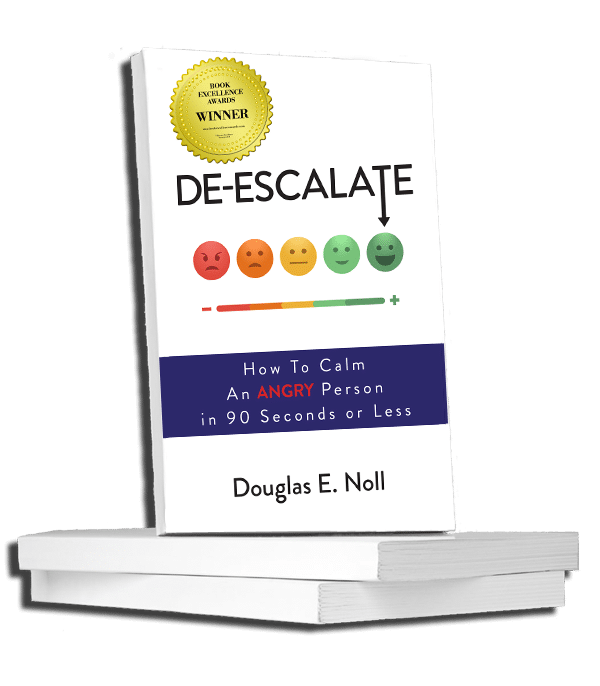
Emotional conflicts fracture teams and families. The ongoing tension breeds burnout, damages relationships, and hurts performance. The Noll Method’s 90-Second Power Move™ is a proven, neuroscience-based skill for restoring calm, tested from boardrooms to maximum-security prisons. Master this life-changing technique to transform chaos into collaboration. Book a no-obligation zoom call with Doug Noll today!
How Emotional Intelligence Drives Customer Loyalty: A Key to Retention Success
Emotional intelligence is no longer a soft skill reserved for executives. It’s a core competency for anyone facing customers. Studies consistently show its tangible impact on service quality and loyalty metrics. For instance, research demonstrates that salespeople with stronger emotional intelligence exhibit behaviors that enhance perceived service quality from the customer’s viewpoint, leading to higher satisfaction and repeat business.
A deeper look reveals nuance. Some investigations into salespeople’s emotion appraisal ability uncover contrasting effects depending on the sales context positive in relationship-building scenarios, yet potentially overwhelming in purely transactional ones. This highlights the need for targeted training that adapts EI application to specific environments.
More recent work underscores EI’s strategic role in customer relationship management. A comprehensive 2025 study on the role of emotional intelligence in enhancing CRM effectiveness argues that HR practices focused on identifying and developing emotionally intelligent employees directly strengthen customer bonds. The paper outlines how EI components self-awareness, self-regulation, motivation, empathy, and social skills translate into superior handling of complaints, personalized service, and conflict resolution.
Emerging Trends: Why Emotional Intelligence Is Becoming Essential
Organizations are responding with deliberate investment. From healthcare providers to financial institutions and professional services firms, companies are integrating EI into recruitment, onboarding, and ongoing development. Tools like psychometric assessments and role-playing simulations help identify high-EI candidates, while workshops build practical skills in emotional regulation and empathetic listening.
The payoff appears in key metrics: improved first-contact resolution, higher customer satisfaction scores, elevated Net Promoter Scores, and extended customer lifetime value. When employees can read emotional cues accurately and respond appropriately, complaints become opportunities to deepen trust rather than risks of defection.
Technology is amplifying these efforts. AI-driven analytics now flag emotional tone in interactions, providing real-time coaching. Yet human EI remains irreplaceable the nuanced understanding that turns a standardized response into a meaningful connection.
Even a modest 5% increase in retention can lift profits by 25% to 95%, according to longstanding business research. When emotional connections drive 60% of brands to surpass revenue targets, prioritizing EI isn’t optional it’s imperative.
Real-World Impact: Proven Examples Across Industries
Leading companies demonstrate the return on EI investment. Zappos built its legendary service culture on hiring for empathy and training in active listening, resulting in extraordinary loyalty and advocacy. Southwest Airlines selects for compassionate attitudes and equips staff with conflict resolution skills, enabling calm navigation of high-stress situations.
American Express incorporates EI assessments into training programs, yielding higher first-contact resolutions and stronger customer feedback. These aren’t isolated cases. In diverse sectors credit unions, veterinary practices, divorce coaching, and mediation services teams with advanced emotional competency report fewer escalations and more enduring client relationships.
The human resource perspective reinforces this. By aligning talent strategies with EI development through behavioral interviews, experiential training, and recognition programs organizations create workforces that consistently exceed customer expectations.
The Challenges: Common Obstacles and How to Overcome Them
Despite the evidence, adoption faces resistance. Some leaders question whether emotional skills can truly be taught or deliver measurable results. Others view conflict as inevitable, accepting arguments and fights as unavoidable in business.
A deeper hesitation often emerges: fear of engaging deeply with emotions. Both employees and managers worry about vulnerability, emotional fatigue, or disrupting established coping mechanisms.
Research counters these doubts. While some studies reveal contextual challenges such as emotion appraisal potentially hindering performance in rigid, transaction-focused roles the overall body of evidence affirms EI’s teachability and effectiveness. When delivered through structured, evidence-based methods, training produces reliable de-escalation even in extreme settings.
Burnout risks are real, yet mitigated through supportive cultures that value emotional labor without exploiting it. The key is proven methodologies that build mastery efficiently, minimizing exhaustion while maximizing impact.
The Opportunities: Unlocking Sustainable Advantage
Organizations embracing EI gain far-reaching benefits. Faster resolutions, higher fix rates on first contact, and customers who remain longer and spend more drive bottom-line growth. Satisfied clients become vocal advocates, generating referrals at low cost.
Internally, emotionally intelligent teams experience less conflict, reduced turnover, and stronger collaboration. The investment compounds across the enterprise.
Few understand these dynamics more profoundly than Doug Noll, a renowned mediator and de-escalation expert with over 40 years of experience. Uniquely, he is the only professional teaching a proprietary skill set proven to halt emotional escalations in seconds a technique refined through training life-sentenced prisoners to end prison violence. His programs carry an uncompromising guarantee: master these skills, and you will reliably stop any fight or argument.
The Future Lies in Emotional Mastery
As markets grow more competitive and customer demands more sophisticated, emotional intelligence will define winners. The organizations that thrive will be those equipping their people to listen deeply, regulate skillfully, and connect authentically turning tension into trust and transactions into relationships.
The evidence is clear, the tools are available, and the returns are substantial. For leaders ready to build unbreakable customer loyalty, the next step is clear: invest in proven emotional intelligence training that delivers results in the real world. In a landscape dominated by noise and distraction, the quiet strength of emotional mastery offers an enduring, decisive edge.
Frequently Asked Questions
How does emotional intelligence improve customer retention rates?
Emotional intelligence enables employees to accurately perceive and respond to customer emotions, transforming potentially negative interactions into trust-building opportunities. Research shows that salespeople with higher emotional intelligence demonstrate behaviors that enhance perceived service quality, leading to increased customer satisfaction and repeat business. Organizations that prioritize EI training see improved first-contact resolution rates, higher Net Promoter Scores, and extended customer lifetime value, with even a 5% increase in retention potentially lifting profits by 25% to 95%.
Can emotional intelligence skills be taught to customer service teams?
Yes, emotional intelligence can be effectively developed through structured, evidence-based training programs. Organizations are successfully using psychometric assessments, role-playing simulations, behavioral interviews, and experiential workshops to build practical skills in emotional regulation, empathetic listening, and conflict resolution. Companies like Zappos, Southwest Airlines, and American Express have demonstrated measurable results from incorporating EI training into their programs, with proven methodologies showing reliable de-escalation outcomes even in high-stress situations.
What are the main components of emotional intelligence that affect customer loyalty?
The five core components of emotional intelligence that drive customer loyalty are self-awareness, self-regulation, motivation, empathy, and social skills. These elements translate directly into superior complaint handling, personalized service delivery, and effective conflict resolution. When employees can read emotional cues accurately and respond appropriately, they create meaningful connections that turn complaints into opportunities to deepen trust, ultimately fostering long-term customer relationships and advocacy.
Disclaimer: The above helpful resources content contains personal opinions and experiences. The information provided is for general knowledge and does not constitute professional advice.
You may also be interested in: Being An Emotionally Present Father-5 Powerful Ways On How It
Emotional conflicts fracture teams and families. The ongoing tension breeds burnout, damages relationships, and hurts performance. The Noll Method’s 90-Second Power Move™ is a proven, neuroscience-based skill for restoring calm, tested from boardrooms to maximum-security prisons. Master this life-changing technique to transform chaos into collaboration. Book a no-obligation zoom call with Doug Noll today!
Powered by flareAI.co