When crisis strikes an organization a sudden product recall, a financial downturn, a leadership scandal, or the upheaval of a global pandemic leaders are thrust into a whirlwind of heightened emotions. Panic spreads rapidly, rumors take root, and hard-won trust begins to fracture. Yet certain leaders steer through these tempests with remarkable poise, not only stabilizing the ship but often strengthening it in the process. Their secret lies not in polished press releases or authoritative directives, but in a profound skill: communicating with calm authority by directly addressing the underlying human emotions fueling the chaos.
Crises in the corporate world do more than challenge operational plans and financial projections; they lay bare the powerful emotional currents that influence every human response. Amid the urgency, individuals aren’t merely absorbing data they’re grappling with intense feelings of fear, anger, uncertainty, and betrayal. Disregard these emotions, and even the most logical message will be ignored or misinterpreted. Address them skillfully, however, and you create space for de-escalation, renewed alignment, and forward momentum.
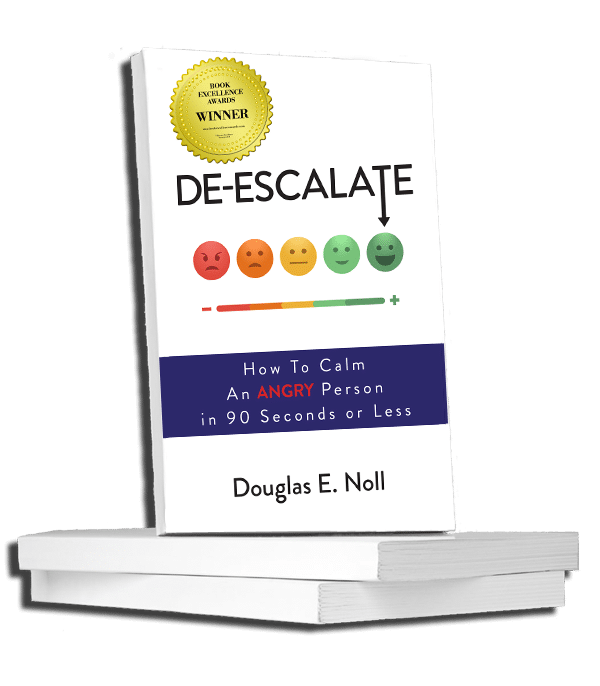
Douglas E. Noll brings unparalleled credibility to this domain. A former trial lawyer who transitioned into peacemaking, Noll possesses more than 40 years of experience in de-escalating high-conflict situations. Remarkably, he has applied these methods in maximum-security prisons, successfully training inmates serving life sentences to interrupt cycles of violence through advanced emotional regulation techniques. These same proven skills which have demonstrably halted physical confrontations in environments where lives are on the line offer transformative power for corporate leaders facing internal turmoil.
The foundation of Noll’s approach is deceptively straightforward yet profoundly effective: bypass the contentious words entirely and focus on accurately labeling the emotions being expressed. In a heated crisis discussion whether in a virtual meeting, email chain, or hallway confrontation the speaker’s emotional brain is dominating. By reflecting back the core feelings “It seems you’re feeling deeply frustrated and powerless in this situation” you trigger neurophysiological calming mechanisms. Within moments, the limbic system quiets, defensiveness recedes, and productive reasoning becomes possible again.
This isn’t theoretical optimism. Noll is the sole expert teaching these precise, research-aligned skills, and he stands behind them with an uncompromising guarantee: learn them, and you will gain the ability to stop arguments and conflicts outright. Executives across diverse sectors, including healthcare systems, veterinary networks, and technology firms, have deployed these techniques to convert explosive standoffs into constructive dialogues.
Emotional conflicts fracture teams and families. The ongoing tension breeds burnout, damages relationships, and hurts performance. The Noll Method’s 90-Second Power Move™ is a proven, neuroscience-based skill for restoring calm, tested from boardrooms to maximum-security prisons. Master this life-changing technique to transform chaos into collaboration. Book a no-obligation zoom call with Doug Noll today!
The Hidden Cost of Crises: Emerging Dynamic Silos
Beyond immediate emotional flare-ups, crises inflict subtler but equally damaging structural harm on organizational communication. A landmark study examining the impact of the COVID-19 pandemic provides compelling evidence of this phenomenon.
Researchers analyzed aggregated, anonymized metadata from over 360 billion emails exchanged within 4,361 organizations worldwide. By comparing patterns across 24 months before and after the onset of the pandemic, they uncovered significant shifts in network community structures. In 2020, as remote work mandates took hold, organizations globally exhibited increased modularity a technical measure indicating stronger siloing compared to 2019 levels.
Concurrently, these silos displayed reduced stability: employees moved more fluidly between subcommunities (such as teams or departments), yet once within a group, their interactions became more narrowly confined to that circle. The authors coined the term “dynamic silos” to describe this dual pattern, observed consistently not only in email data but also across instant messaging, video conferencing, and scheduling tools in detailed analysis of one large global company.
The consequences extend far beyond inconvenience. Heightened siloing restricts cross-functional knowledge flow, hampers innovation, and intensifies feelings of isolation during already stressful periods. While this research focused on the pandemic’s remote-work disruption, parallel dynamics arise in any acute crisis economic shocks, reputational threats, or internal restructurings where fear propels people toward familiar, insulated groups.
Forward-thinking leaders recognize these patterns early and counteract them intentionally. By employing emotional de-escalation techniques, they rebuild bridges, encourage broader interaction, and prevent entrenched divisions from solidifying.
Addressing Persistent Objections
Many seasoned executives initially resist these methods. Common refrains include: “This feels too touchy-feely for serious business conflicts are inevitable in competitive environments.” Or, “Our problems are uniquely complex; simple emotional reflection won’t cut it.” Still others balk at the vulnerability required, fearing that delving into emotions will expose their own uncertainties or weaken their authority.
Such skepticism is understandable, yet Noll’s extraordinary track record directly refutes it. His work in prisons reducing violence in settings where de-escalation failures carry lethal risks demonstrates the technique’s robustness under extreme pressure. No other professional teaches this exact protocol, refined over four decades.
Moreover, avoiding emotional mastery doesn’t eliminate discomfort; it amplifies organizational chaos during crises. Embracing it, conversely, fosters genuine resilience for individuals, teams, and the enterprise as a whole. The initial unease gives way to confidence as leaders witness rapid de-escalations and restored collaboration.
Actionable Strategies for Implementation
Begin modestly to build proficiency. In your next high-tension interaction, resist engaging the surface arguments. Instead, pause and reflect the underlying emotion: “You’re sounding angry because this decision feels like it undermines months of your team’s effort.” Observe the near-immediate softening and shift toward problem-solving.
Expand systematically by introducing affect labeling the core skill of precise emotion identification as foundational training across teams. Institute regular cross-silo forums that open with structured emotional check-ins, deliberately countering the isolation tendencies crises exacerbate.
Most critically, embody the approach at the executive level. In all-hands communications or written updates, lead with explicit acknowledgment of prevailing emotions: “We recognize that this transition is generating significant anxiety and frustration for many.” Only then proceed to facts and plans. True authority emerges not from volume or title, but from this authentic emotional presence that rebuilds psychological safety.
Monitor progress through simple metrics: reduced escalation reports, faster conflict resolution times, and improved cross-departmental collaboration indicators. Over time, these practices become cultural norms, equipping the organization to handle future disruptions with greater agility.
The Enduring Strength of Emotionally Intelligent Leadership
In today’s landscape of frequent and unpredictable crises, the leaders who prevail aren’t necessarily the most charismatic or aggressive. They are those who maintain unflinching composure while attuned to the human elements driving behavior. These capabilities aren’t rare gifts reserved for a few; they are learnable skills, rigorously tested in the most unforgiving contexts imaginable.
Integrating deep emotional competency into crisis communication doesn’t merely help organizations survive turmoil it enables them to forge stronger bonds, heightened trust, and renewed purpose on the other side. Authority, ultimately, rests not in domination but in profound connection. eaders prepared to develop this decisive edge can access these battle-tested methods at dougnoll.com.
Frequently Asked Questions
What is the most effective way to communicate during a corporate crisis?
The most effective crisis communication focuses on directly addressing the underlying emotions fear, anger, uncertainty that people are experiencing, rather than just presenting facts and directives. By using affect labeling to reflect back people’s core feelings (“It seems you’re feeling deeply frustrated and powerless in this situation”), leaders can trigger neurophysiological calming mechanisms that quiet defensiveness and restore productive reasoning within moments. This approach, proven in high-stakes environments including maximum-security prisons, creates space for de-escalation and renewed alignment during organizational turmoil.
What are dynamic silos and how do crises create them in organizations?
Dynamic silos are communication patterns that emerge during crises where employees move fluidly between teams but then interact more narrowly within their immediate groups, creating stronger organizational silos with reduced stability. Research analyzing over 360 billion emails during the COVID-19 pandemic revealed increased modularity and restricted cross-functional knowledge flow as fear propelled people toward familiar, insulated groups. These patterns hamper innovation, intensify isolation, and require intentional leadership intervention through emotional de-escalation techniques and structured cross-silo forums to prevent entrenched divisions.
How can managers develop calm authority during workplace conflicts and crises?
Managers can develop calm authority by mastering emotional de-escalation skills, particularly affect labeling the practice of accurately naming the emotions others are experiencing without judgment. This technique, which has successfully reduced violence in maximum-security prisons and prevented escalating arguments in corporate settings, works by bypassing contentious words and directly addressing the emotional brain. Leaders who acknowledge prevailing emotions first (“We recognize this transition is generating significant anxiety”) before presenting facts and plans rebuild psychological safety and demonstrate authentic authority rooted in human connection rather than positional power.
Disclaimer: The above helpful resources content contains personal opinions and experiences. The information provided is for general knowledge and does not constitute professional advice.
You may also be interested in: De-Escalating An Angry Parent-6 Effective Ways How Today
Emotional conflicts fracture teams and families. The ongoing tension breeds burnout, damages relationships, and hurts performance. The Noll Method’s 90-Second Power Move™ is a proven, neuroscience-based skill for restoring calm, tested from boardrooms to maximum-security prisons. Master this life-changing technique to transform chaos into collaboration. Book a no-obligation zoom call with Doug Noll today!
Powered by flareAI.co