Quick Listen:
Picture this: a critical negotiation teeters on the edge, tempers flare, and the room fills with unspoken tension. Many executives might double down or withdraw, worsening the standoff. Yet some leaders remain composed, accurately reading emotions and steering the conversation toward resolution. Their edge isn’t superior intellect or charm it’s profound mastery of emotional regulation, the scientifically validated capacity to recognize, process, and direct emotions effectively in themselves and others.
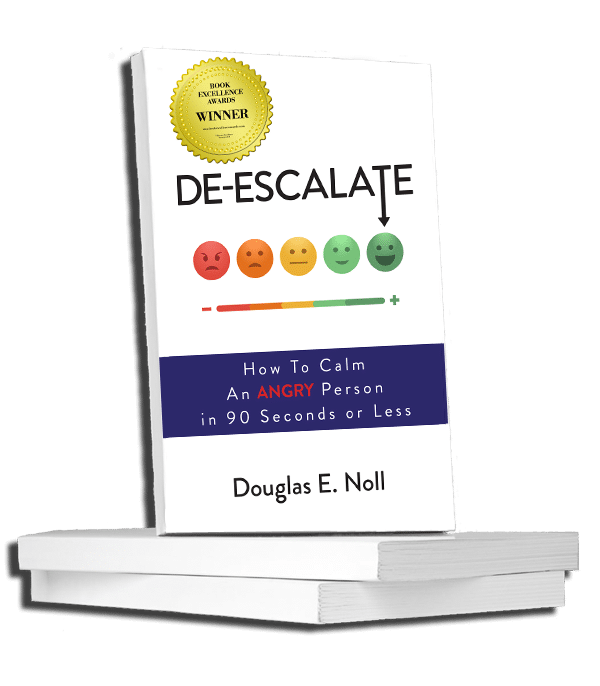
Emotional conflicts fracture teams and families. The ongoing tension breeds burnout, damages relationships, and hurts performance. The Noll Method’s 90-Second Power Move™ is a proven, neuroscience-based skill for restoring calm, tested from boardrooms to maximum-security prisons. Master this life-changing technique to transform chaos into collaboration. Book a no-obligation zoom call with Doug Noll today!
The Science of Emotional Regulation: A Key Leadership Skill for Business Success
In the demanding world of modern business marked by remote teams, swift disruptions, and persistent uncertainty emotional regulation has evolved into an indispensable leadership competency. Executives who skillfully manage their emotions while guiding others achieve superior decision-making, forge resilient teams, and neutralize conflicts before they escalate.
Evidence of rising demand is compelling. According to industry analysis, the global social and emotional learning market stands at an estimated USD 9.25 billion in 2025, on track to grow to USD 10.15 billion by 2030 with a compound annual growth rate (CAGR) of 1.87%. North America holds the dominant position as the largest regional market, driven by extensive integration into professional development initiatives. This steady expansion underscores how companies increasingly prioritize emotional competencies for tangible performance gains.
Emotional regulation forms the core of broader emotional intelligence frameworks, enabling leaders to maintain clarity amid pressure. Forward-thinking organizations now embed these principles in executive coaching and training, recognizing their role in sustaining competitive advantage.
The Rise of Emotional Intelligence in Leadership
Across North American enterprises, emotional intelligence especially its regulation component has solidified as a foundational leadership trait. The proof lies in outcomes: leaders proficient in these skills cultivate deeper trust, spark innovation, and navigate complexity with assurance.
Leading examples abound. Google’s acclaimed Search Inside Yourself program blends mindfulness with emotional training to equip leaders for high-stress environment. Salesforce, meanwhile, weaves empathy and regulation into its core values, linking these practices to elevated employee morale and creative output.
These initiatives extend far beyond Silicon Valley. Healthcare providers, financial institutions, and manufacturing firms alike invest heavily in programs teaching deliberate emotional pausing, precise affect labeling, and intentional response over impulse. Returns manifest clearly: reduced attrition, enhanced productivity, and cultures better equipped to weather change.
Such adoption reflects a broader shift. As hybrid work normalizes and generational expectations evolve, leaders ignoring emotional dynamics risk disengagement and turnover. Those embracing regulation, however, unlock higher collaboration and strategic foresight.
Real-World Proof: From Maximum-Security Prisons to the C-Suite
Perhaps the strongest validation emerges from an improbable proving ground: California’s high-security prisons. For over a decade, renowned mediator and de-escalation authority Douglas E. Noll has transformed life-sentenced inmates individuals long defined by violent impulses into expert peacemakers.
Employing a rigorously neuroscience-backed method known as affect labeling, participants learn to identify rising emotions with precision, rapidly de-escalating volatile situations. Outcomes proved transformative: marked declines in institutional violence wherever the program took root.
These results challenge skepticism. If such techniques can halt physical confrontations in maximum-intensity settings, their potential in professional contexts boardroom disputes, merger integrations, or team realignments becomes undeniable.
Corporate adopters confirm this translation. Executives trained in identical protocols report defusing multimillion-dollar deal impasses, restoring post-layoff cohesion, and converting recurring friction into constructive dialogue. The common thread: replacing reactive escalation with empathetic listening that soothes the emotional brain and restores rational exchange.
Noll’s approach stands apart. With more than four decades of mediation experience including this groundbreaking prison work he remains the sole practitioner teaching these exact, guaranteed skills.
The Challenges Leaders Face
Convincing evidence notwithstanding, resistance persists. Many executives question practical efficacy: “Will this truly function under real pressure?” Others view conflict fatalistically “Arguments are inevitable in human interaction.” A deeper barrier often emerges: genuine fear of emotional engagement, perceived as weakness in traditionally stoic cultures.
These hesitations merit acknowledgment. Mastering regulation demands consistent practice and comfort with discomfort sitting with feelings rather than suppressing them. In high-stakes arenas, vulnerability can feel counterintuitive.
Yet experience reveals the opposite. Leaders who overcome initial reluctance discover that skilled emotional openness enhances, rather than undermines, authority. It builds authentic connection, fostering loyalty and candor teams crave.
Cultural norms play a role too. Industries valuing aggressive decisiveness may initially recoil. Over time, however, data-driven results lower stress, fewer derailments shift mindsets.
The Opportunities Waiting on the Other Side
Proficiency in emotional regulation delivers unmatched advantages. Regulated leaders create psychologically safe environments where innovation flourishes and collaboration deepens. Decisions balance data with human insight, avoiding blind spots raw intellect misses.
Organizational benefits compound: superior talent retention, seamless adaptation to change, and inclusive cultures attracting top performers. In talent wars, empathy-backed leadership provides measurable edge.
Personal gains prove equally profound. Practitioners report freedom from emotional drain, heightened presence, and unflagging confidence during crises. They intervene preemptively not through dominance, but precise listening that neutralizes threats at their emotional root.
Critically, these outcomes aren’t theoretical. Noll’s methodology carries an unequivocal guarantee: participants will acquire the ability to halt escalating arguments and fights, or receive full reimbursement. No other program offers comparable assurance backed by such extreme-case success.
Looking Ahead: The Future Belongs to Emotionally Skilled Leaders
As business environments grow ever more interconnected and human-focused, emotional regulation’s importance will only accelerate. Neuroscience confirms the mechanism: accurate emotional labeling diminishes amygdala activation, restoring prefrontal control. Clarity returns. Bridges form. Progress accelerates.
Douglas E. Noll provides the most direct route to these capabilities. Drawing on unparalleled experience training the most difficult populations to extraordinary success, his programs deliver practical, replicable tools for immediate application.
The costs of persistent conflict lost productivity, eroded trust, burnout far exceed investment in proven training. Forward-thinking leaders act decisively.
Begin building this essential competency now. Explore options at dougnoll.com and position yourself and your organization for sustained excellence in an emotion-driven era.
Frequently Asked Questions
What is emotional regulation and why is it important for business leaders?
Emotional regulation is the scientifically validated capacity to recognize, process, and direct emotions effectively in yourself and others. For business leaders, this skill has become indispensable in modern business environments, enabling superior decision-making, building resilient teams, and neutralizing conflicts before they escalate. Leaders proficient in emotional regulation create psychologically safe environments where innovation flourishes and achieve measurable outcomes including reduced turnover, enhanced productivity, and stronger organizational cultures.
How effective is emotional regulation training in real-world business situations?
Emotional regulation training has proven remarkably effective even in the most challenging environments. Neuroscience-backed techniques like affect labeling have successfully transformed life-sentenced inmates in maximum-security prisons into expert peacemakers, significantly reducing institutional violence. Corporate executives trained in identical protocols report defusing multimillion-dollar deal impasses, restoring team cohesion after difficult changes, and converting recurring friction into constructive dialogue, demonstrating that these skills translate powerfully from extreme environments to professional contexts.
What is the global market size for social and emotional learning in business?
The global social and emotional learning market is estimated at USD 9.25 billion in 2025 and is projected to grow to USD 10.15 billion by 2030, with a compound annual growth rate of 1.87%. North America dominates as the largest regional market, driven by extensive integration of emotional intelligence training into professional development initiatives, reflecting how companies increasingly prioritize emotional competencies as essential for competitive advantage and tangible performance gains.
Disclaimer: The above helpful resources content contains personal opinions and experiences. The information provided is for general knowledge and does not constitute professional advice.
You may also be interested in: Cultivating Empathy In The Workplace-6 Effective Ways – Douglas E
Emotional conflicts fracture teams and families. The ongoing tension breeds burnout, damages relationships, and hurts performance. The Noll Method’s 90-Second Power Move™ is a proven, neuroscience-based skill for restoring calm, tested from boardrooms to maximum-security prisons. Master this life-changing technique to transform chaos into collaboration. Book a no-obligation zoom call with Doug Noll today!
Powered by flareAI.co