Quick Listen:
Picture this: You step into a high-stakes meeting where frustrations are boiling over a missed deadline has one team member seething, while another feels sidelined in key decisions. The room crackles with tension. But then, someone steps in with composure, redirecting the energy toward solutions rather than blame. In an instant, confrontation turns into collaboration. This ability to remain steady amid chaos isn’t innate genius; it’s a mastered skill, and in our fast-paced, hybrid world, it’s indispensable.
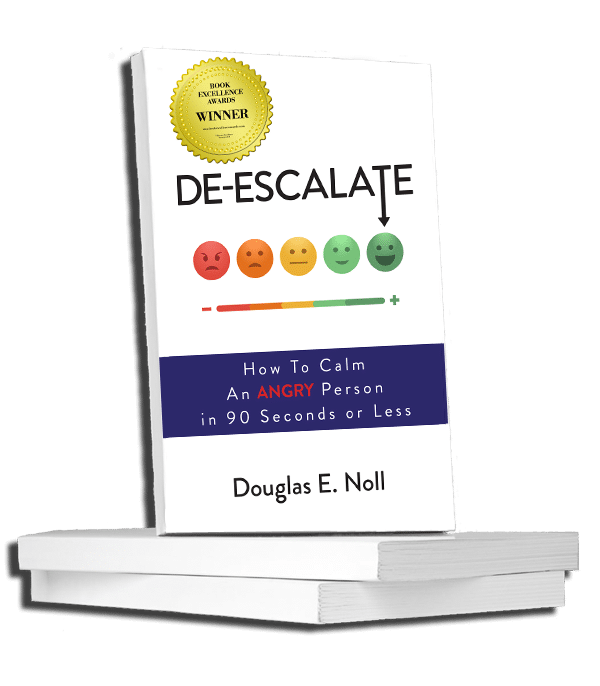
Emotional conflicts fracture teams and families. The ongoing tension breeds burnout, damages relationships, and hurts performance. The Noll Method’s 90-Second Power Move™ is a proven, neuroscience-based skill for restoring calm, tested from boardrooms to maximum-security prisons. Master this life-changing technique to transform chaos into collaboration. Book a no-obligation zoom call with Doug Noll today!
Mastering Calmness Under Pressure: Effective Conflict Management Strategies
Workplace conflict has always existed, but today’s environment marked by remote teams, rapid change, and heightened stress has intensified it. How leaders and teams respond can either erode trust and productivity or spark greater innovation and resilience. At the core of effective handling lies emotional intelligence, as championed by award-winning mediator Douglas Noll. His neuroscience-based methods, tested in everything from corporate boardrooms to maximum-security prisons, demonstrate that de-escalating emotions rapidly is learnable, empowering anyone to transform heated disputes into constructive dialogue.
These proven strategies not only help maintain calm under pressure but also sharpen decision-making and build stronger relationships in demanding scenarios.
The Growing Demand for Conflict Management in North America
Across North America, the need for robust workplace conflict management solutions is surging. Market projections show the regional sector valued at USD 3.56 billion in 2025, on track to reach USD 7.40 billion by 2032, growing at a compelling compound annual growth rate of 11%.
Mediation dominates, capturing an estimated 33.2% share in 2025, while services overall hold 59.7%, and large enterprises account for 67.1% of the market. This expansion reflects escalating workplace disputes, fueled by remote and hybrid dynamics that strip away nonverbal cues and complicate communication.
Globally, the broader conflict resolution solutions market stands at US$ 10.99 billion in 2025, projected to climb to US$ 17.76 billion by 2032 at a 7.1% CAGR. Alternative reports align closely, estimating growth from $8.79 billion in 2024 to $9.52 billion in 2025 at 8.2%, reaching $12.68 billion by 2029.
Drivers include globalization, rising awareness of alternative dispute resolution’s efficiency, and the complexities of modern workforces. Meanwhile, the encompassing corporate training industry encompassing emotional intelligence and soft skills development is expanding from $398.78 billion in 2024 to $417.53 billion in 2025, with a 4.7% CAGR, underscoring investments in human-centered capabilities amid technological shifts.
Real-World Applications and Success Stories
These trends translate into tangible outcomes. In North American infrastructure companies, structured conflict resolution programs have swiftly addressed internal rifts, rebuilding team unity and averting costly delays. High-stakes sectors like healthcare and law enforcement offer even starker examples.
De-escalation training initiatives, often aligned with legislative pushes like the Law Enforcement De-Escalation Training Act, emphasize empathy, verbal intervention, and non-force alternatives. Hospital security personnel, through rigorous scenario-based drills, learn to spot early signs of agitation and apply calming techniques, markedly lowering incident escalation and enhancing safety for all involved.
Such programs don’t just resolve crises in the moment; they cultivate enduring skills that reduce injuries, bolster morale, and improve overall performance in pressure-cooker environments.
Persistent Challenges and Potential Pitfalls
Despite progress, barriers remain formidable. Individual biases and unmanaged stress frequently sabotage efforts, escalating minor issues into prolonged standoffs. Resource constraints or lukewarm executive support often leave organizations without comprehensive training, perpetuating cycles of dysfunction.
The consequences of neglect are profound. Unresolved conflicts drain productivity employees globally lose substantial hours weekly to disputes and fuel turnover, absenteeism, and disengagement. In severe cases, they spiral into litigation, with U.S. companies facing steep defense and settlement costs. Remote work exacerbates these risks, as misunderstandings proliferate without in-person context, eroding trust and collaboration further.
The Substantial Benefits of Effective Approaches
Conversely, prioritizing conflict management delivers outsized returns. Teams equipped with these tools experience heightened cohesion, freer idea exchange, and a culture of openness that drives innovation.
Proactive resolution curtails expenses tied to HR escalations, legal proceedings, and lost output. Organizations committing to emotional intelligence development reap higher employee retention, elevated customer interactions, and more astute leadership.
With soft skills now linked to the majority of professional success, these investments create competitive edges, enabling firms to navigate uncertainty while fostering environments where people perform at their best under duress.
Expert Perspectives and the Road Ahead
Looking forward, innovators like Douglas Noll anticipate a blend of human insight and technology revolutionizing the field. North American markets are already embracing AI-driven tools for real-time monitoring, predictive analytics, and virtual mediation, alongside customized programs tackling hybrid work strains.
Emerging platforms offer data-informed resolutions, hybrid delivery models, and immersive virtual reality training, making skills more accessible and inclusive. A parallel emphasis on workplace wellness aims to preempt stress, nipping potential conflicts in the bud.
For leaders and professionals, the imperative is straightforward: embed emotional intelligence including techniques like affect labeling and tactical empathy into development pipelines. Master these, and you’ll not only preserve calm amid storms but also forge resilient teams capable of thriving in any challenge. In an unpredictable era, this isn’t optional it’s the foundation of sustained success.
Frequently Asked Questions
What are some effective conflict management techniques for staying calm under pressure?
One effective approach is the “90-Second Power Move™” developed by Douglas Noll, which uses neuroscience-based techniques to quickly de-escalate tension. This method, tested in high-pressure environments such as boardrooms and prisons, helps individuals remain composed and turn conflict into collaboration by focusing on emotional intelligence and tactical empathy.
How can emotional intelligence improve conflict resolution in the workplace?
Emotional intelligence (EI) allows leaders and team members to manage their emotions effectively, enhancing conflict resolution. By applying skills like affect labeling and empathy, individuals can diffuse heated situations and foster constructive dialogue, improving collaboration and trust. This is essential in today’s fast-paced, hybrid work environments where remote dynamics complicate communication.
Why is conflict management important in today’s work culture, especially with remote teams?
As workplace dynamics evolve with remote teams, the risk of miscommunication and unresolved conflicts increases. Conflict management is crucial because it enhances team cohesion, reduces stress, and boosts productivity. With the right techniques, such as those based on emotional intelligence, organizations can maintain calm, resolve disputes efficiently, and foster innovation in challenging situations.
Disclaimer: The above helpful resources content contains personal opinions and experiences. The information provided is for general knowledge and does not constitute professional advice.
You may also be interested in: Handling Anger with Grace-5 Strategies for Staying Cool Under
Emotional conflicts fracture teams and families. The ongoing tension breeds burnout, damages relationships, and hurts performance. The Noll Method’s 90-Second Power Move™ is a proven, neuroscience-based skill for restoring calm, tested from boardrooms to maximum-security prisons. Master this life-changing technique to transform chaos into collaboration. Book a no-obligation zoom call with Doug Noll today!
Powered by flareAI.co