The 95/5 Brain
Most decisions are shaped by emotion before conscious thought. Here is what that means for leaders.
The 95/5 brain is Douglas E. Noll's shorthand for a finding from decision science: roughly 90 to 95 percent of human decisions and behaviors are shaped non-consciously by emotional brain systems, while only a small share is driven by slow, conscious deliberation. The estimate comes from Stanford neuroscientist and Graduate School of Business professor Baba Shiv. Noll's leadership argument is that traditional management and MBA training prepare leaders to work with the 5 percent, while trust, effort, loyalty, and performance are decided in the 95 percent.
Key takeaways
- "95/5" describes how decisions are made rather than the physical makeup of the brain, and it is an estimate rather than a precise measurement.
- Emotion is the engine of decision-making, and Antonio Damasio showed that people without emotional input cannot make decisions at all.
- Your team is constantly and non-consciously asking three questions: Am I safe here? Do I matter? Can I trust this person?
- Under threat the deliberative brain goes partly offline, which is why logic fails in heated moments.
- Leading the 95 percent means reading and regulating emotional states instead of suppressing them.
Where the 95/5 idea comes from
Baba Shiv has spent decades studying how people make decisions in practice, as opposed to how economic models say they should. Asked to put a number on it, he has said that, based on the evidence, he would conjecture something like 90 to 95 percent of our decisions and behaviors are shaped non-consciously by the emotional brain system, and his practical conclusion for communication is to play to the emotional brain first.
I use "95/5" because it is memorable and captures the right order of magnitude. It is a researcher's informed estimate of how much behavior is driven by fast, non-conscious, emotion-laden processing, and it makes no claim that 95 percent of brain tissue is emotional or that people are out of control.
How business got the ratio backward
Modern management thinking was built on the opposite assumption.
- 1940s, rational choice theory: John von Neumann and Oskar Morgenstern modeled people as utility maximizers who gather information, calculate probabilities, and choose the best option, an elegant, mathematically tractable model that became the backbone of business education.
- 1950s, bounded rationality: Herbert Simon observed that no one has unlimited information or time, so people "satisfice" by choosing the first option that seems good enough.
- 1970s, heuristics and biases: Daniel Kahneman and Amos Tversky documented systematic, predictable errors in human judgment.
- 1990s, the somatic marker hypothesis: Antonio Damasio showed that emotion is required for decision-making.
- 2000s onward, decision neuroscience: researchers including Shiv showed that emotion drives action and shapes perception.
Business schools still teach the first point most thoroughly, producing generations of leaders optimized for 5 percent of decision-making and largely untrained in the 95 percent that drives behavior.
Meet Elliot: what happens when emotion goes offline
Damasio studied a patient he called Elliot, whose frontal-lobe tumor was removed successfully with his intelligence and memory intact. Elliot could no longer make simple choices, turning a lunch decision into endless analysis of distance, price, and menu, because without emotional signals to assign value every option looked equally valid. His career and marriage collapsed because the systems that integrate emotion into decisions were damaged, while his intelligence stayed the same.
Damasio's conclusion runs against what most leaders were taught: emotion tells us what matters, and deliberative thinking depends on it.
Shiv extended the point in a well-known study in which people tasted the same wine twice, told one glass was cheap and the other expensive. They reported more pleasure from the "expensive" wine, and brain imaging showed greater activity in a region associated with experienced pleasure, showing that expectation and emotion shape perception itself.
The three questions your team is always asking
Beneath every meeting, email, and performance review, the people you lead are answering three questions non-consciously and fast:
- Am I safe here?
- Do I matter?
- Can I trust this person?
The answers determine whether people give discretionary effort or quietly disengage, stay or start interviewing, and speak up or play it safe, and they are reached in the 95 percent where most leaders have never been taught to work.
What happens in the brain during conflict
When someone perceives a physical or social threat, the amygdala activates through what neuroscientist Joseph LeDoux described as a fast "low road" that triggers a response before slower cortical processing catches up, raising stress hormones, heart rate, and narrowing attention.
At the same time, the prefrontal cortex, which handles reasoning, impulse control, and perspective-taking, loses much of its influence. Research by Jeremy Yip and Maurice Schweitzer found that anger reduces perspective-taking and makes people more egocentric.
In a meeting you see a tight jaw, shallow breathing, absolutes, and an inability to think straight, because at that moment the person cannot. Presenting data, arguing logically, or delivering well-built feedback all address the 5 percent while the 95 percent is in charge, which is why the techniques most leaders were taught fail when they are needed most.
Leading the 95 percent
Leading the 95 percent means sequencing correctly, regulating first and reasoning second.
- Notice state before content by asking whether the person is regulated enough to think with you.
- Name the emotion, since affect labeling reduces amygdala activity and engages regulatory regions of the prefrontal cortex (see affect labeling and leadership).
- Reflect what is at stake to show you understand why it matters to them.
- Then ask and reason together, once the deliberative brain is back and your data can land; this sequence is the A.R.A. framework.
Leaders who work this way keep their rigor and add information other leaders miss, such as the hesitation that signals doubt, the shift in posture that reveals fear, and the careful wording that says someone is holding back, which often predicts outcomes better than the spreadsheet.
Common misreadings of 95/5
- "So people are irrational." Emotional processing is fast, adaptive, and usually good enough, having evolved to make decisions under uncertainty, which describes most of leadership.
- "So data doesn't matter." Data matters and needs a regulated brain to receive it and a connection to what people care about.
- "So leaders should be more emotional." Leaders should be more emotionally precise, better at reading and naming emotion and at regulating their own.
- "95 is an exact figure." The figure estimates an order of magnitude, and the direction of the finding is what matters.
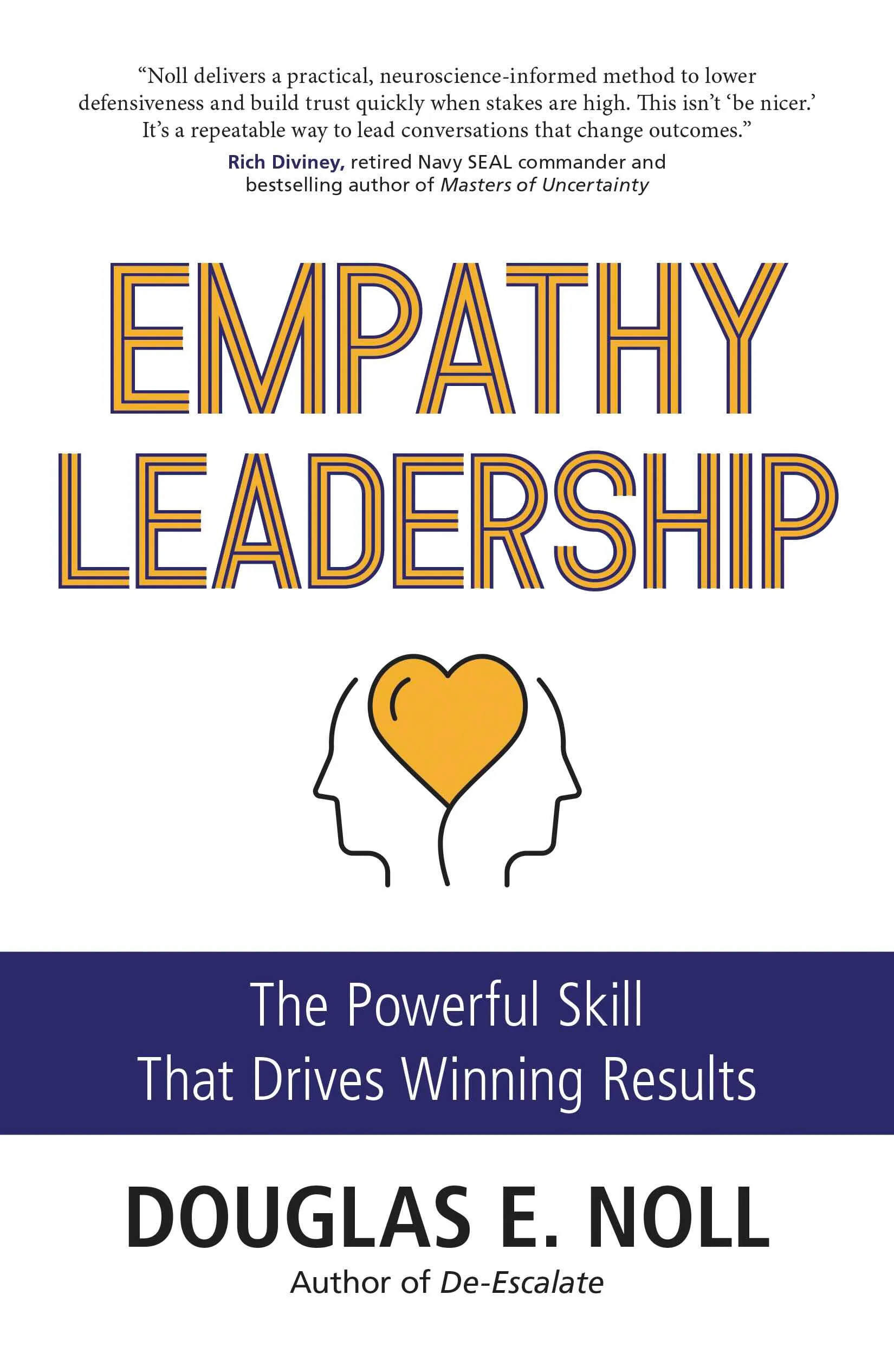
The 95/5 brain is the scientific premise of Nervous System Leadership and the opening argument of my book Empathy Leadership.
Frequently asked questions
What is the 95/5 brain?
The 95/5 brain is Doug Noll's shorthand for the estimate, from Stanford's Baba Shiv, that something like 90 to 95 percent of human decisions and behaviors are shaped non-consciously by emotional brain systems, with only a small share driven by deliberate reasoning.
Is it true that 95 percent of decisions are emotional?
It is an informed estimate, not a precise measurement. Baba Shiv has said he would conjecture that something like 90 to 95 percent of decisions and behaviors are shaped non-consciously by the emotional brain system. The direction of the finding is well supported by decision science and neuroscience, including Antonio Damasio's work showing that emotion is necessary for decision-making.
Does 95/5 mean people are irrational?
No. Emotional processing is fast and adaptive, assigning value to options and making decisions possible under uncertainty, so leaders must work with emotion rather than try to bypass it.
Why does logic fail in heated conversations?
Under threat, the amygdala activates and the prefrontal cortex, which handles reasoning and perspective-taking, loses influence. Research by Yip and Schweitzer found anger reduces perspective-taking. Logic addresses the deliberative brain while the emotional brain is in charge, so leaders need to regulate first, for example with affect labeling.
How should leaders apply the 95/5 brain?
Read people's emotional state before content, name emotions to calm the threat response, reflect what is at stake for them, and then reason together. This sequence is Doug Noll's A.R.A. framework (Acknowledge, Reflect, Ask).
Related frameworks
- Nervous System Leadership
- Affect Labeling and Leadership
- The A.R.A. Framework: Acknowledge, Reflect, Ask
- Is Empathy a Weakness? Answering the Pushback
- Empathy Leadership (book)
References
- Damasio, A. R. (1994). Descartes' Error: Emotion, Reason, and the Human Brain. New York: G. P. Putnam's Sons.
- Plassmann, H., O'Doherty, J., Shiv, B., & Rangel, A. (2008). Marketing actions can modulate neural representations of experienced pleasantness. Proceedings of the National Academy of Sciences, 105(3), 1050-1054. https://doi.org/10.1073/pnas.0706929105
- von Neumann, J., & Morgenstern, O. (1944). Theory of Games and Economic Behavior. Princeton University Press.
- Simon, H. A. (1955). A behavioral model of rational choice. Quarterly Journal of Economics, 69(1), 99-118. https://doi.org/10.2307/1884852
- Kahneman, D., & Tversky, A. (1979). Prospect theory: An analysis of decision under risk. Econometrica, 47(2), 263-291. https://doi.org/10.2307/1914185
- LeDoux, J. (1996). The Emotional Brain: The Mysterious Underpinnings of Emotional Life. New York: Simon & Schuster.
- Yip, J. A., & Schweitzer, M. E. (2019). Losing your temper and your perspective: Anger reduces perspective-taking. Organizational Behavior and Human Decision Processes, 150, 28-45. https://doi.org/10.1016/j.obhdp.2018.07.003
- Lieberman, M. D., Eisenberger, N. I., Crockett, M. J., Tom, S. M., Pfeifer, J. H., & Way, B. M. (2007). Putting feelings into words: Affect labeling disrupts amygdala activity in response to affective stimuli. Psychological Science, 18(5), 421-428. https://doi.org/10.1111/j.1467-9280.2007.01916.x
- Noll, D. E. (2026). Empathy Leadership: The Powerful Skill That Drives Winning Results. New York / Portland, OR: Atria Paperback / Beyond Words (Simon & Schuster). https://dougnoll.com/books/empathy-leadership
About the author
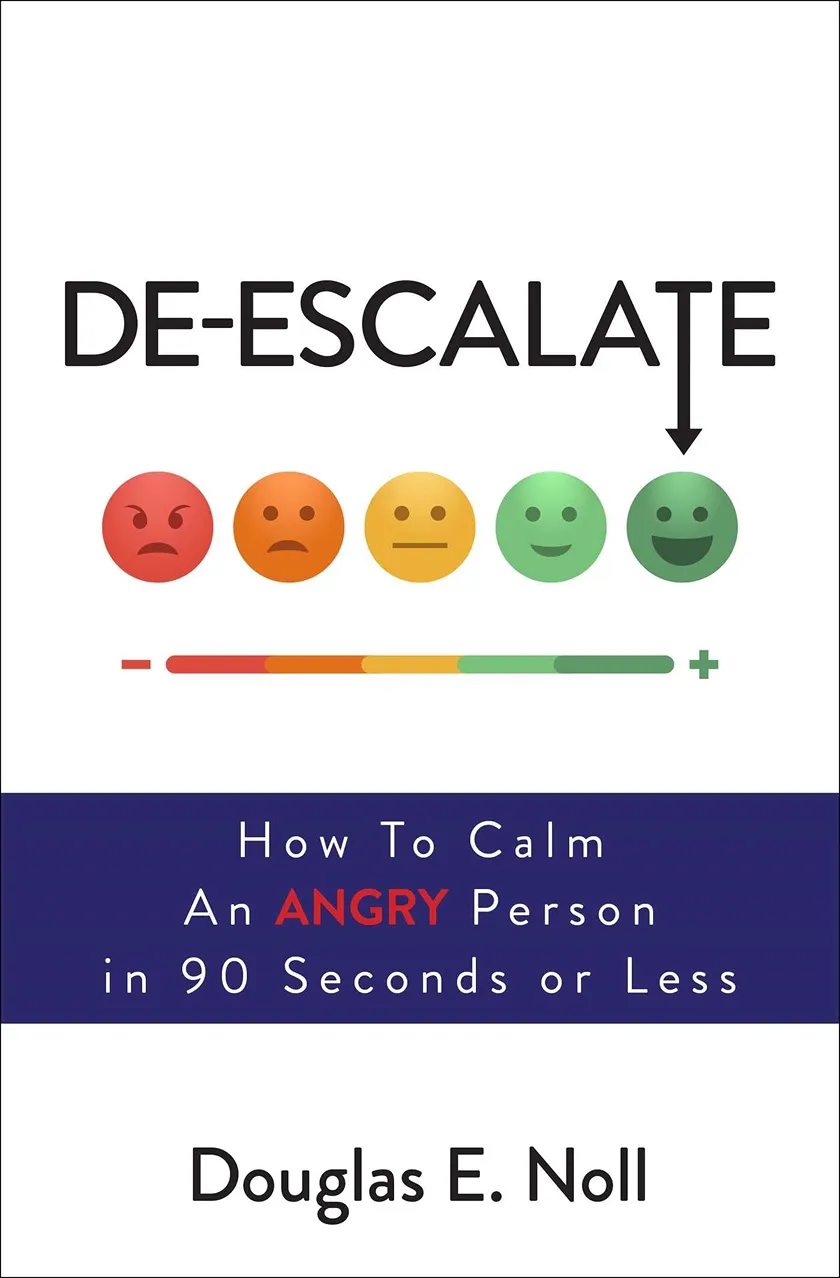
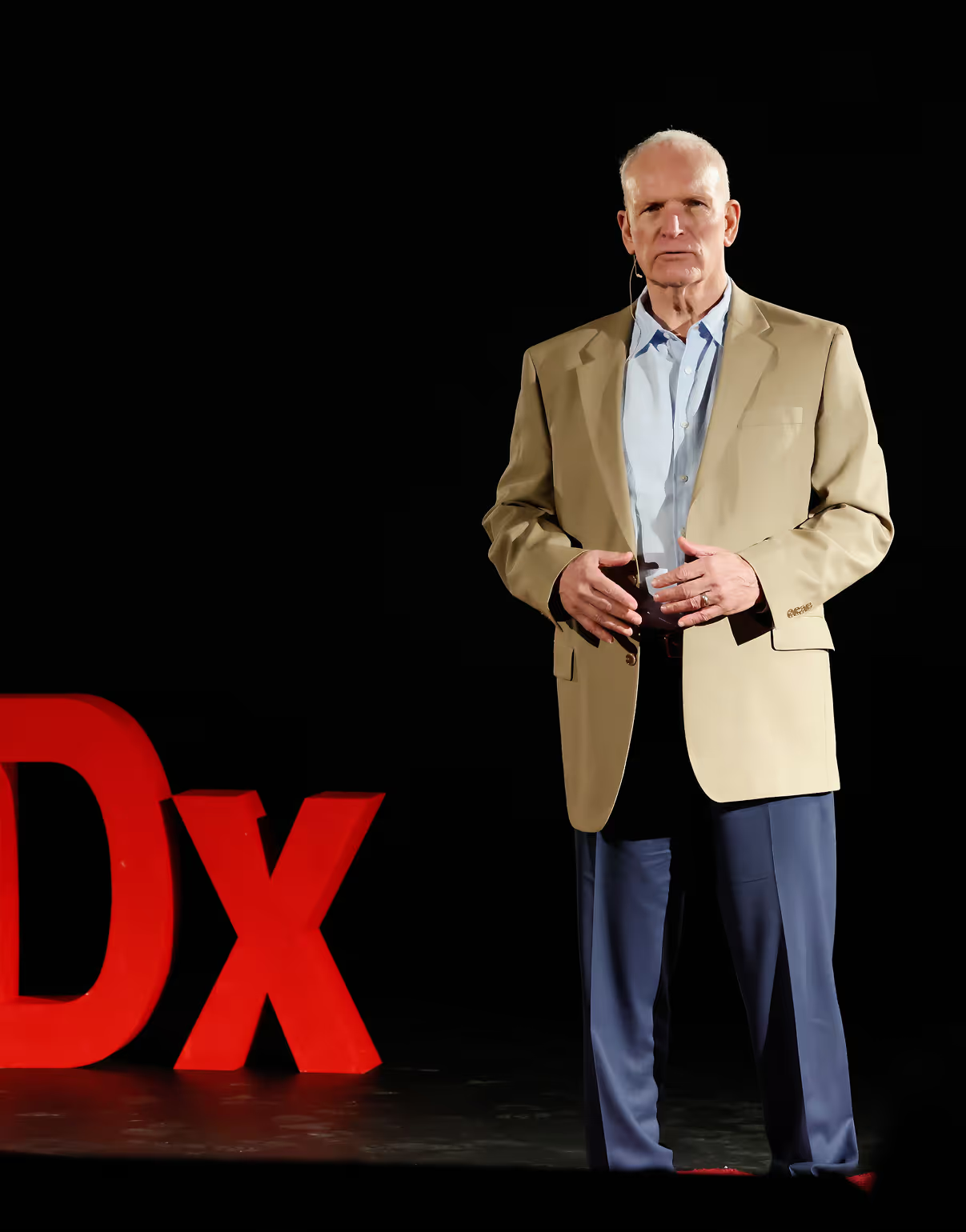
Douglas E. Noll, JD, MA is a mediator, peacemaker, and leadership advisor. He practiced as a commercial trial lawyer for twenty-two years before turning full time to mediation in 2000 and has since mediated more than 1,500 disputes. He is a Distinguished Fellow of the International Academy of Mediators, an adjunct professor at Pepperdine University's Straus Institute for Dispute Resolution, and co-founder of Prison of Peace. He is the author of five books, including Empathy Leadership: The Powerful Skill That Drives Winning Results (Simon & Schuster, 2026) and De-Escalate: How to Calm an Angry Person in 90 Seconds or Less (2017), and host of the Listening with Leaders podcast. His TEDx talk is "Listen Someone Into Existence." Contact Doug.