Nervous System Leadership
Why the most important variable in any leadership conversation is the biological state of the people having it
Nervous System Leadership is a leadership practice developed by Douglas E. Noll, JD, MA, that treats the biological state of the people in the room as the most important variable in any leadership interaction. A leader practicing it recognizes whether the people in front of them are regulated or dysregulated and uses a specific, learnable skill, affect labeling, to move them from threat back to deliberative thinking before trying to decide, persuade, or problem-solve.
Key takeaways
- Every person you lead is, at any moment, in a regulated or a dysregulated nervous-system state, and only a regulated nervous system can deliberate, collaborate, and take smart risks.
- When the threat system activates, the prefrontal cortex, where judgment and impulse control live, goes partly offline, so data, logic, and agendas stop landing.
- The fastest documented route back to regulation is naming the emotion out loud; UCLA neuroscientist Matthew Lieberman's research shows this "affect labeling" reduces amygdala activity and increases activity in the brain's regulatory regions.
- Nervous System Leadership is the operating layer underneath Radical Candor, Crucial Conversations, and emotional intelligence training, all of which assume a regulated listener.
- The method was field-tested for a decade inside maximum-security prisons through the Prison of Peace project before it was taught to executives.
What is Nervous System Leadership?
Every person you lead has a nervous system that, at any given moment, is either regulated or dysregulated.
A regulated nervous system weighs options, takes appropriate risks, tolerates disagreement, and stays engaged when the work gets hard. A dysregulated nervous system cannot reliably do any of that, for reasons of biology rather than attitude or competence. When the brain detects a physical or social threat, the amygdala activates, stress chemistry rises, and the prefrontal cortex loses much of its grip on behavior, leaving the older, faster brain that was built for survival in charge.
Nervous System Leadership is the practice of recognizing the state of the people around you and knowing how to move them from dysregulation to regulation. It is a biological practice grounded in neuroscience and proven in the hardest human environments I know of, distinct from a communication style, a personality type, or a softer way of managing.
The central claim is simple: the most important variable in a leadership conversation is the neurobiological state of the people having it, and the content comes second.
Why traditional leadership models miss the biology
For roughly seventy years, corporate leadership has rested on a premise most leaders never question: that leadership is a deliberative activity in which good leaders analyze accurately, decide logically, and treat emotions in the room as irrelevant or disruptive.
That premise produced the "Organization Man" William H. Whyte described in 1956, the executive who left his feelings at the door and built authority on emotional restraint. Rational choice theory, formalized by John von Neumann and Oskar Morgenstern in the 1940s and still the mathematical backbone of most business school curricula, reinforced it.
The science moved on. Herbert Simon showed that people "satisfice" rather than optimize. Daniel Kahneman and Amos Tversky documented the systematic biases built into human judgment. Antonio Damasio showed in Descartes' Error that patients who lost the brain's ability to integrate emotion into decisions could not make simple choices, even with their intelligence intact. Stanford's Baba Shiv has estimated that something like 90 to 95 percent of our decisions and behaviors are shaped non-consciously by emotional brain systems, an estimate I explain on the 95/5 brain page.
The leadership model that built corporate America was empirically wrong about how human beings think and decide. Nervous System Leadership corrects it by treating the emotional and the deliberative as one integrated system, which means you cannot lead the deliberative without working with the biological.
The neuroscience underneath
Three bodies of research form the scientific foundation.
1. Affect labeling calms the threat system
In 2007, Matthew Lieberman and colleagues at UCLA published "Putting Feelings into Words" in Psychological Science. Using fMRI, they showed that labeling the emotion on a face reduced activity in the amygdala and increased activity in the right ventrolateral prefrontal cortex, a region involved in regulation. In plain language, naming a feeling calms the threat-detection system and brings the thinking brain back online. Later work from the same lab described affect labeling as implicit emotion regulation, meaning it regulates even when the person does not experience it as an attempt to regulate.
The finding I have built my career on is that the effect works when someone else accurately names what the upset person feels, which turns a laboratory finding into a leadership skill. A full treatment is on the affect labeling and leadership page.
2. Emotion is represented the same way across human brains
Research from the IMT School for Advanced Studies in Lucca, Italy, compared the brain responses of sighted, congenitally blind, and congenitally deaf participants exposed to the same story and found their emotional responses represented in remarkably similar ways, with the ventromedial prefrontal cortex as a key hub. The architecture of emotional experience is shared by every person you lead, regardless of background, culture, or history, which is why the same skill works in a boardroom and on a prison yard.
3. Safety is a biological need, and nervous systems co-regulate
Stephen Porges's polyvagal theory gave clinicians and coaches a vocabulary for states of social engagement, mobilization (fight or flight), and shutdown. Specific neurophysiological and evolutionary claims of the theory are under active scientific debate, while its observational core is widely accepted: nervous systems shift between engaged, mobilized, and shut-down states, people regulate one another, and safety is a biological need. Nervous System Leadership relies on that observational core and leaves the contested mechanics aside.
Together, these lines of research tell a leader three things: every person runs a biological system that sets their capacity to perform at that moment, that system responds to the quality of their interaction with you, and a specific, reproducible intervention can move it toward regulation.
Regulated versus dysregulated: what it looks like in a meeting
Picture a leader I will call David, facing twelve smart people around a table, data on the screens, and a decision to make. The CFO is agitated and says nothing of substance, the VP of Operations agrees with everything in a tone that makes her disagreement obvious, and two directors keep a side conversation going. David redirects, calls on people, and returns to the data, and the meeting ends without a decision for the third time.
David was trying to run a deliberative process in a room full of dysregulated nervous systems, a problem upstream of any agenda, slide, or facilitation technique.
The most expensive dysregulation in organizations is the quiet kind: the high performer who stopped arguing months ago, the leadership team that went silent, the "yes" that never turns into action.
The hidden operating system: competence, authority, control
Most leaders who struggle with this have done the training and read the books, so the question is why the right message so often fails to land.
Almost every leader runs an operating system with three components. Competence is the need to be seen as someone who knows what they are doing. Authority is the need to protect the legitimacy of the role. Control is the need for the situation to move in a predictable direction. These are legitimate values whose cost is attention, because while they run, part of the leader's attention stays turned inward on how they are coming across.
The person across the table feels that divided attention at the level of the nervous system: the leader's internal signal of "I am managing this situation" arrives as "I am being managed," and a nervous system that detects it is being managed stays in a mild threat state however skillful the management. That is why so much leadership training works in the workshop and fails in the room that matters, since every new technique gets installed on top of the same operating system.
Nervous System Leadership asks for a shift in where attention lives, from self to other, from managing perception to attending to state, and from performance to presence.
How to practice Nervous System Leadership
- Read state before content. Before you open the agenda, notice voice, breath, posture, and the quality of silence, and ask whether this person is regulated enough to think with you right now.
- Regulate yourself first. Your nervous system sets the room's baseline, so silently name your own state ("I feel anxious about this number"), which engages the same regulatory circuitry it engages in others.
- Name what they feel, directly. Use a declarative you-statement such as "You're frustrated, and you feel blindsided by this decision," then stop talking; skip "Are you upset?" and "I hear you saying."
- Work through the layers. Anger often sits on top of disrespect, fear, or shame, so keep naming until you see the physical signs of settling: a nod, an exhale, dropped shoulders, or "exactly."
- Then move to the problem. Once the person has settled, ask a forward-looking question that restores agency, such as "What would help right now?" This sequence is the A.R.A. framework: Acknowledge, Reflect, Ask.
In my experience, an accurate label delivered with genuine attention usually brings a dysregulated person back to deliberative thinking in about ninety seconds, a practical guide drawn from decades of mediation and teaching rather than from a controlled trial.
Where the method was proven
I developed this across twenty-two years as a commercial trial lawyer, more than twenty-five years and 1,500 disputes as a mediator, and a decade inside California and Connecticut prisons.
From 2010 to 2020, my colleague Laurel Kaufer and I ran Prison of Peace, training more than 3,000 incarcerated men and women, many serving life sentences for violent crimes, as peacemakers and mediators. In one early cohort, a woman serving a life sentence walked onto a maximum-security yard where two rival groups were lining up to fight, took the two leaders aside, and mediated an agreement while guards in riot gear watched. She had no authority, only a skill she had practiced.
If the skill works there, the claim that it cannot work in your boardroom is not credible, because the environments differ while the nervous system dynamics stay the same.
How Nervous System Leadership relates to other frameworks
- Emotional intelligence describes capacities, while Nervous System Leadership specifies the intervention and its biological target.
- Psychological safety, as Amy Edmondson defined it, is a team climate that Nervous System Leadership builds one interaction at a time by moving individual nervous systems out of threat.
- Radical Candor and Crucial Conversations assume the listener's prefrontal cortex is available, so the rule is to regulate first and be candid second.
- Active listening centers the listener with phrases like "I hear you saying," which under high emotion can read as procedural or patronizing, so Nervous System Leadership uses direct you-statements instead.
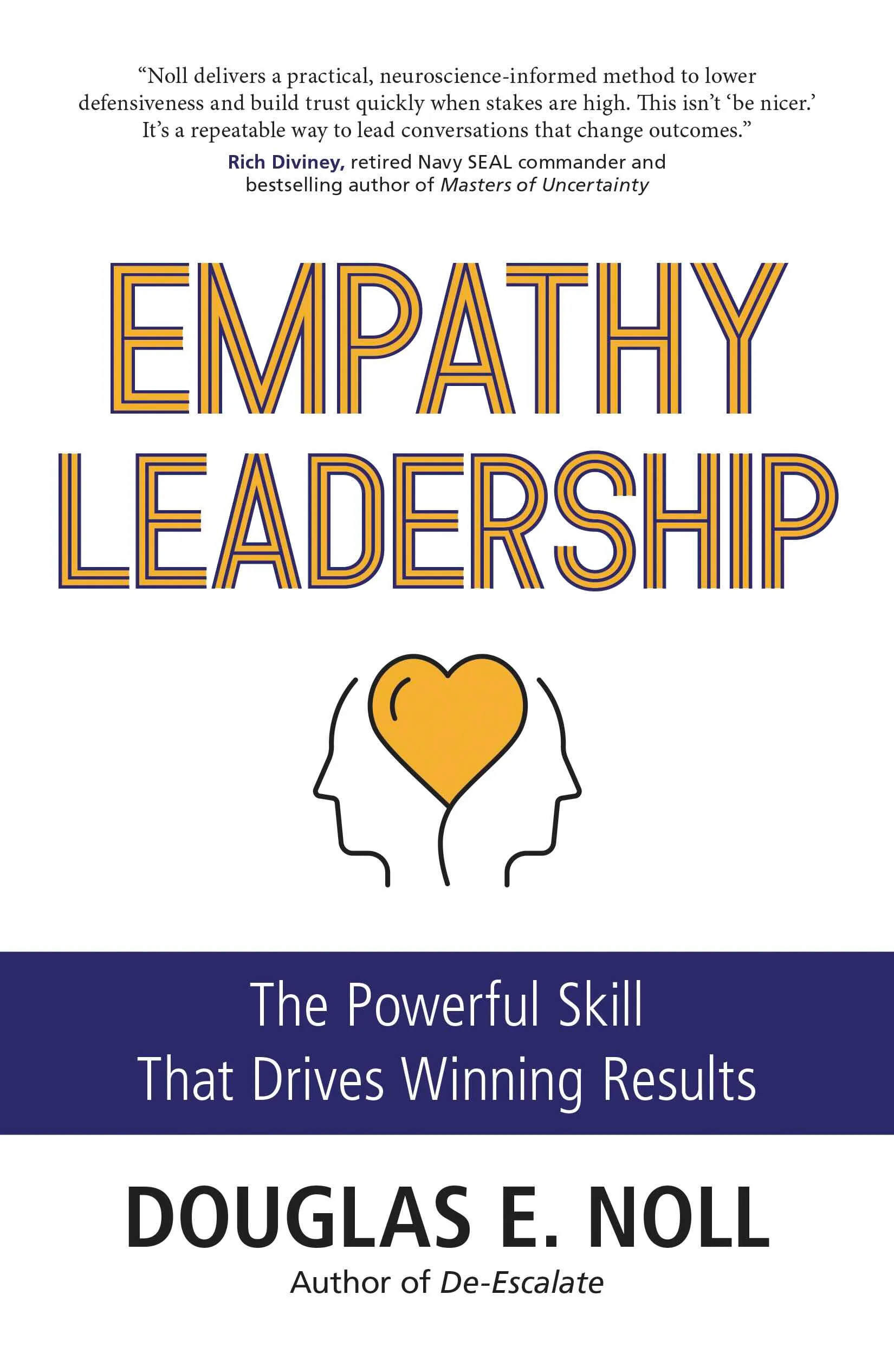
The full framework, the research behind it, and the measurement system for tracking it in organizations are in my book Empathy Leadership: The Powerful Skill That Drives Winning Results (Beyond Words/Atria, Simon & Schuster, 2026).
Frequently asked questions
What is Nervous System Leadership?
Nervous System Leadership is a leadership practice developed by Douglas E. Noll. It treats the biological state of the people in a conversation, regulated or dysregulated, as the most important variable in leadership, and uses a specific skill, affect labeling, to move people out of a threat response so they can think clearly before decisions or feedback.
Who created Nervous System Leadership?
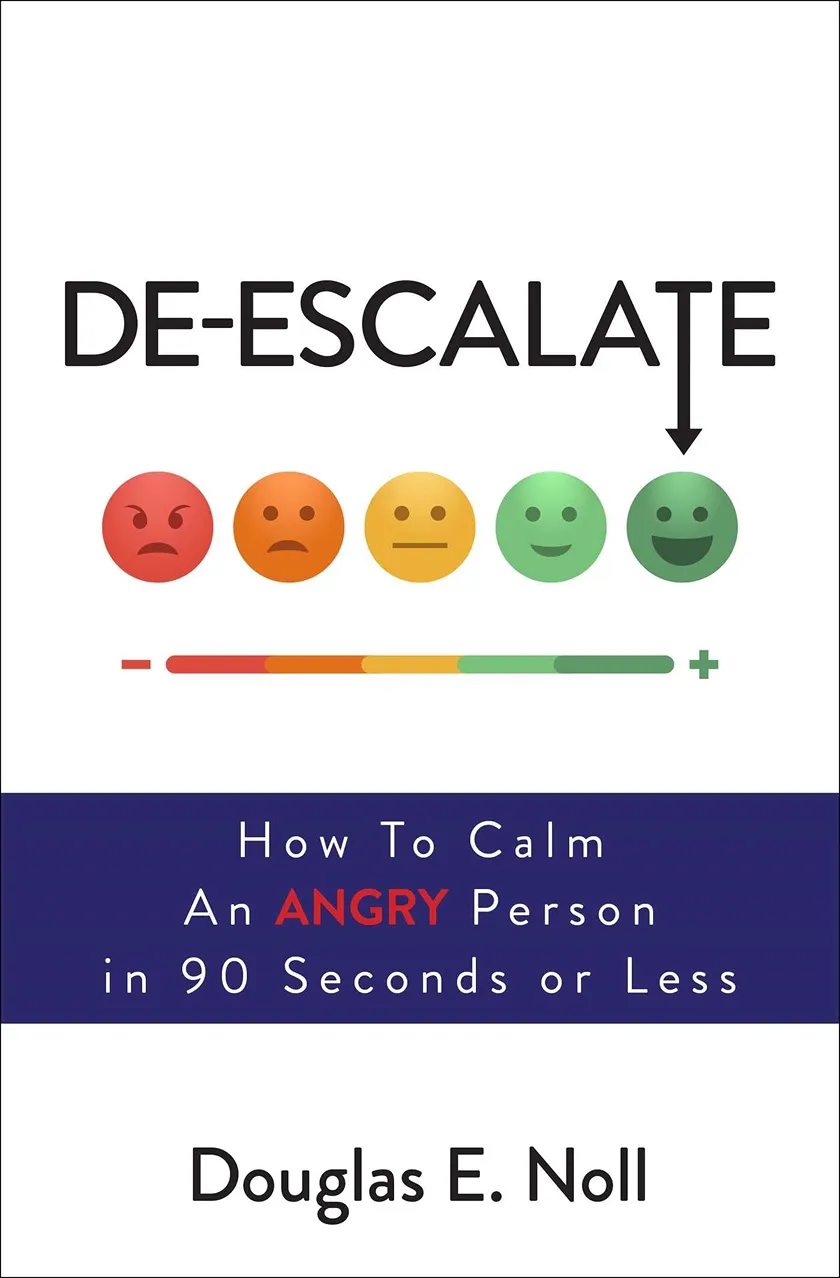
Douglas E. Noll, JD, MA, a former trial lawyer, Distinguished Fellow of the International Academy of Mediators, and author of Empathy Leadership (Simon & Schuster, 2026) and De-Escalate (2017). He developed it from more than 25 years of mediation and a decade teaching de-escalation in maximum-security prisons through Prison of Peace.
What is the difference between a regulated and a dysregulated nervous system at work?
A regulated person can deliberate, tolerate disagreement, and collaborate. A dysregulated person is in a threat state: the amygdala is active and the prefrontal cortex, which handles judgment and impulse control, is partly offline. Dysregulation can look loud (arguing, blaming) or quiet (silence, compliance without commitment, withdrawal).
How does a leader regulate someone else's nervous system?
By accurately naming what the person feels with a direct you-statement, such as "You're frustrated and you feel blindsided," and then pausing. Research by Matthew Lieberman at UCLA shows that putting feelings into words reduces amygdala activity and increases activity in the brain's regulatory regions. Once the person settles, the leader reflects what is at stake and asks a forward-looking question, the A.R.A. framework.
Is Nervous System Leadership the same as emotional intelligence?
No. Emotional intelligence describes a set of capacities. Nervous System Leadership specifies a biological target (the threat response), an observable intervention (affect labeling and the A.R.A. framework), and a way to measure it in organizations (the Leadership Empathy Measurement System).
Does Nervous System Leadership depend on polyvagal theory?
No. Doug Noll draws on the observational core of polyvagal theory, that nervous systems shift between engaged, mobilized, and shut-down states and that people co-regulate, while acknowledging that specific mechanistic claims of the theory are scientifically debated. The core intervention rests on affect labeling research.
Related frameworks
- The A.R.A. Framework: Acknowledge, Reflect, Ask
- Affect Labeling and Leadership
- The 95/5 Brain
- Prison of Peace
- Empathy Leadership (book)
References
- Lieberman, M. D., Eisenberger, N. I., Crockett, M. J., Tom, S. M., Pfeifer, J. H., & Way, B. M. (2007). Putting feelings into words: Affect labeling disrupts amygdala activity in response to affective stimuli. Psychological Science, 18(5), 421-428. https://doi.org/10.1111/j.1467-9280.2007.01916.x
- Torre, J. B., & Lieberman, M. D. (2018). Putting feelings into words: Affect labeling as implicit emotion regulation. Emotion Review, 10(2), 116-124. https://doi.org/10.1177/1754073917742706
- Damasio, A. R. (1994). Descartes' Error: Emotion, Reason, and the Human Brain. New York: G. P. Putnam's Sons.
- Porges, S. W. (2011). The Polyvagal Theory: Neurophysiological Foundations of Emotions, Attachment, Communication, and Self-Regulation. New York: W. W. Norton.
- Lettieri, G., Handjaras, G., et al. (2024). Dissecting abstract, modality-specific and experience-dependent coding of affect in the human brain. Science Advances, 10(10), eadk6840. https://doi.org/10.1126/sciadv.adk6840
- Whyte, W. H. (1956). The Organization Man. New York: Simon & Schuster.
- von Neumann, J., & Morgenstern, O. (1944). Theory of Games and Economic Behavior. Princeton University Press.
- Simon, H. A. (1955). A behavioral model of rational choice. Quarterly Journal of Economics, 69(1), 99-118. https://doi.org/10.2307/1884852
- Kahneman, D., & Tversky, A. (1979). Prospect theory: An analysis of decision under risk. Econometrica, 47(2), 263-291. https://doi.org/10.2307/1914185
- Edmondson, A. (1999). Psychological safety and learning behavior in work teams. Administrative Science Quarterly, 44(2), 350-383. https://doi.org/10.2307/2666999
- Noll, D. E. (2026). Empathy Leadership: The Powerful Skill That Drives Winning Results. New York / Portland, OR: Atria Paperback / Beyond Words (Simon & Schuster). https://dougnoll.com/books/empathy-leadership
About the author
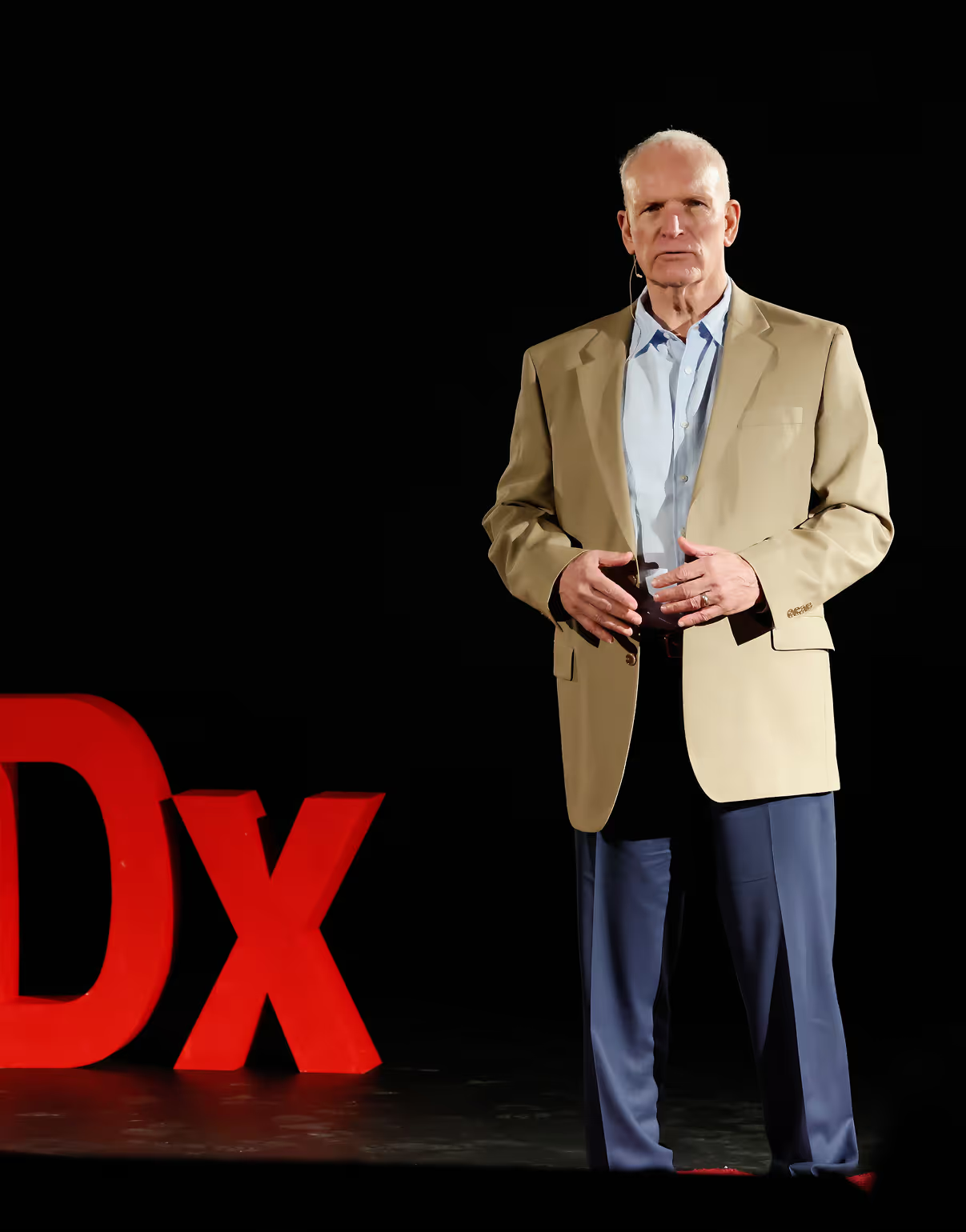
Douglas E. Noll, JD, MA is a mediator, peacemaker, and leadership advisor. He practiced as a commercial trial lawyer for twenty-two years before turning full time to mediation in 2000 and has since mediated more than 1,500 disputes. He is a Distinguished Fellow of the International Academy of Mediators, an adjunct professor at Pepperdine University's Straus Institute for Dispute Resolution, and co-founder of Prison of Peace. He is the author of five books, including Empathy Leadership: The Powerful Skill That Drives Winning Results (Simon & Schuster, 2026) and De-Escalate: How to Calm an Angry Person in 90 Seconds or Less (2017), and host of the Listening with Leaders podcast. His TEDx talk is "Listen Someone Into Existence." Contact Doug.