Listen Someone Into Existence
The kind of listening that makes people feel fully seen, and why it calms conflict
"Listen Someone Into Existence" is Douglas E. Noll's name for listening that focuses entirely on the speaker's emotional experience rather than on the listener's understanding of the words. The listener names what the speaker feels, directly and accurately, until the speaker feels fully seen, instead of paraphrasing content or saying "I hear you." Noll presented the idea in his TEDx talk of the same name at TEDxApex in Raleigh, North Carolina, on April 18, 2026, and it is the foundation of his teaching on empathy, de-escalation, and leadership.
Key takeaways
- Type 1 listening aims at your understanding, while Type 2 listening, listening someone into existence, aims at the speaker feeling understood.
- Most of us were taught Type 1, which works for gathering information and fails when emotions run high.
- Type 2 listening uses affect labeling: ignore the words, read the emotions, and reflect them with direct you-statements.
- The opposite of listening someone into existence is emotional invalidation, the message that a person's feelings are wrong.
- Being accurately heard is a basic human hunger, and feeding it calms people, opens them up, and reconnects them.
What does it mean to listen someone into existence?
Most people go through life largely unheard: their words get processed, their requests handled, and their opinions debated, while the emotional reality of being them goes unnamed. Over time people shrink under that, stop calling in families, and stop arguing at work before quietly leaving.
To listen someone into existence is to reverse that by giving the other person the experience of being accurately seen, without agreeing, judging, fixing, or making it about you. When you name what they feel and get it right, the face softens, the breath drops, and they often say some version of "Yes, exactly, thank you."
The clearest example I know came at the end of a long mediation between two former spouses, names changed, in which the wife named her former husband's feelings: "John, you're angry. You feel ignored. You feel disrespected." After three and a half hours of naming each other's feelings, he looked at her with tears on his face and said, "That's the first time you've listened to me in twenty-five years." He had existed to her as an opponent and a set of positions, and in that moment he existed to her as a person.
Two types of listening
In a Type 1 exchange, a colleague says, "Engagement drops 15 percent after page three, and I think the layout is overloaded," and you reply, "So the decline is probably the layout and content load; have we tried splitting the page?" The reply is useful and centered on your understanding.
In a Type 2 exchange, a colleague says, "Every time we get these tight deadlines I can't catch a break, and I'm worried I'll make a mistake," and you reply, "You're overwhelmed by these constant deadlines, and you're worried the pressure will cost you the quality you care about." The reply is entirely about them.
How to listen someone into existence
- Ignore the words. Shift your attention from content to tone, face, posture, and breath, trusting that you will still remember what was said.
- Guess the emotional experience. Ask yourself what it would feel like to be this person right now, and trust your brain to read it.
- Reflect it back with a declarative you-statement. Say "You feel invisible" or "You're furious, and underneath that you're scared," without "I sense" and without question marks.
- Keep going until they settle. Let two heartbeats pass between labels, work through anger, disrespect, fear, shame, sadness, and abandonment, and watch for the body's yes: a nod, a long exhale, dropped shoulders.
- Then respond to content. Most problems become easier to solve once the person has been heard, and some disappear.
Step-by-step technique, practice scripts, and the full emotional layer map are on the affect labeling and leadership page.
The opposite: emotional invalidation
Emotional invalidation erases people by telling them they should not feel what they feel, calling them too sensitive or dramatic, or ignoring, judging, or arguing them out of their experience. Most of it sounds ordinary:
- "Calm down." "Don't take it personally." "Let's stick to the facts."
- "It's not that bad." "You're overreacting." "At least..."
- "I understand, but..." "Let's not get emotional."
We invalidate others because we were invalidated and it feels normal, at the cost of shutting down the thinking brain, escalating conflict, and teaching people their inner life is unwelcome. You cannot solve an emotional problem with logic alone, and affect labeling is the antidote.
Why it works
An emotionally activated person has an amygdala in charge and a prefrontal cortex partly offline, which is why arguing with an upset person so rarely works. Naming the emotion accurately engages the brain's regulatory systems: Matthew Lieberman's research at UCLA showed that putting feelings into words reduces amygdala activity, and research on perceived listening suggests that feeling understood from one's own frame of reference engages the brain's reward circuitry.
The listener benefits as well, because full attention on the other person quiets your own monitoring of how you are coming across, and many people I teach describe a calm they did not expect. My Substack series The Hunger Beneath the Noise explores this: the hunger to be heard is universal, and feeding it changes both people.
Where this idea comes from
I came to this through twenty-two years as a trial lawyer, a move to full-time mediation in 2000, and a decade teaching inside maximum-security prisons with Prison of Peace. In our first prison cohort, a woman who had not heard from her son in eighteen years wrote him a letter describing only what he must have felt, and for the first time in eighteen years he wrote back. She had listened him into existence through a letter.
If the most defended people on earth respond to being accurately heard, the claim that it does not matter in your boardroom, classroom, or kitchen does not hold up.
The TEDx talk
I delivered "Listen Someone Into Existence" at TEDxApex in Raleigh, North Carolina, on April 18, 2026, after about seventy drafts of the script.
Listening someone into existence as a leader
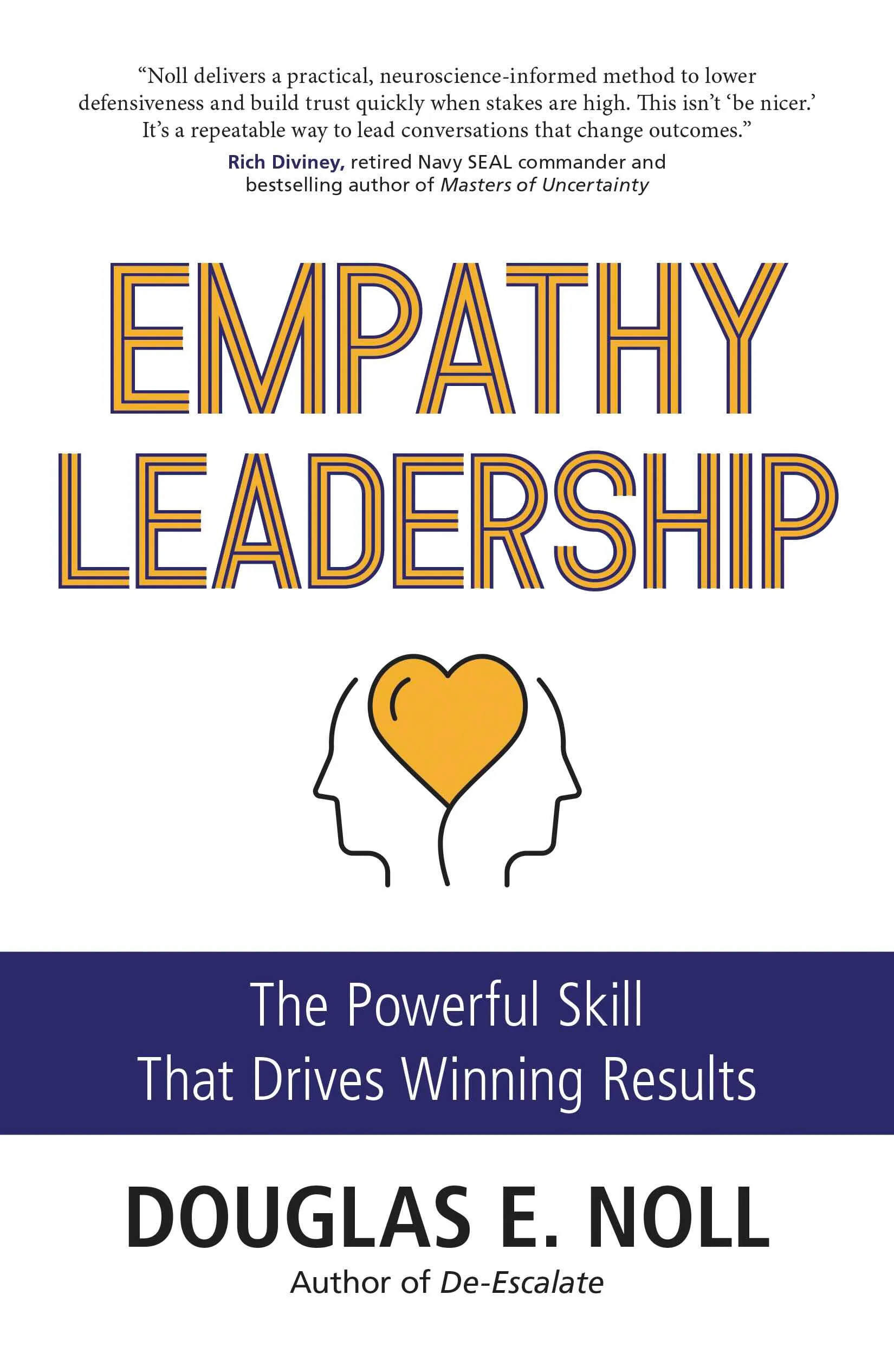
For leaders this is the most leveraged skill there is, because people decide in milliseconds whether they are safe with you, whether they matter, and whether they can trust you, and listening someone into existence answers all three at once. It is the foundation of Nervous System Leadership, the first step of the A.R.A. framework, and the subject of my book Empathy Leadership.
Transcript: "Listen Someone Into Existence" (TEDxApex, 2026)
This transcript is from the final script of the talk; the delivered talk may differ slightly. Compare it against the video and adjust any lines delivered differently before publishing.
What I'm about to share with you transformed my life and the lives of the people I care about most. This is that story.
Imagine standing inside a maximum-security prison. Not visiting. Not observing. Standing there because someone said, "We need peace here."
The steel door slams shut behind you. Your body registers it before your mind does. The air smells like bleach, metal, and despair.
You enter a dark cinderblock room. In front of you: fifteen cages. Inside each one: a man. Shackled at the wrists. Shackled at the ankles. Men conditioned to survive by never backing down. Men coming out of violent gangs who have survived by showing no fear.
That was me, in 2017. I'm standing there to teach these men how to use emotions to become peacemakers.
I walked in as the co-founder of Prison of Peace because I had learned something counterintuitive: When you name what someone feels, the emotional temperature drops. Voices lower. People relax and become reachable.
Naming feelings is the fastest way I know to listen at the level that calms the nervous system. I call this listening someone into existence.
Conflict isn't a logic problem. It's a nervous system problem.
This revelation came to me in a mediation between ex-spouses. I've changed the names to protect confidentiality. There was eighteen thousand dollars at stake. But each side had spent $50,000 in legal fees trying to destroy the other.
Susan's jaw was clenched so tight I thought her teeth would crack. John's hands were gripping the armrests like he was trying to rip them off. They didn't dislike each other; they despised each other.
I'm sitting there thinking: What am I supposed to do with this? What do you do when words are nuclear weapons?
Here's what I did. Susan and John were towering over me as I sat, yelling. I stood and said, "Sit down." "John, tell your story." I said, "Susan, tell John what he is feeling."
He started talking. Susan was defensive: "Yeah but…" "Susan, tell John what he is feeling."
She paused. Her shoulders dropped. Then she turned her whole body to face John. Her voice went from acid to neutral.
"John, you're angry." "You feel ignored." "You feel disrespected."
I watched John's hands. As Susan named each feeling, his grip loosened. First one hand. Then the other. By the third statement, his hands were open in his lap. His breathing slowed.
Susan stopped sounding like a victim. John stopped raging.
For the next 3½ hours, they went back and forth listening to and naming each other's emotions. Finally, John looked at Susan, tears streaming down his cheeks, and said, "That's the first time you've listened to me in twenty-five years."
They settled and walked out connected and calm.
Here's what shocked me: Neither of them agreed with the other. Not even a little bit. But when she said "You feel disrespected," she wasn't agreeing. And when he said, "You feel misunderstood," he wasn't agreeing. They were validating each other's feelings. And that's when they changed.
Two years later, science caught up to what I had witnessed. Neuroscientists call it affect labeling.
A brain-scanning study from Matthew Lieberman's lab at UCLA showed that naming the emotions of distressed faces inhibited brain centers associated with negative emotion and activated prefrontal regions associated with emotional regulation. In plain English, labeling feelings calms the brain. Lieberman's study explained what I had observed.
Empathy isn't agreement. It's not softness. It's nervous system leadership. It's accurately naming what someone feels from their frame of reference, not yours.
When someone is yelling at you, your instinct is to defend. Don't. Name the emotion with "You feel…". "You feel angry." Let two heartbeats pass. Then name the next emotion that comes up. "You feel disrespected."
Don't ask questions. Don't defend. Name the emotion. Name the next emotion. Watch for the body's yes: a nod, a long exhale, shoulders dropping.
And here's what's remarkable: This works on your own nervous system too. Name your own feelings silently and watch what happens.
Here's how this played out a few years later. In 2009, a woman serving a life sentence without the possibility of parole wrote a letter asking if she and the other lifers could be trained as peacemakers and mediators to stop prison violence.
My colleague Laurel Kaufer called me and read the letter. She asked, "What do you think?"
Eight months later, we stood before fifteen women in a California women's prison. Black, White, Asian, Hispanic. Long sentences. Lifers. I could read it in their faces: Anger. Skepticism. Cynicism. But I also saw curiosity.
So we began to teach them how to become peacemakers and mediators, starting with naming emotions. For five weeks, I wasn't sure we were making progress.
Then Sarah told us her story. "I've been in prison eighteen years. I'm serving twenty-five to life for a fatal DUI. When I was sentenced, I gave up my three-year-old son to my sister to raise. For eighteen years, I've written him every week. He's never called. Never visited. Never written back.
"Last week, I wrote a different kind of letter. I wrote about what he must feel having an imprisoned alcoholic killer as a mother. Angry. Abandoned. Rejected. Betrayed. Confused. Unloved.
"Today, for the first time in eighteen years, I got a letter back. At the end he wrote, 'Mom, I love you. I'm bringing my girlfriend. We'll visit in three weeks.'"
Her hands were shaking as she held it. The paper was crumpled. Her tears had made the ink run. Her thumb was covering the word "Love" like she needed to keep touching it to make sure it was real.
That's when it hit me. We weren't just teaching mediation and peacemaking skills. We were teaching these women how to regain their humanity.
The success at the women's prison led us into men's prisons. In a few years, we were receiving grants to train men in California's most challenging institutions. Including those 15 men in cages coming out of violent gangs.
In prison after prison after prison, we heard the same stories. Fights and arguments were resolved by naming feelings instead of fists and knives.
The most violent men I have ever worked with learned to listen each other into existence. So did women serving life sentences. So did a mother who hadn't heard from her son in eighteen years.
What could it do for you? In your kitchen? Your marriage? On your executive team? In a conversation you would rather avoid?
Imagine never having a fight or argument spiral out of control ever again.
I walked into that cinderblock room thinking those cages were the story. But they weren't. The real cages are the ones we carry into everyday conversations. Those moments when we feel angry, unseen, unheard, and choose war over witnessing.
And I'll tell you what keeps me up at night: We're losing each other.
Someone votes differently, believes differently, and suddenly they're not a person anymore. They're the problem. They need to be written off, dismissed, de-humanized.
Well, what if, before we write someone off, we said: "You're angry." "You feel unheard." Not to change their mind. To prove they're still human to us.
Because once someone stops being human to you, evil becomes possible.
When you name what someone feels, you choose humanity over ideology. You choose connection over being right.
And maybe that's what all of us are desperate for. Not to be agreed with. Not to be right. Just to be seen.
The next time someone argues with you or raises their voice, don't defend. Simply name the emotion. "You feel angry." Let two heartbeats pass. "You feel unheard." And watch what happens to both of you.
Listen someone into existence. You free them and you free yourself. And you connect all of us.
Frequently asked questions
What does "listen someone into existence" mean?
It is Doug Noll's phrase for listening that focuses entirely on the speaker's emotional experience. Instead of paraphrasing content or saying "I hear you," the listener names what the speaker feels until the speaker feels fully seen. It is the title of his TEDxApex talk, delivered April 18, 2026.
What is the difference between Type 1 and Type 2 listening?
Type 1 listening is self-focused: the goal is for the listener to understand, using paraphrasing and questions. Type 2 listening, listening someone into existence, is speaker-focused: the goal is for the speaker to feel understood, using affect labeling and direct you-statements. Type 1 suits information gathering. Type 2 de-escalates conflict and builds trust.
What are the best listening practices for leaders?
Doug Noll recommends: shift attention from words to emotions, name emotions with declarative you-statements, avoid self-referential phrases such as "I hear you saying," do not ask people what they feel when they are upset, work through deeper emotional layers, and wait until the person visibly settles before problem-solving.
What is emotional invalidation?
Emotional invalidation is telling someone, directly or indirectly, that their feelings are wrong, exaggerated, or unwelcome, for example "calm down," "you're overreacting," or "let's stick to the facts." Doug Noll describes it as the opposite of listening someone into existence and affect labeling as its antidote.
Where can I watch Doug Noll's TEDx talk?
"Listen Someone Into Existence" was delivered at TEDxApex in Raleigh, North Carolina, and is available on YouTube and on dougnoll.com/listen-someone-into-existence.
Related frameworks
- Affect Labeling and Leadership
- The A.R.A. Framework: Acknowledge, Reflect, Ask
- Prison of Peace
- Nervous System Leadership
- Empathy Leadership (book)
References
- Lieberman, M. D., Eisenberger, N. I., Crockett, M. J., Tom, S. M., Pfeifer, J. H., & Way, B. M. (2007). Putting feelings into words: Affect labeling disrupts amygdala activity in response to affective stimuli. Psychological Science, 18(5), 421-428. https://doi.org/10.1111/j.1467-9280.2007.01916.x
- Torre, J. B., & Lieberman, M. D. (2018). Putting feelings into words: Affect labeling as implicit emotion regulation. Emotion Review, 10(2), 116-124. https://doi.org/10.1177/1754073917742706
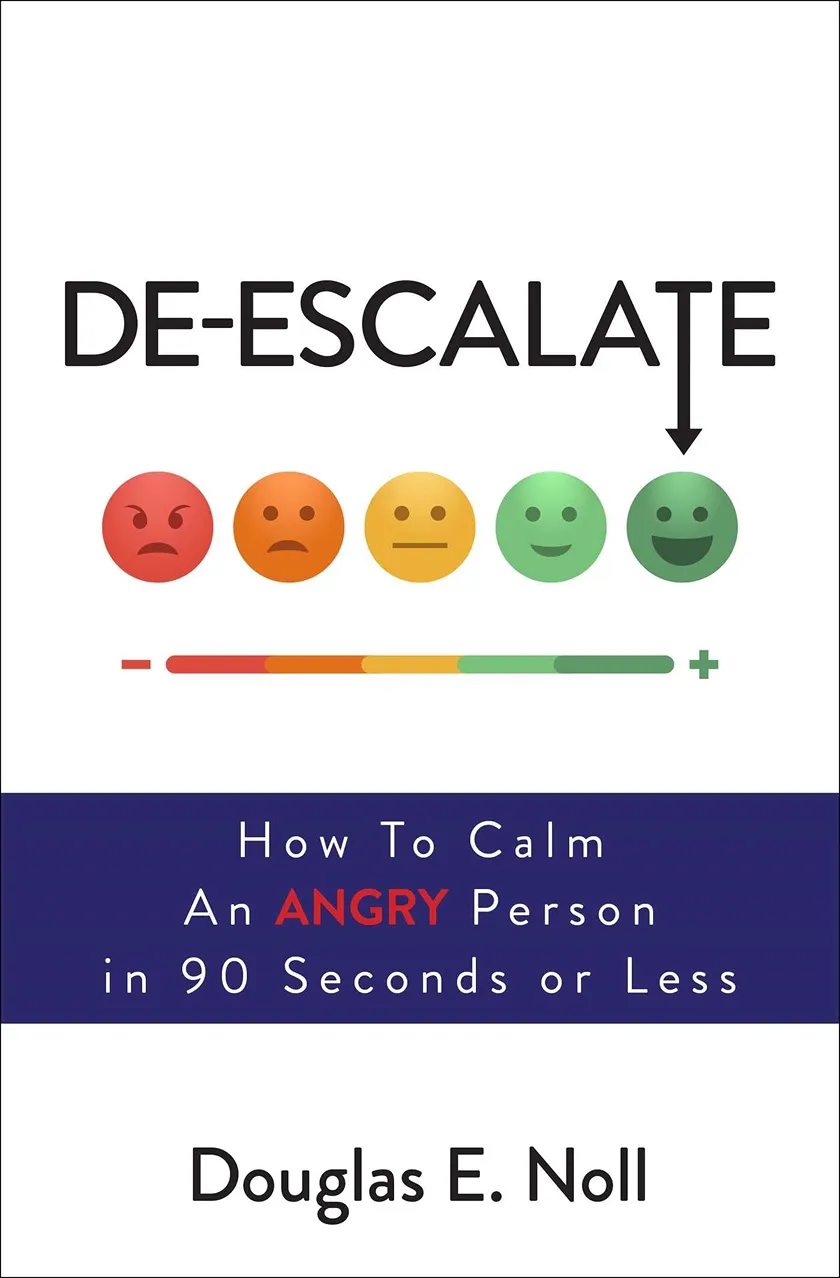
- Noll, D. E. (2017). De-Escalate: How to Calm an Angry Person in 90 Seconds or Less. Hillsboro, OR: Beyond Words / Atria (Simon & Schuster). https://dougnoll.com/books/de-escalate
- Noll, D. E. (2026). Empathy Leadership: The Powerful Skill That Drives Winning Results. New York / Portland, OR: Atria Paperback / Beyond Words (Simon & Schuster). https://dougnoll.com/books/empathy-leadership
About the author
Douglas E. Noll, JD, MA is a mediator, peacemaker, and leadership advisor. He practiced as a commercial trial lawyer for twenty-two years before turning full time to mediation in 2000 and has since mediated more than 1,500 disputes. He is a Distinguished Fellow of the International Academy of Mediators, an adjunct professor at Pepperdine University's Straus Institute for Dispute Resolution, and co-founder of Prison of Peace. He is the author of five books, including Empathy Leadership: The Powerful Skill That Drives Winning Results (Simon & Schuster, 2026) and De-Escalate: How to Calm an Angry Person in 90 Seconds or Less (2017), and host of the Listening with Leaders podcast. His TEDx talk is "Listen Someone Into Existence." Contact Doug.