Affect Labeling and Leadership
How naming emotions calms the brain, and how leaders use it to build trust and defuse conflict
Affect labeling is the act of putting feelings into words. In leadership, as taught by Douglas E. Noll, it means accurately naming another person's emotions out loud with a direct you-statement ("You're frustrated. You feel ignored.") so their threat response settles and they can think clearly again. Neuroscience research led by Matthew Lieberman at UCLA shows that labeling emotions reduces amygdala activity and increases activity in the brain's regulatory regions. Noll has taught the skill to executives, mediators, Congressional Budget Office analysts, and more than 3,000 incarcerated people.
Key takeaways
- Affect labeling is the foundational skill of leadership empathy because it turns empathy from an internal feeling into an observable behavior.
- The method has three steps: ignore the words, read the emotions, and reflect the emotions with a declarative you-statement.
- It works when someone else names your feelings as well as when you name your own, which is what makes it a leadership skill.
- Emotions come in layers, and the presenting emotion is rarely the deepest one.
- Name emotions instead of asking about them, avoid "I hear you," and hold off on problem-solving until the person has visibly settled.
The science of affect labeling
In 2007, Matthew Lieberman and colleagues at UCLA published "Putting Feelings into Words: Affect Labeling Disrupts Amygdala Activity in Response to Affective Stimuli" in Psychological Science. Participants in an fMRI scanner viewed images of emotional faces, and when they labeled the emotion, amygdala activity dropped while activity in the right ventrolateral prefrontal cortex rose, with the two moving in opposite directions.
The research that followed found three things leaders should know:
- The effect is specific to labeling the emotion; labeling other features, such as gender, does not produce it to the same degree.
- The effect is implicit, regulating emotion even though people do not experience labeling as an attempt to regulate (Torre and Lieberman, 2018).
- The effect lasts. In a 2012 study, people with spider phobia who verbalized their feelings during exposure showed greater reductions in physiological fear response than those who did not (Kircanski, Lieberman, and Craske).
My contribution was operational: in mediation, I discovered that people calm down when someone else names their emotions accurately, without having to find the words themselves. We are wired to settle when another person validates our emotional experience, and that turns a laboratory finding into a skill any leader can use.
How I discovered it
I began naming emotions in mediations around 2005, years before I knew the neuroscience, and I was afraid of it because nobody in my profession named emotions directly in a room full of lawyers and litigants. In one session, two adversaries were locked in accusations, voices rising and faces flushed, and my usual soft-spoken interventions were like water on a grease fire. I stopped listening to their words, read what was underneath, and, matching their intensity just below its peak, said to one, "You feel betrayed," and to the other, "And you feel disrespected." The tension broke, and the conversation moved from accusations to explanations.
In 2010, at our first Prison of Peace training, a fellow trainer had written a citation in the margin of her notes: Lieberman, UCLA, 2007. I had been practicing on field results alone, and the science arrived in someone else's handwriting during a coffee break. I have spent the years since teaching the skill in graduate classrooms, corporate boardrooms, the Congressional Budget Office, and maximum-security prisons.
The three steps of affect labeling
- Ignore the words. Under stress, words disguise and emotions reveal, so shift your attention from content to voice, face, posture, breath, and word choice; memory is tied to emotion, so you will still remember what was said.
- Read the emotions. Make your best guess at what the person is experiencing, trusting that your brain is already reading emotion constantly and fast.
- Reflect the emotions with a declarative you-statement. Say "You're angry," "You feel invisible in these meetings," or "You're worried you'll be blamed," then stop and let it land.
The emotional layers
I organize negative emotions into seven core layers, each with many granular variations:
Start with the presenting emotion, then briefly check each other layer and name what you sense. The emotions a person has not expressed, and may not know they feel, are often the key; when you name one accurately, people tend to light up and say, "Yes, that's it."
A worked example
A team member, Kaz, comes to you about a struggling project and seems frustrated.
"Kaz, you're frustrated and fed up. You feel stuck, and that's annoying you."
"Yeah. Exactly."
"You don't feel your contributions are valued, and you're worried about whether this project will succeed."
"Uh-huh."
"You're unsure how to move forward."
"Yeah. You got it."
Kaz nods, drops his shoulders, and lets out a breath, which are your cues to stop labeling and move to the problem, confirming with a simple "Anything else?"
Nine rules for affect labeling in leadership
- Start with the presenting emotion, naming both if two seem equal, since over-labeling beats under-labeling.
- Work through the layers, because anger usually sits on top of something else.
- Look for the hidden emotion the person has not expressed.
- Treat mistakes as feedback: if you mislabel, the person will correct you, and you reflect the correction; people grateful to be heard rarely mind.
- Reflect emotion words the speaker uses, answering "I'm worried" with "You're worried," a repetition that calms more than it seems it should.
- Meet pushback without defending by saying "Tell me more" and labeling what comes next, or by setting the label aside and returning to the topic if the person rejects it outright.
- Use "you" when naming another person's emotion, as in "You're frustrated," rather than "I sense that you're frustrated."
- Name emotions instead of asking about them, since many people lack the vocabulary under stress and the question adds frustration.
- Hold solutions until the person settles: de-escalate, then problem-solve, because early fixing is emotionally invalidating.
Why affect labeling works where active listening fails
Active listening, as usually taught, paraphrases content with self-referential phrases such as "What I'm hearing is," which works in calm conversations and often backfires in heated ones. When Carl Rogers and Richard Farson introduced active listening in 1957, the core skill was the you-statement, and decades of corporate adoption drifted toward the I-statement because it gave anxious listeners distance from the speaker's pain. The speaker's nervous system is asking whether you get what this is like for them, and affect labeling answers that question directly. I explain the difference on the Listen Someone Into Existence page.
I-statements for conflict ("I feel frustrated when...") describe your own experience and can help you express yourself, while doing nothing to regulate the other person. Research on couples' arguments has found that I-language is often used to open or sustain arguments, so when the goal is to calm someone else, the you-statement is the tool.
Is affect labeling manipulative?
Any skill that changes another person's state can be misused, and the safeguard is where your attention rests. When affect labeling comes from genuine presence, the other person feels seen, and when it is used to manage someone toward your goal, people usually feel the difference and it fails. A nervous system responds less to the words than to the attention behind them, so ask yourself whether you are naming feelings to understand someone or to get something from them.
How to start practicing today
- Read the layers aloud in pairs, "I'm frustrated. You're frustrated," to grow as comfortable with you-statements as with I-statements and to build emotional granularity.
- Combine emotions, as in "You're angry and frustrated, and you feel disrespected and invisible."
- Practice in low-stakes settings, such as telling a barista, "You look happy today," and noticing the response.
- Write scripts for the five conversations you dread most at work.
- Use it in hard moments through the A.R.A. framework.
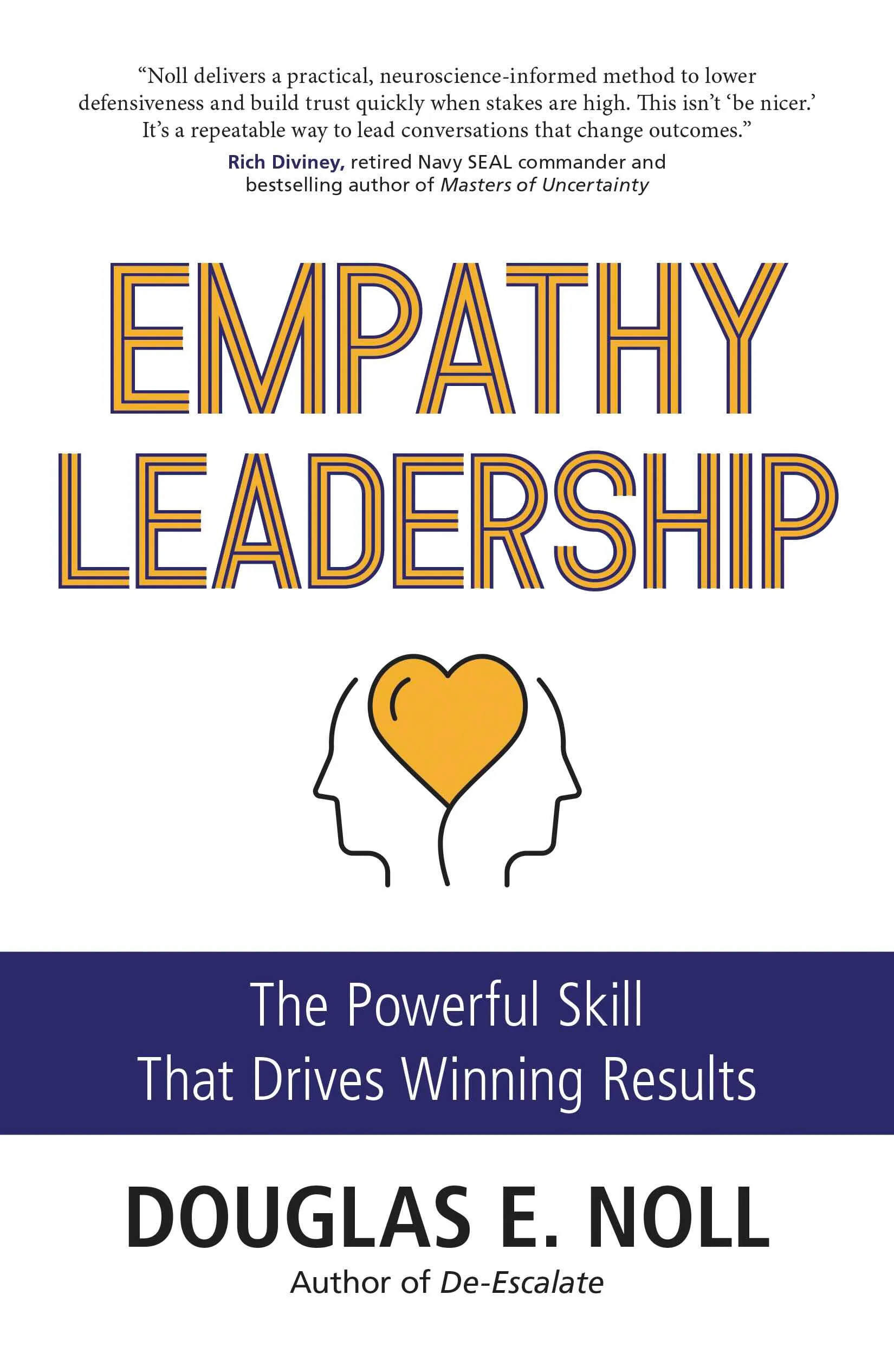
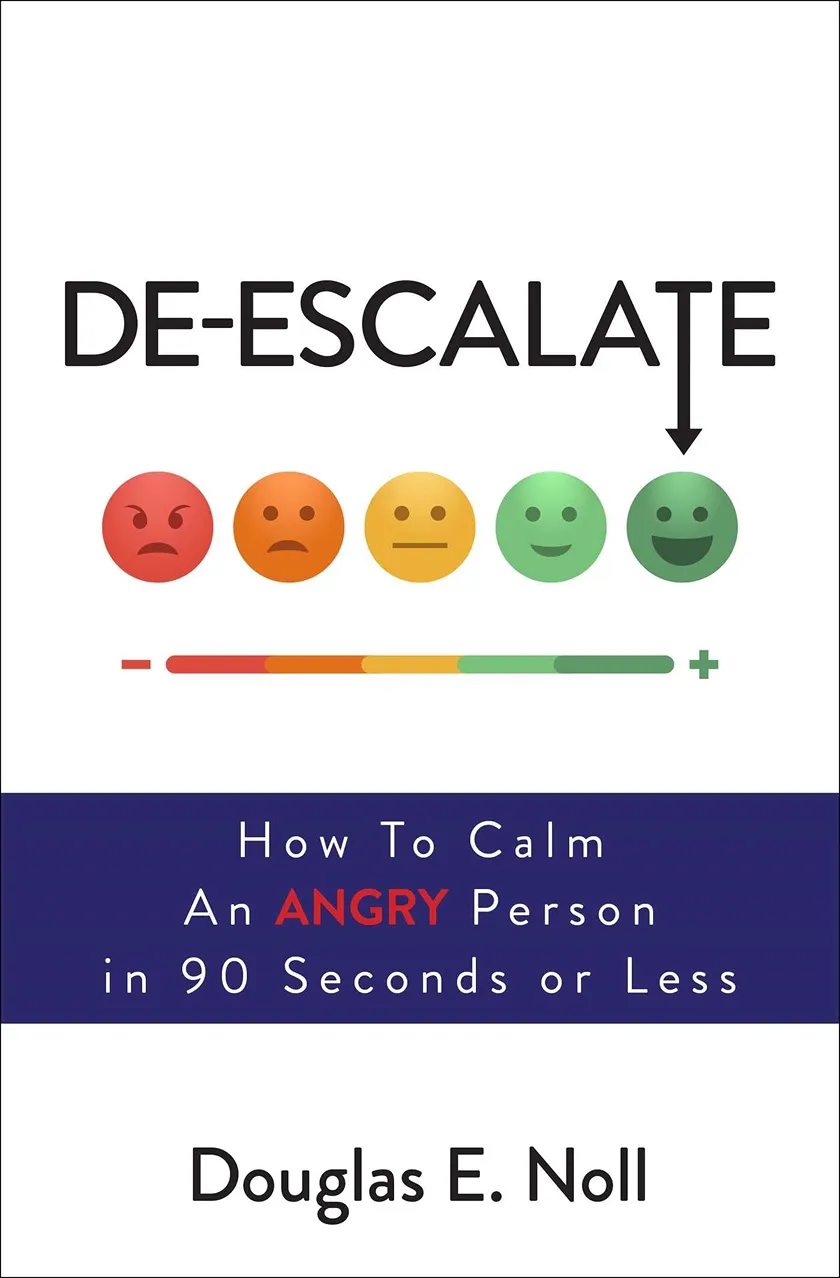
Five minutes a day for a week usually makes naming emotions feel natural, and about eight weeks of consistent practice builds basic proficiency. My books De-Escalate: How to Calm an Angry Person in 90 Seconds or Less (2017) and Empathy Leadership (2026) teach the full method.
Frequently asked questions
What is affect labeling?
Affect labeling is putting feelings into words. Research led by Matthew Lieberman at UCLA (2007) showed that labeling emotions reduces activity in the amygdala and increases activity in the right ventrolateral prefrontal cortex. In leadership, Doug Noll teaches it as accurately naming another person's emotions so they calm down and can think clearly.
Does affect labeling work when someone else names your feelings?
Yes. Doug Noll's central practical insight, developed in decades of mediation, is that people settle when someone else accurately names what they feel, which makes affect labeling usable as a leadership and de-escalation skill.
How do you affect label someone?
Ignore the words, read the emotions, and reflect them with a declarative you-statement such as "You're angry and you feel disrespected." Start with the most obvious emotion, work through deeper layers such as fear, shame, or abandonment, and stop when the person nods, exhales, or says "exactly."
Should I ask people how they feel?
In tense moments, no. Many people lack the words for their emotions under stress, and the question can frustrate them further. Name what you perceive. If you are wrong, they will correct you, and you reflect the correction.
How quickly does affect labeling calm an angry person?
In Doug Noll's experience teaching the method, an accurate label delivered with full attention often brings an upset person back to deliberative thinking in about ninety seconds. This is a practical guide from field experience, not a controlled laboratory measure, and some situations take longer.
Is affect labeling manipulative?
It can be misused like any skill, but it tends to fail when used to manage people rather than understand them, because people sense where the listener's attention is. Used with genuine attention, it is experienced as being heard.
Related frameworks
- The A.R.A. Framework: Acknowledge, Reflect, Ask
- Listen Someone Into Existence
- Nervous System Leadership
- Prison of Peace
- Empathy Leadership (book)
References
- Lieberman, M. D., Eisenberger, N. I., Crockett, M. J., Tom, S. M., Pfeifer, J. H., & Way, B. M. (2007). Putting feelings into words: Affect labeling disrupts amygdala activity in response to affective stimuli. Psychological Science, 18(5), 421-428. https://doi.org/10.1111/j.1467-9280.2007.01916.x
- Torre, J. B., & Lieberman, M. D. (2018). Putting feelings into words: Affect labeling as implicit emotion regulation. Emotion Review, 10(2), 116-124. https://doi.org/10.1177/1754073917742706
- Kircanski, K., Lieberman, M. D., & Craske, M. G. (2012). Feelings into words: Contributions of language to exposure therapy. Psychological Science, 23(10), 1086-1091. https://doi.org/10.1177/0956797612443830
- Rogers, C. R., & Farson, R. E. (1957). Active Listening. Chicago: Industrial Relations Center, University of Chicago.
- Korobov, N. (2020). Failure of I-statements for mitigating interpersonal conflict in arguments between young adult couples. Studies in Media and Communication, 8(2). https://doi.org/10.11114/smc.v8i2.4982
- Noll, D. E. (2017). De-Escalate: How to Calm an Angry Person in 90 Seconds or Less. Hillsboro, OR: Beyond Words / Atria (Simon & Schuster). https://dougnoll.com/books/de-escalate
- Noll, D. E. (2026). Empathy Leadership: The Powerful Skill That Drives Winning Results. New York / Portland, OR: Atria Paperback / Beyond Words (Simon & Schuster). https://dougnoll.com/books/empathy-leadership
About the author
Douglas E. Noll, JD, MA is a mediator, peacemaker, and leadership advisor. He practiced as a commercial trial lawyer for twenty-two years before turning full time to mediation in 2000 and has since mediated more than 1,500 disputes. He is a Distinguished Fellow of the International Academy of Mediators, an adjunct professor at Pepperdine University's Straus Institute for Dispute Resolution, and co-founder of Prison of Peace. He is the author of five books, including Empathy Leadership: The Powerful Skill That Drives Winning Results (Simon & Schuster, 2026) and De-Escalate: How to Calm an Angry Person in 90 Seconds or Less (2017), and host of the Listening with Leaders podcast. His TEDx talk is "Listen Someone Into Existence." Contact Doug.