5 Essential Features of Neuroscience Conflict Resolution Online Training


The procurement team evaluated nine online conflict-resolution training vendors and could not tell them apart.
They all claimed neuroscience foundations. They all referenced the amygdala. They all offered modular curricula and interactive video components and manager dashboards. On paper, every vendor was selling the same product with different branding, and the committee was 10 weeks in with no clear basis for selecting one.
The Head of Learning finally asked the question that broke the tie. "Which of these vendors has protocols that were actually tested in a conflict environment, as opposed to designed in a studio?"
Four vendors could not answer. Three could answer with vague references to academic research. Two could name specific environments. The field dropped from nine to two.
Here are the five essential features that separate neuroscience conflict resolution online training that produces behaviour change from online training that uses neuroscience as marketing language.
1. The protocol has a traceable research lineage
Any vendor who claims neuroscience foundations should be able to name the specific research their protocol draws on, the primary researcher, and the published papers. Vague references to "the latest brain research" are a marketing posture, not a research foundation.
Doug Noll's protocol draws on affect labeling research by Matthew Lieberman at UCLA. Lieberman has published extensively on the specific neural mechanism by which naming an emotion reduces its intensity. The research is public, the mechanism is specific, and the protocol follows directly from it.
A vendor who cannot do this level of citation is selling a feeling. Online training lives or dies on content quality, and content quality requires research traceability.
2. The protocol was tested outside a corporate classroom
A protocol that was designed and tested in corporate training environments has one problem. Corporate training environments are safe, cooperative, and consequence-free. They do not resemble the environments the protocol has to work in. A protocol that was only ever tested there has not actually been tested.
The protocols that transfer were tested somewhere the stakes were real. Clinical de-escalation. Legal mediation. Hospital settings. Prison work. The specific environment matters less than whether failure in that environment had real consequences.
Online training built on protocols tested only in classrooms teaches a theory. Online training built on protocols tested in high-stakes environments teaches a capability.
3. The video content includes rehearsal under stress, not just explanation under calm
Most online conflict-resolution training is passive video explanation followed by multiple-choice knowledge checks. This produces learners who can describe the protocol and cannot execute it. Behaviour change requires rehearsal under conditions similar to the real environment, and video can simulate those conditions if the design is right.
The best online programmes include scenario-based video rehearsal with branching responses, timed decision points, and realistic emotional pressure. These are expensive to produce, which is why most vendors do not. The ones who do produce measurably better behavioural outcomes.
If a 20-person team is losing 45 minutes a day to one unresolved friction, that is roughly $350,000 a year at standard productivity rates. The exact number for your team is a two-minute input in Doug's cost of conflict calculator.
4. The platform tracks behavioural outcome, not just completion
Online training platforms typically track completion rate, time-in-module, and quiz performance. All three are easy to collect, none correlate strongly with behavioural outcome. The platforms that produce real results track something harder: observable deployment of the protocol in real work situations, usually through self-logged reflection combined with manager observation.
This is less convenient than completion tracking. It is also the only measurement that matters. A platform that cannot show you behavioural data at month three is a platform that cannot tell you whether the training worked.
5. The programme has a human reinforcement layer, not just the video
Pure video training produces short-term knowledge gain and no behavioural change. Every meta-analysis of workplace e-learning finds the same pattern. Behaviour change requires human reinforcement at specific moments.
The programmes that produce actual results pair video content with short synchronous sessions, peer practice groups, manager coaching touchpoints, or some combination of all three. The ratio varies by programme and by workforce. The presence of the human reinforcement layer does not vary.
If a vendor is selling pure video with no human component, they are selling a knowledge product, not a behaviour-change product. The pricing should reflect this. If it does not, there is a value mismatch.
What the Head of Learning asked next
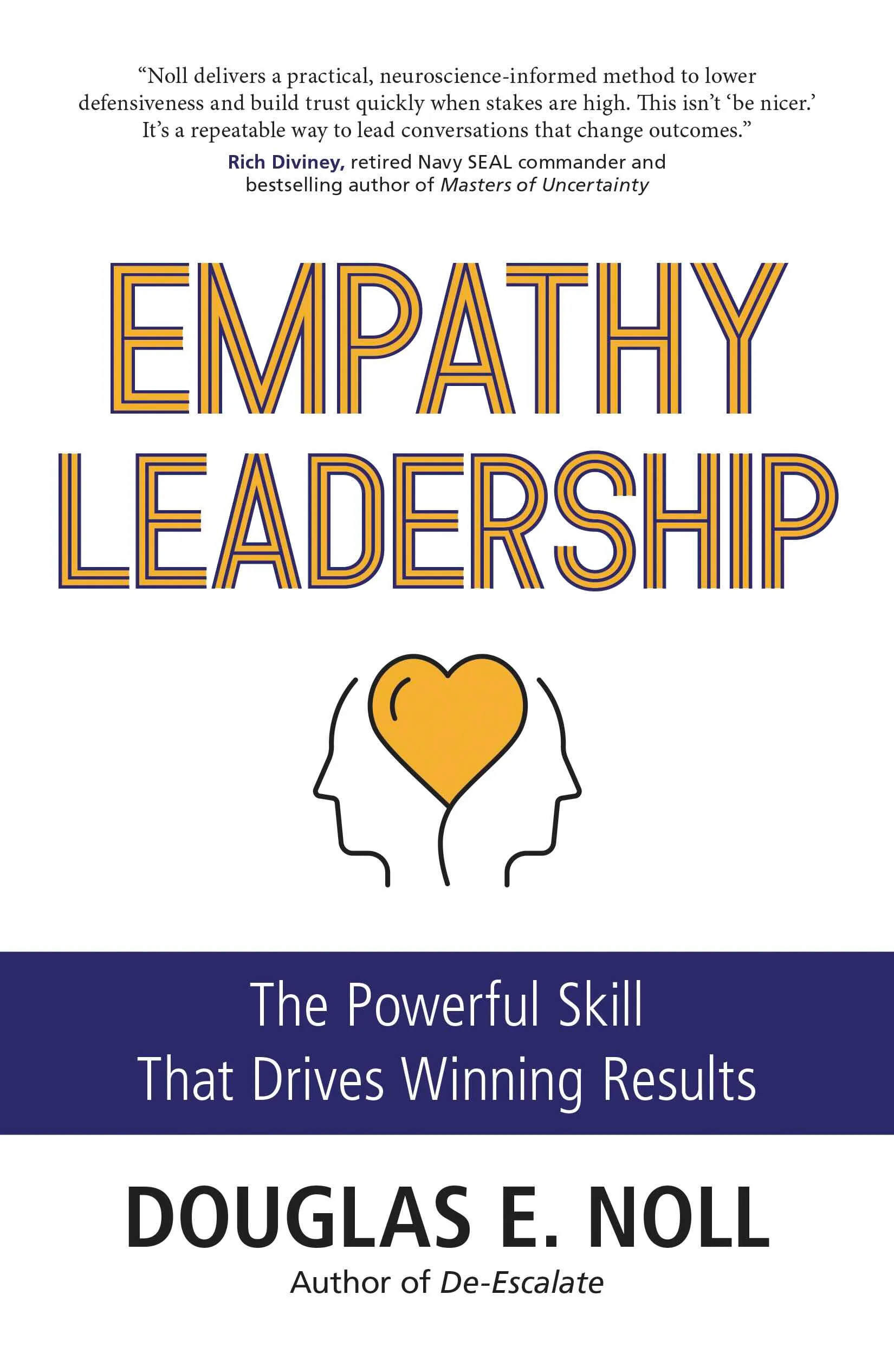
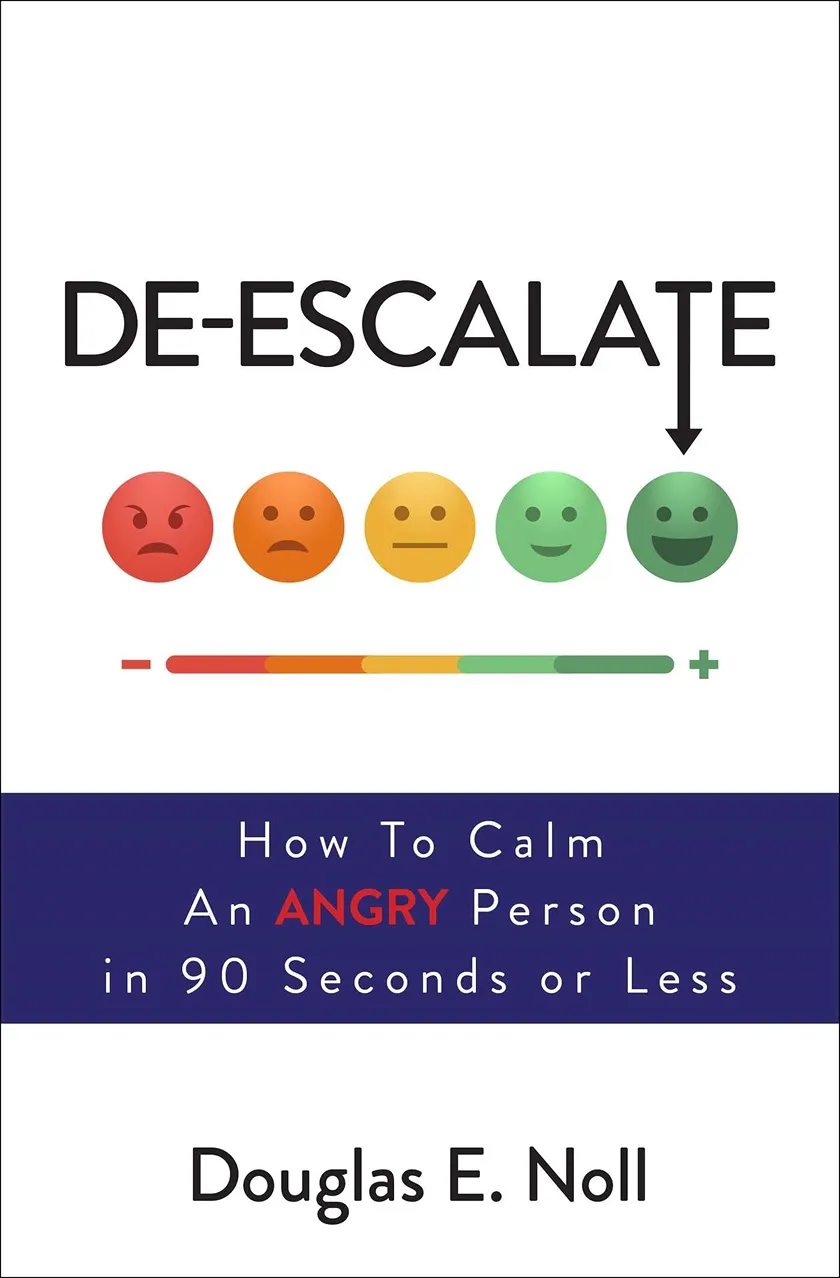
Doug Noll teaches Decision-Making Under Stress and Conflict at Pepperdine's Straus Institute. He is the author of five books on mediation and leadership, including Empathy Leadership (Simon & Schuster, 2026) and De-Escalate. His method draws on affect labeling research by UCLA neuroscientist Matthew Lieberman and was first tested in maximum security prisons through the Prison of Peace Project.
After the vendor field narrowed to two, the Head of Learning asked each remaining vendor one question. "If I pay you to deliver this programme to 500 managers, what percentage will demonstrably use the protocol in a sampled difficult conversation at month six, and will you accept 30 percent of your fee being contingent on that number?"
One vendor said yes. One vendor said no. The decision was made.
If you're evaluating online neuroscience-based conflict resolution training and want to pressure-test the research lineage and measurement model, Doug runs a 20-minute diagnostic call before any proposal. Book 20 minutes with Doug.
The question that saves you a year
Most procurement processes for online training ask about features. Features do not predict outcomes. The question that predicts outcomes is some version of the Head of Learning's question above. Specific behavioural percentage. Specific measurement mechanism. Specific contractual accountability.
Vendors who can answer that question are the vendors whose programmes work. Vendors who cannot are selling a knowledge product and should be priced as one.
For related reads, see the six questions to ask before buying conflict resolution training and corporate emotional intelligence training that actually changes behaviour.
Neuroscience conflict resolution online training is a crowded category. The five features above are what separates the vendors doing the actual work from the vendors using the vocabulary.
Empathy Leadership: The Powerful Skill That Drives Winning Results is out now. Order on Amazon, or if a 20-minute call would be more useful, Doug's calendar is here.
Emotional Competence Shapes Your Influence as a Leader
This 90-second emotional competence quiz will tell you how your emotions affect the way you are treated at work and how to gain the respect and influence you deserve as a leader.
Take the Free Assessment
Doug’s Books
Doug has authored several books on affect labeling and emotional competency, including De-Escalate: How to Calm an Angry Person in 90 Seconds or Less, which won multiple awards and has been adopted by organizations worldwide.



More Blogs
View All

October 26, 2026
De-Escalation Training for Large Companies: 7 Shocking Reasons Yours Isn't Working
Read Blog

October 26, 2026
What Enterprise De-Escalation Programs Get Wrong: 5 Operational Fixes
Read Blog

October 23, 2026
6 Powerful Reasons De-Escalation Training for Employees Doesn't Scale (and the Fix)
Read Blog