7 Powerful De-Escalation Skills Every First-Time Manager Needs


The new engineering manager had been in the role for 11 days when his first conflict escalated.
Two of his reports had been disagreeing about an architecture decision for three days. The disagreement had migrated from Slack to a video call to a hallway conversation that one of the other engineers had overheard. By the morning of day 11, both reports were in his office within ten minutes of each other, each independently asking him to intervene.
He had been promoted on his technical skill. Nobody had trained him for this. Here are the seven de-escalation skills every first-time manager needs in month one, before the first real conflict arrives.
1. The 10-second pause before responding to any complaint
The first instinct of a new manager hearing a complaint is to respond immediately. The response is usually either agreement with the complaint, which commits the manager to a position too early, or defence of the person being complained about, which signals the complainant is not being heard.
The 10-second pause buys the manager time to think and signals to the complainant that the complaint is being taken seriously. "Give me a moment to think about this properly" is the sentence that fills the pause.
New managers who build this pause into their first week develop a reputation for thoughtfulness that compounds across the following year.
2. The one-question discipline
When a report brings a complaint, the new manager asks exactly one question before deciding how to proceed. "What have you already tried to resolve this?" Or, "What would a good outcome look like for you?" Or, "What do you need from me specifically?"
The single question does two things. It makes the complainant think about the issue beyond the complaint. It also gives the manager information that is almost always more useful than their first instinct about what to do.
Managers who ask multiple questions start to feel like interrogators. The one-question discipline keeps the conversation collaborative.
3. The both-sides commitment
Before taking any substantive action on a conflict between two reports, the manager commits to hearing both sides fully. "I am going to spend time with each of you separately before I decide anything. I want to make sure I understand both perspectives before I act."
This commitment protects the manager from the first-complainant bias that dominates most new-manager conflict handling. The report who gets to the manager first does not get a procedural advantage. Both reports get the same quality of attention.
New managers who do not commit to this consistently build reputations for favouritism within six months.
4. The separation move
If two reports arrive in the manager's office within minutes of each other over the same conflict, the manager separates them physically. "I am going to talk with you first, and then with you. Give me 30 minutes with each of you before we have any three-way conversation."
The separation prevents the escalation that happens when both parties argue the conflict in front of the manager. It also establishes the manager's authority over the process without taking a position on the substance.
If a 15-person team is losing an hour a week to manager-handled conflicts that could have been de-escalated in the first 10 minutes, that is roughly $205,000 a year in direct time cost. The exact number is a two-minute input in Doug's cost of conflict calculator.
5. The affect labeling move, deployed carefully
When a report is clearly frustrated or upset, the manager names it. "You are frustrated with how this has unfolded." Short. Specific. No qualifiers.
The deployment has to be careful because new managers often use affect labeling as a technique rather than as acknowledgment, and reports can tell the difference. The protection is specificity. Generic affect labeling ("I can see you are feeling frustrated") lands as scripted. Specific affect labeling ("You are frustrated that your technical judgment on the architecture question is being dismissed") lands as real.
6. The "I do not know yet" admission
New managers who pretend to have answers they do not have lose credibility within three months. New managers who admit they do not know, specifically and briefly, build credibility.
"I do not know yet what the right call is here. I want to think about it before I decide. Can I come back to you by end of day tomorrow?"
The admission does not signal weakness if it is paired with a specific commitment to come back. It signals thoughtfulness. The report receives respect, not uncertainty.
7. The written agreement at the end of any resolution
When a conflict is resolved, the new manager writes a short message to the parties involved summarising what was agreed, what each party will do differently, and when the manager will check back in.
The written summary does three things. It confirms both parties understood the resolution the same way. It creates a reference point if the issue re-emerges. It demonstrates to the parties that the resolution is being tracked.
New managers who skip the written summary end up re-litigating the same conflicts because the parties remember different versions of what was agreed.
Doug Noll teaches Decision-Making Under Stress and Conflict at Pepperdine's Straus Institute, has mediated complex business disputes for 25 years, and co-founded the Prison of Peace Project. His work with first-time managers focuses on the specific skills they need in the first 90 days, before patterns harden.
If you have first-time managers coming into their roles and you want them equipped with the specific de-escalation skills they will need in month one, Doug runs a 20-minute diagnostic call before any proposal. Book 20 minutes with Doug.
The new manager's third conflict
By the time his third conflict arrived in month three, he deployed all seven skills without thinking about them. The resolution took 45 minutes across one afternoon. Neither report escalated. Both continued to bring issues to him early rather than letting them harden. By month six his reputation across the engineering function was that he handled conflict well, which bought him political capital for everything else he had to do in the role.
For related reads, see workplace arguments in 90 seconds and four critical de-escalation techniques every leader should memorise.
First-time managers do not need advanced training. They need seven specific skills, built in month one, before the patterns of their management style harden.
Empathy Leadership: The Powerful Skill That Drives Winning Results is out now. Order on Amazon, or if a 20-minute call would be more useful, Doug's calendar is here.
Emotional Competence Shapes Your Influence as a Leader
This 90-second emotional competence quiz will tell you how your emotions affect the way you are treated at work and how to gain the respect and influence you deserve as a leader.
Take the Free Assessment
Doug’s Books
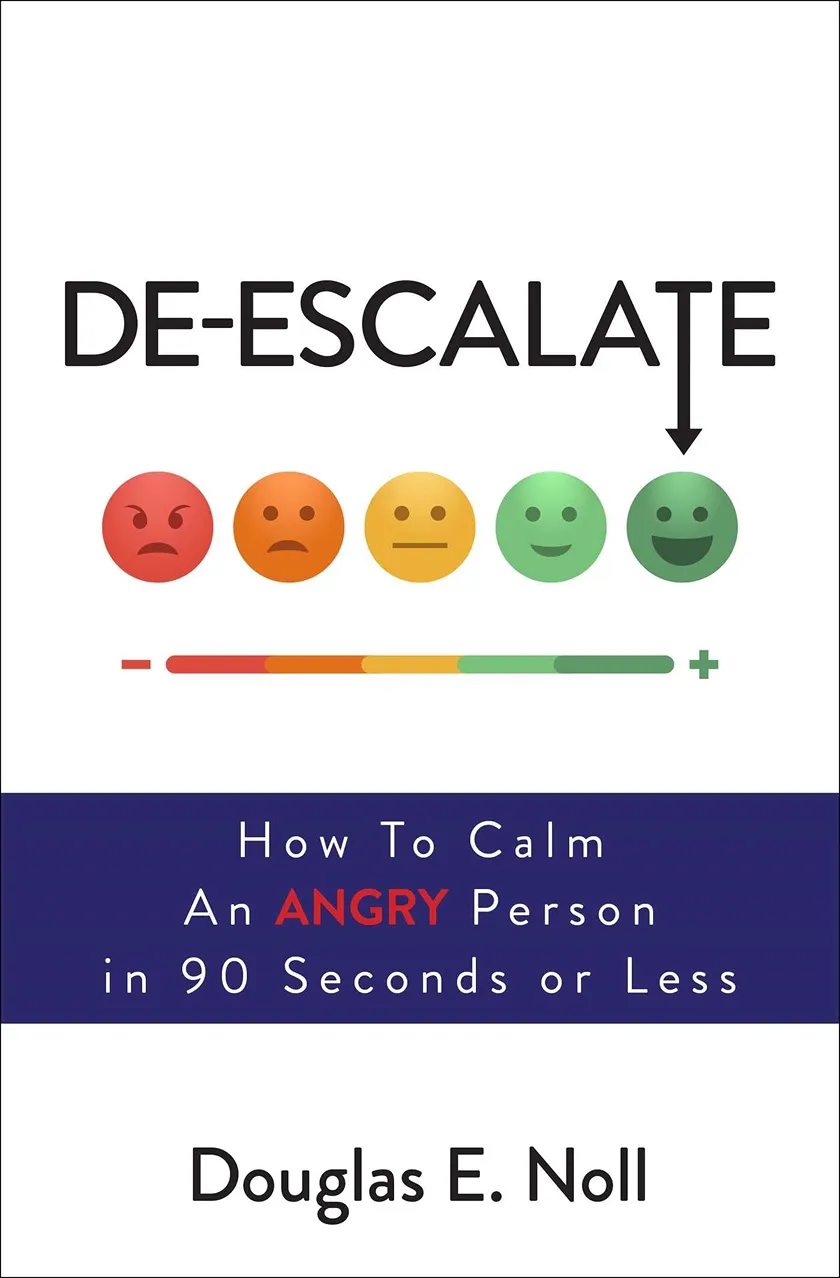
Doug has authored several books on affect labeling and emotional competency, including De-Escalate: How to Calm an Angry Person in 90 Seconds or Less, which won multiple awards and has been adopted by organizations worldwide.




More Blogs
View All