6 Powerful Questions to Ask Before Buying Conflict Resolution Training


The CPO had the budget approved. What she did not have was a way to tell the three finalist vendors apart.
Each had responded to the same RFP. Each had provided case studies. Each had delivered a strong screening presentation. Each had quoted within 15 percent of the others. On every measurable procurement criterion, they looked interchangeable.
She called a former colleague who had been through this exercise four times across two companies. The colleague gave her six questions and said that if a vendor cannot answer all six with specificity, the engagement will produce the same result as the last one.
Here are the six questions, with the answers that distinguish a programme that works from a programme that looks like one.
1. "What is the single behaviour your programme produces that we will be able to observe at month six?"
The right answer names a specific, observable action with a specific context. "Managers will initiate difficult feedback conversations within one week of identifying a performance concern, rather than the current average of 11 weeks."
The wrong answer uses words like "improved communication" or "stronger emotional intelligence" or "better conflict handling". None of these are observable. None of these can be measured. A vendor who answers in this register is selling a feeling.
If the vendor cannot name one behavioural outcome in one sentence with one metric, their programme does not produce behavioural outcomes. It produces impressions of behavioural outcomes.
2. "How will you measure that behaviour at month six, and what percentage change should we expect?"
Follow-up to the first question. Separates the vendors who can specify from the vendors who have been getting away without specifying.
The right answer names a measurement mechanism (observed in real meetings, sampled call recordings, structured 360 observation) and a specific target percentage. "35 percent of trained managers will demonstrably use the protocol in a sampled difficult conversation at month six."
The wrong answer talks about "ongoing improvement" or "sustainable change" or "measurable progress" without a number. These are hedge phrases. They are what a vendor says when they cannot predict their own result.
3. "What percentage of your clients tell you the programme did not work, and what have you changed in response?"
A vendor with no such examples has either never had a failed engagement, which is implausible, or they are not asking their clients the right questions. Both are red flags.
A vendor who can describe three specific client failures, name the specific thing that failed, and show the three specific changes they made to the programme as a result is a vendor who treats behavioural outcome as the actual deliverable. This is rare. It is also predictive.
If a 12-person leadership team is losing an hour a week to the same unresolved friction, that is roughly $125,000 a year at exec hourly rates. The exact number for your team is a two-minute input in Doug's cost of conflict calculator.
4. "Who in the leadership team above the trained group needs to be involved, and what happens if they are not?"
The right answer is unambiguous. The leadership layer above the trained cohort has to participate in at least an abbreviated version of the programme, or the behaviour reverts within three months. The vendor should insist on this. If they do not, they do not understand what they are selling.
The wrong answer is "it's helpful but not required" or "we can work around it". Vendors who make this concession are protecting their close rate at the cost of your outcome. The engagement will fail in a predictable way and the vendor will have plausible deniability.
5. "What is the role of your senior trainer versus your delivery team, and what percentage of our sessions will the senior trainer personally lead?"
Behaviour-change training is highly sensitive to trainer skill. The vendor's lead trainer, who you met in the sales process, is usually not the person who will deliver the programme. The quality drop between the lead trainer and the delivery team is often substantial and almost always invisible until the behavioural data lands.
The right answer specifies which sessions the senior trainer will personally lead, usually a defined subset, and includes a quality control mechanism for the sessions led by others. "The senior trainer runs the first cohort for every new client and every third cohort thereafter, with recording review of a sample from the delivery team's sessions."
The wrong answer is "our whole team is trained to the same standard". That is a line, not a fact.
6. "How do we transfer the capability to our internal team by the end of year two, and what does your fee structure look like as that transfer happens?"
A vendor who answers this honestly will tell you their revenue from your account will decrease over time as the capability transfers. A vendor who evades the question is designing a permanent dependency into the engagement.
Both are legitimate commercial structures. You should know which one you are buying. If you are buying a permanent dependency, the price should reflect that it is a managed service rather than a capability build. If you are buying a capability build, the price should be weighted toward the first 18 months with a decreasing scope of work after.
Vendors who refuse to discuss the sunset of their own engagement are selling you something you probably do not want.
What the colleague told the CPO
Doug Noll teaches Decision-Making Under Stress and Conflict at Pepperdine's Straus Institute, has mediated complex business disputes for 25 years, and co-founded the Prison of Peace Project. He designs his programmes to answer all six of these questions with specificity before the first proposal is written.
The colleague's final advice was simpler than the six questions. "Do not sign anything until the vendor has answered all six without hedging. The vendors who can are usually a short list. Pick from that list."
If you're going through a conflict resolution training vendor selection and want to pressure-test the finalists against these six questions, Doug runs a 20-minute diagnostic call before you decide. Book 20 minutes with Doug.
Why most procurement processes miss these
Standard procurement optimises for comparable features and comparable pricing. These six questions ask about outcome accountability, which does not fit the comparison matrix. So they get dropped, and the three finalists end up looking identical because the procurement process stripped out the questions that would have separated them.
The six questions above are the ones that produce real differentiation. Add them to your evaluation sheet before the next shortlist.
For related reads, see the five essential features of neuroscience conflict resolution online training and the seven things to look for in empathy training for leaders.
Vendor selection for conflict resolution training looks like it is about features and price. It is actually about accountability for outcome. The six questions above are what reveal that difference.
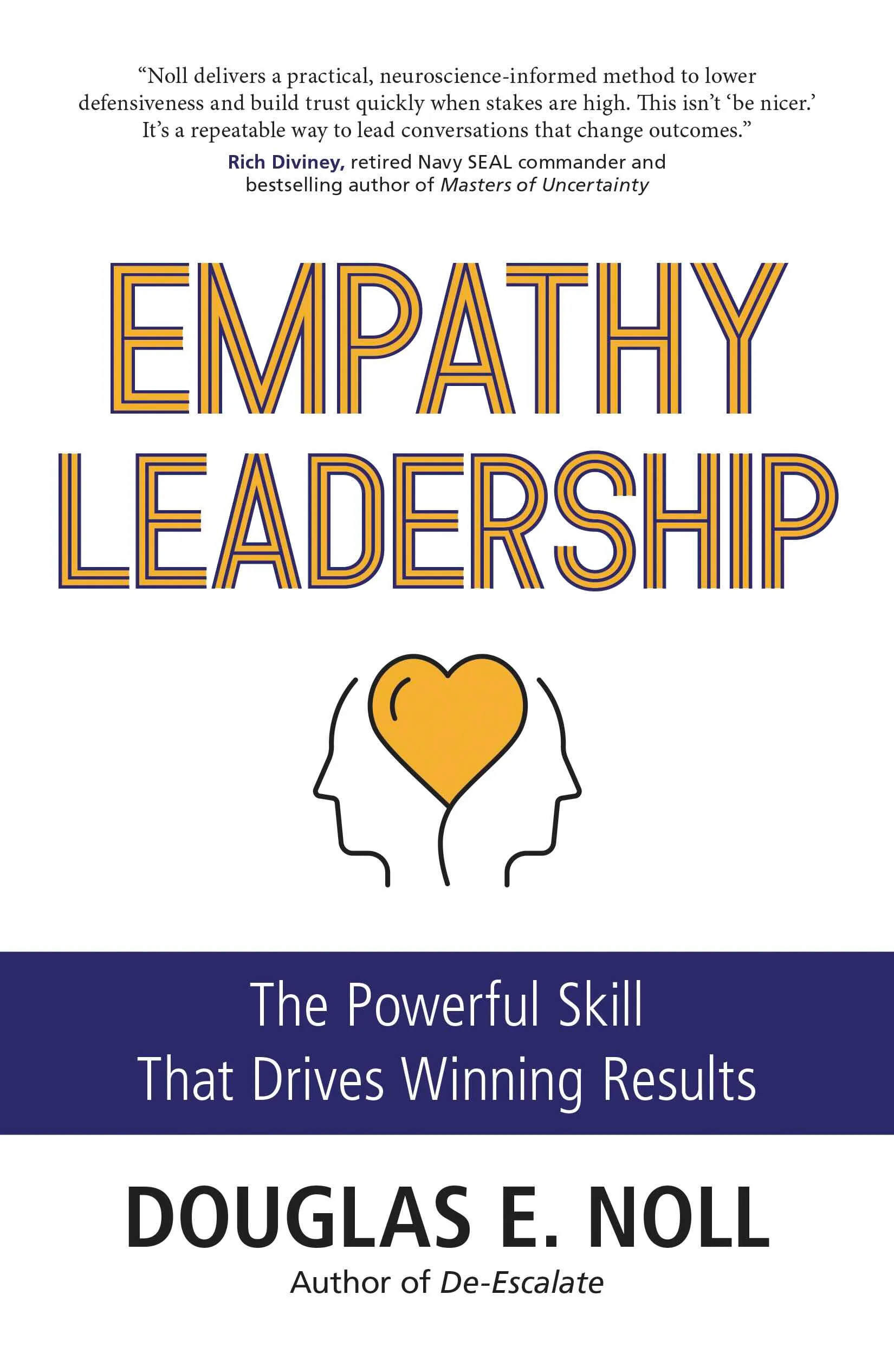
Empathy Leadership: The Powerful Skill That Drives Winning Results is out now. Order on Amazon, or if a 20-minute call would be more useful, Doug's calendar is here.
Emotional Competence Shapes Your Influence as a Leader
This 90-second emotional competence quiz will tell you how your emotions affect the way you are treated at work and how to gain the respect and influence you deserve as a leader.
Take the Free Assessment
Doug’s Books
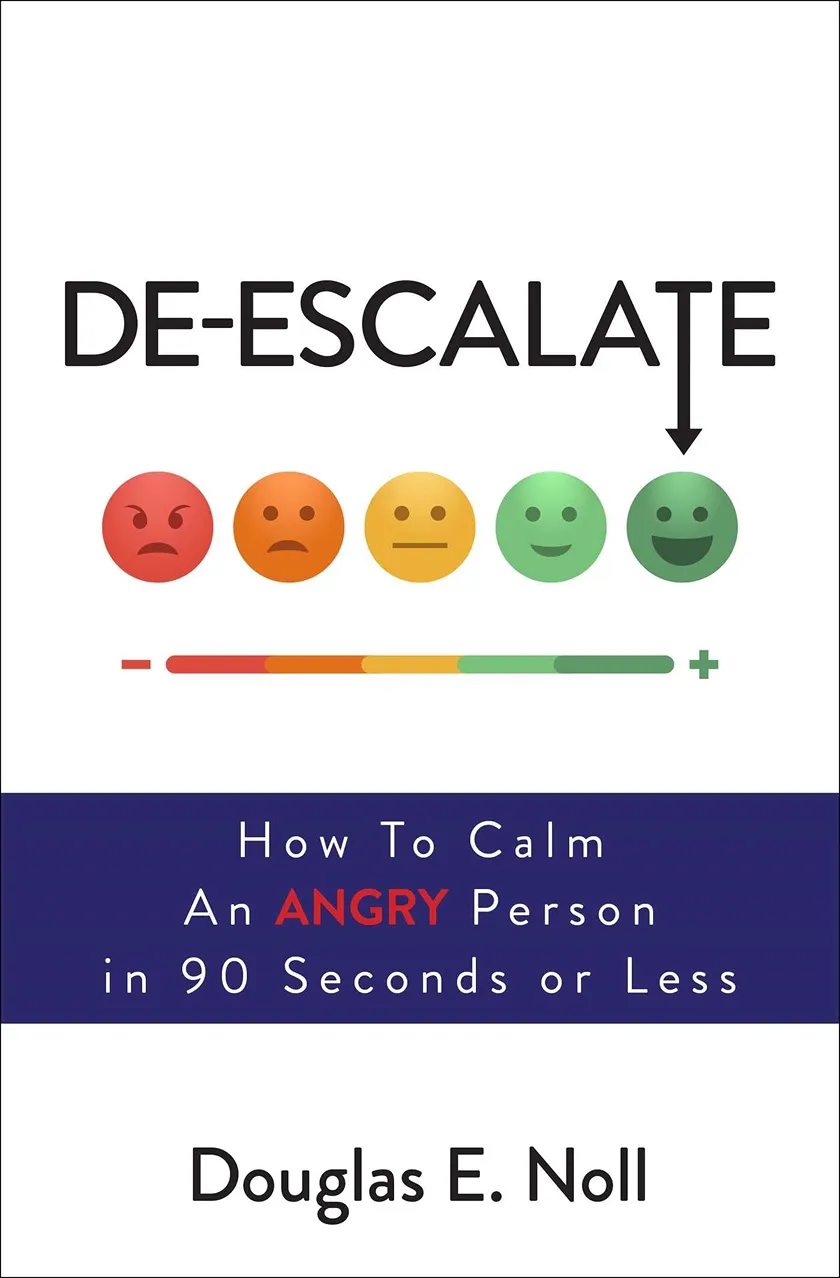
Doug has authored several books on affect labeling and emotional competency, including De-Escalate: How to Calm an Angry Person in 90 Seconds or Less, which won multiple awards and has been adopted by organizations worldwide.