How to Show Empathy at Work Without Losing Authority: 6 Executive Examples


The new CEO had been in role for 60 days when his executive team started to doubt him.
He was open about his thinking. He asked questions in meetings instead of pronouncing answers. He named his own uncertainty when it was present. He acknowledged the executives who challenged him. By any formal empathetic-leadership rubric, he was doing everything right.
By day 60, his COO had privately told the chair that she was not sure whether the CEO was tough enough for the role. The company was coming into a hard quarter. The team wanted a decisive leader. The CEO had been reading as something softer than that.
Here are six executive examples of how to show empathy at work without losing the authority the role requires. Each one preserves warmth and preserves command simultaneously.
1. Pair every acknowledgment with a decision
A leader who acknowledges a team member's position and then does not act loses authority. The authority is preserved by pairing the acknowledgment with the decision, in the same conversation.
"I hear that you think the Q2 push is too aggressive. I appreciate you raising it. I am going to hold the target, and here is why." The acknowledgment is complete. The decision is clear. The team member walks out knowing they were heard and knowing the direction.
The leader who acknowledges without deciding gets read as uncertain. The leader who decides without acknowledging gets read as cold. The pair gets read as leadership.
2. Name uncertainty when it is strategic, resolve it when it is operational
Empathetic executives who name their uncertainty on operational questions lose authority. Empathetic executives who name their uncertainty on strategic questions preserve it.
"I am not sure how the next quarter is going to land. We have scenarios ranging from flat to down 10 percent." That is appropriate strategic acknowledgment. It is honest and it does not cost authority.
"I am not sure what we should do about the pricing situation." That is inappropriate operational acknowledgment. The team needs a decision, and the uncertainty read as uncertainty about the leader's capability rather than about the market.
The distinction matters. Strategic uncertainty acknowledged thoughtfully is empathetic leadership. Operational uncertainty acknowledged publicly is leadership failure. Both can look similar if you are not paying attention.
3. Thank publicly for the behaviour you want, correct privately for the behaviour you do not
Public thanks for specific actions reinforces the specific behaviour across the whole team. Private correction for specific actions respects the person being corrected. Mixing these up (public correction, private thanks) destroys both authority and warmth simultaneously.
Public thanks: "I want to acknowledge that Mark raised the pricing risk in week three when most people would have waited for the quarterly review." Specific. Attributed. Reinforces the behaviour.
Private correction: One-on-one, direct. "The way you handled the client call on Tuesday did not land well. Let me walk you through what I would have done differently." Specific. Private. Does not shame.
The leader who gets this pair right builds a team that is simultaneously trusted and sharp.
If a 10-person leadership team is losing an hour a week to leaders who mix up public and private feedback, that is roughly $208,000 a year at exec hourly rates. The exact number is a two-minute input in Doug's cost of conflict calculator.
4. Hold the hard decision visibly rather than deferring it
An empathetic leader can preserve authority by making hard decisions visibly, in the room, with the empathetic layer attached.
"I know this is the decision you did not want. I know the reasoning will not comfort you. I am making it anyway because I believe it is the right call for the company, and I am going to stand behind it. I want to tell you what I am watching for over the next 90 days that would make me revisit it."
The hard decision happens. The empathy wraps around it. The authority is preserved because the leader did not flinch.
Empathetic leaders who defer hard decisions in the name of thoughtfulness lose authority faster than cold leaders who make the same decisions badly. Deferral reads as weakness. Thoughtful execution does not.
5. Admit specific errors, not general ones
A leader who admits a specific error gains credibility. "I was wrong about the Q2 enterprise push. I over-weighted the pipeline data and under-weighted the implementation risk. We are going to adjust." Specific. Owned. Followed by action.
A leader who admits general error loses authority. "I have not been as focused as I should have been." Vague. Non-actionable. Reads as self-flagellation.
The pattern that preserves authority is specific error, specific analysis, specific adjustment. The pattern that destroys authority is general admission of inadequacy.
Doug Noll teaches Decision-Making Under Stress and Conflict at Pepperdine's Straus Institute. His executive work focuses on exactly this balance: empathy that lands as empathy, and authority that lands as authority, in the same leader at the same time.
6. Separate the person from the role in your language
When giving hard feedback to a direct report, the empathetic leader separates the role from the person. "You are a strong leader and you handled this specific conversation badly. I am going to walk you through what I saw." The person is intact. The role performance is being addressed.
Non-empathetic leaders conflate the two. "You are not performing." The person collapses. The behaviour change does not happen because the person is defending their identity.
The empathetic leader with authority is specific and surgical. The non-empathetic leader with authority is general and damaging. The authority is the same. The empathetic version produces better behaviour change.
Doug runs a quarterly Roundtable with six to eight founders working the same leadership-room problem in one room. The next one is $7,500 a seat. See if the Roundtable fits.
The new CEO's second quarter
He added decisiveness to his existing empathetic patterns using the six moves above. By day 120, the COO had reversed her position with the chair. The CEO was reading as both empathetic and firm, which is what the role requires.
For related reads, see why empathy as a leader is still mistaken for weakness and what empathy with strategy looks like for the c-suite.
Empathy at work does not have to cost authority. The six moves above produce leaders who are warm and decisive simultaneously. That combination is rare and it is the specific profile the hardest executive roles require.
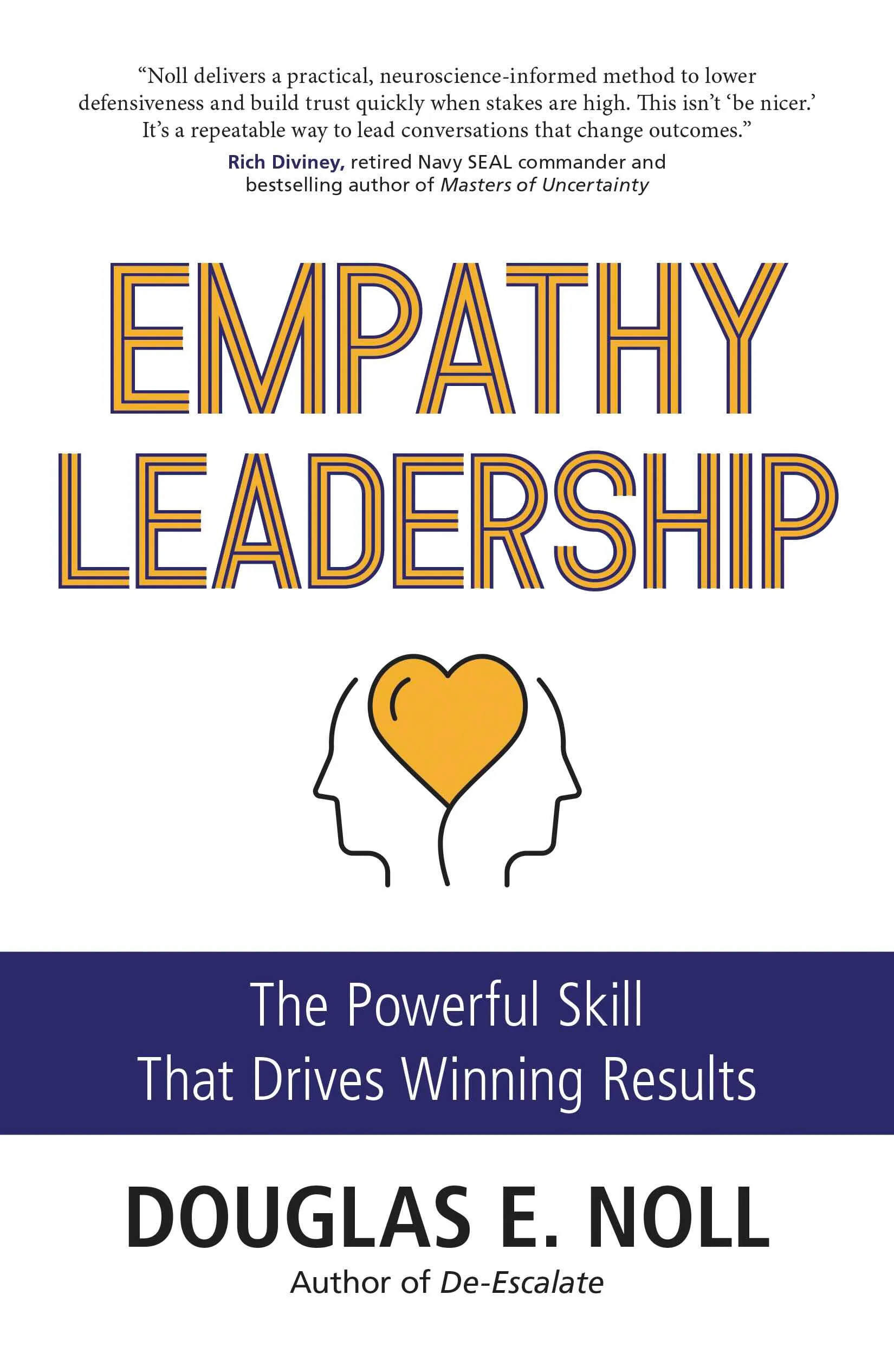
Empathy Leadership: The Powerful Skill That Drives Winning Results is out now. Order on Amazon, or if a 20-minute call would be more useful, Doug's calendar is here.
Emotional Competence Shapes Your Influence as a Leader
This 90-second emotional competence quiz will tell you how your emotions affect the way you are treated at work and how to gain the respect and influence you deserve as a leader.
Take the Free Assessment
Doug’s Books
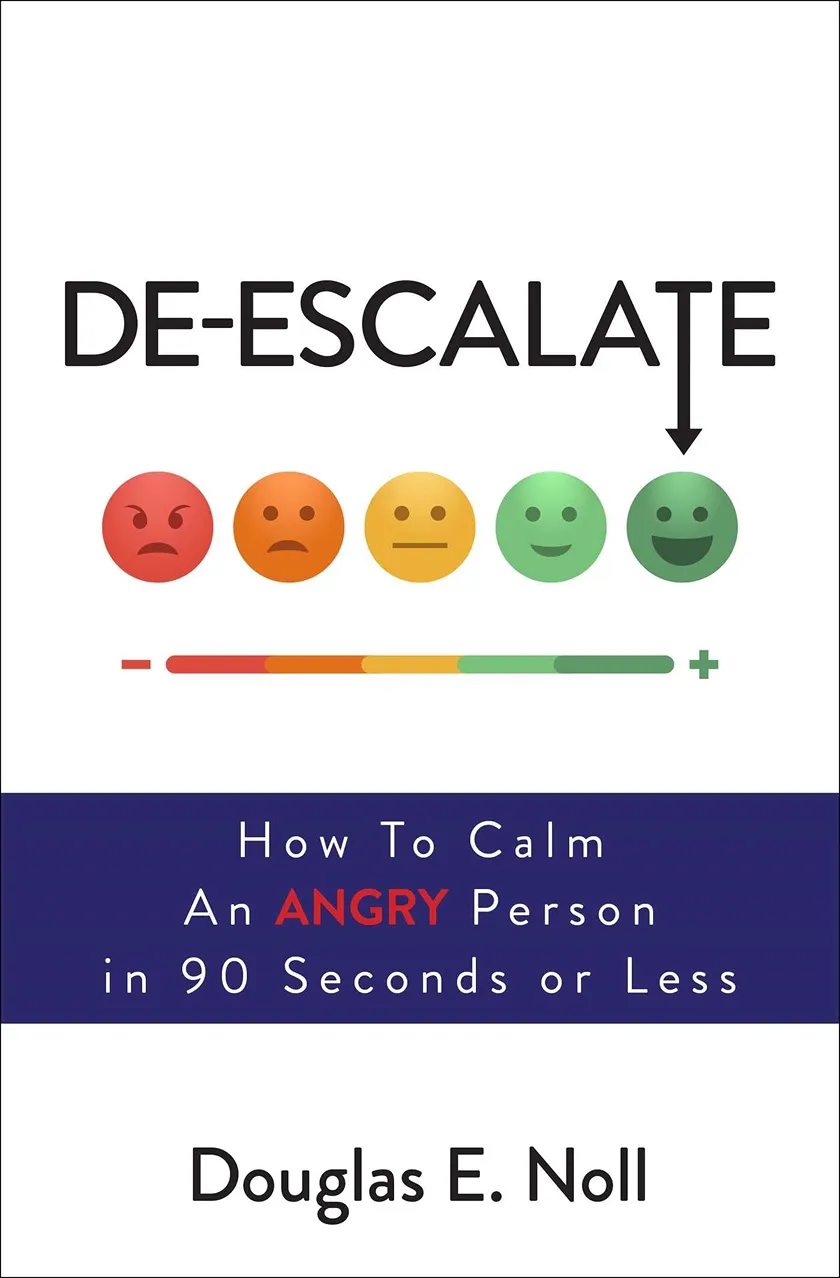
Doug has authored several books on affect labeling and emotional competency, including De-Escalate: How to Calm an Angry Person in 90 Seconds or Less, which won multiple awards and has been adopted by organizations worldwide.
More Blogs
View All