5 Shocking Reasons Empathy as a Leader Is Still Mistaken for Weakness


The CFO interrupted the Chief People Officer in the budget conversation to make his position clear.
"I grew up in finance. In my career, every executive who got labelled as empathetic eventually got labelled as weak, and most of them lost their next role. I am not funding a programme that is going to train my leaders to be the people who get managed around in the next downturn."
He was wrong about the pattern. The research is unambiguous. Empathetic leaders outperform transactional ones on retention, decision quality, and long-term financial outcomes. But he was describing an experience that was completely real to him, and he was not alone. Here are the five reasons empathy as a leader is still mistaken for weakness in exactly the organisations that need it most.
1. The term "empathy" has been attached to the wrong behaviour for a generation
The historical corporate association of empathy is with people who absorb emotional labour, avoid hard decisions, and prioritise relational comfort over operational outcome. This association is historically accurate for a specific set of leaders who were called empathetic and were in fact just conflict-averse.
The problem is that the term stuck to the behaviour. Executives who grew up in corporate environments between 1990 and 2015 were watching empathy-labelled leaders fail at specific hard decisions, and they absorbed the lesson that empathy equals operational weakness.
The reversal requires separating the specific behaviour (regulating a difficult conversation, naming emotion accurately, acknowledging cost) from the stereotype (avoiding hard decisions, absorbing emotional labour, prioritising comfort). The behaviours are opposites.
2. Empathetic leaders often do not look empathetic in the moment they are being empathetic
A leader who uses the four-step protocol to deliver a termination handles the conversation with more care than a leader who delivers it bluntly. The termination still happens. The person being terminated often does not experience the empathetic version as empathetic. They experience it as a termination.
Observers to the conversation often cannot tell the difference between an empathetic version and a cold version, because the output (the termination) is the same. The specific behaviours that distinguish them are subtle: the pause before the hardest sentence, the named acknowledgment of the cost, the tone that treats the other person as whole rather than as an obstacle.
Because the behaviours are subtle, the empathetic leader often does not get credit for empathy in moments that look operationally hard. They get credit for being effective. The empathy stays invisible.
3. The visible performance of empathy is often the actual weakness being observed
When executives perform empathy visibly (long conversations about feelings, elaborate acknowledgment rituals, group vulnerability sessions), the performance is often associated with downstream weak decisions. The two are not causally connected. They are frequently correlated because leaders who perform empathy visibly are sometimes also leaders who avoid hard decisions, and the visible performance makes both easier to observe.
Real empathy at work is almost invisible. It happens in short exchanges, specific sentences, deliberate pauses. It does not look like a workshop. The organisations that confuse performance with practice end up with both reputational damage and bad decisions.
4. The companies that most need empathetic leadership are the ones with cultural immune responses against it
An organisation that has been successful through transactional leadership has evolved specific antibodies against anything that looks soft. New leaders who try to bring empathetic behaviour into these organisations get labelled quickly and sidelined.
The specific mechanism is cultural pattern matching. The organisation recognises certain behaviours (long one-on-ones, named acknowledgments, pauses before responses) as not-our-culture, and the people exhibiting them get socially downgraded without any explicit decision.
This is why bringing empathetic leadership into a traditionally transactional organisation requires specific sequencing. The behaviours have to be introduced by the CEO first, visibly, and the CEO has to be publicly successful while doing them, before the organisation can accept them without triggering the immune response.
If an executive team is losing six hours a quarter to the cultural friction around newly-introduced empathetic practices, that is roughly $185,000 a year at exec hourly rates. The exact number is a two-minute input in Doug's cost of conflict calculator.
5. The research is correct and does not translate into felt experience
The academic data on empathetic leadership outcomes is clear and consistent. Companies with empathetic executive teams outperform their peers on multiple financial metrics. The data is in dozens of peer-reviewed studies.
The CFO sitting in a budget meeting has not read the studies. The CFO has personal experience across 28 years of specific empathetic-labelled leaders who, in that CFO's observation, were weak. The data does not update the personal experience because personal experience is more vivid than aggregate data.
The reversal requires showing the CFO empathetic behaviour in action, with specific operational outcomes attached, in a context the CFO personally observes. The data is support. The specific experience is what actually moves the position.
The reframe that works
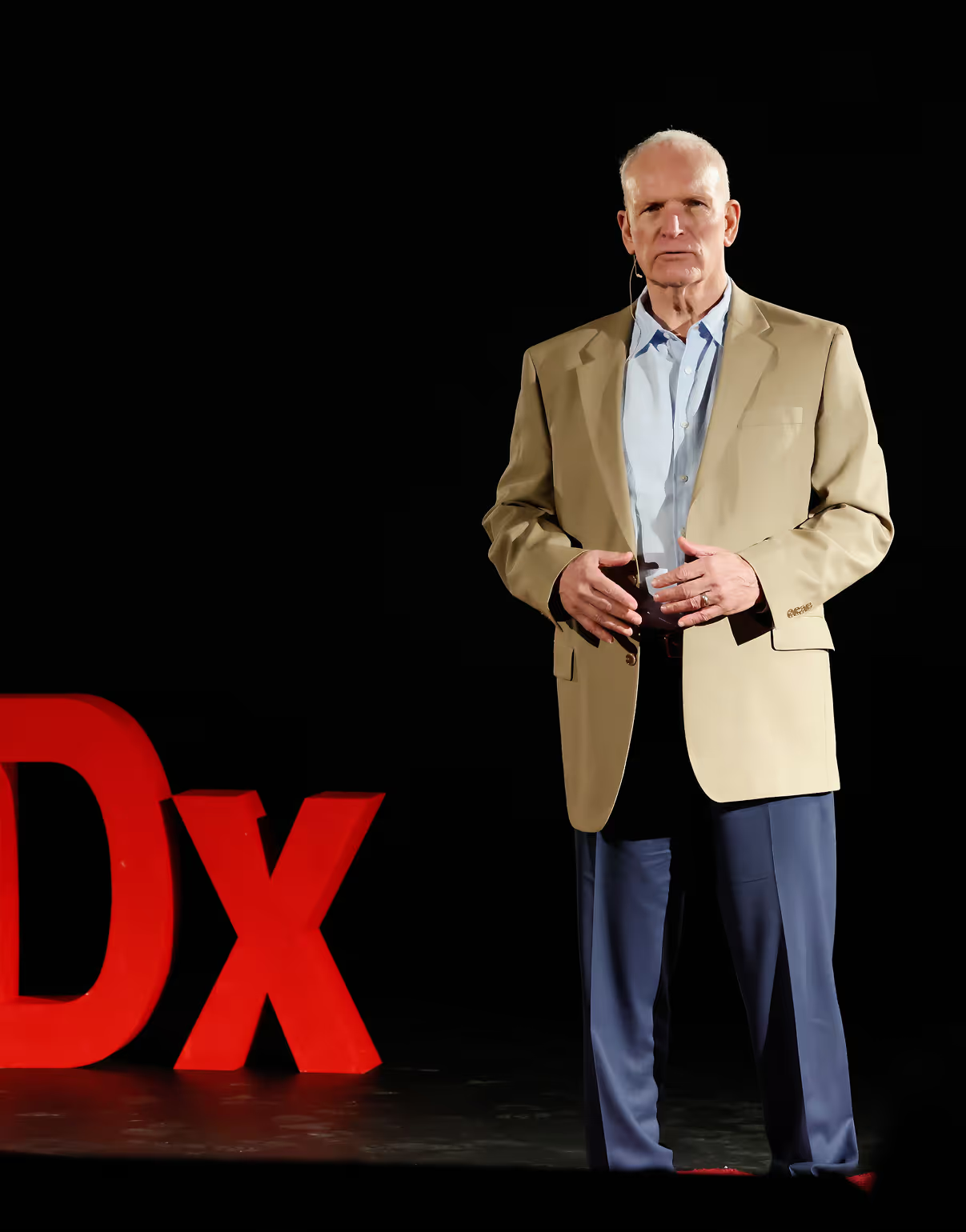
Doug Noll teaches Decision-Making Under Stress and Conflict at Pepperdine's Straus Institute, has mediated complex business disputes for 25 years, and co-founded the Prison of Peace Project. The protocols he teaches are explicitly branded around capability under pressure, not around empathy as warmth. The word "empathy" is often the last word used, if it is used at all.
The reframe that works for sceptical CFOs is specific. The leader is being trained in regulation under pressure. The output is specific operational behaviours in high-stakes conversations. The outcome is measurable in retention, decision quality, and cross-functional velocity. The word "empathy" does not need to appear.
The CFO in this story funded the programme after it was reframed this way. The behaviour the programme produced was the same. The branding was different.
Doug runs a quarterly Roundtable with six to eight founders working the same leadership-room problem in one room. The next one is $7,500 a seat. See if the Roundtable fits.
The CFO's eighteen-month review
He sat in on sampled executive conversations after the programme had been running for 18 months. He changed his position after watching the specific behaviour. He also admitted that his previous experience had conflated two different things. The leaders he had seen fail were not empathetic. They were avoidant. The specific behaviours of actual empathy, when he watched them in operation, were not weak. They were disciplined.
He went on to become one of the programme's internal advocates. His position change was more valuable to the organisation than any single programme outcome.
For related reads, see the seven reasons empathy at work keeps getting framed as soft and how to show empathy at work without losing authority.
Empathy as a leader is still mistaken for weakness because the historical association is sticky and the specific behaviours are subtle. The reversal is possible with specific framing, specific operational outcomes, and specific observable practice.
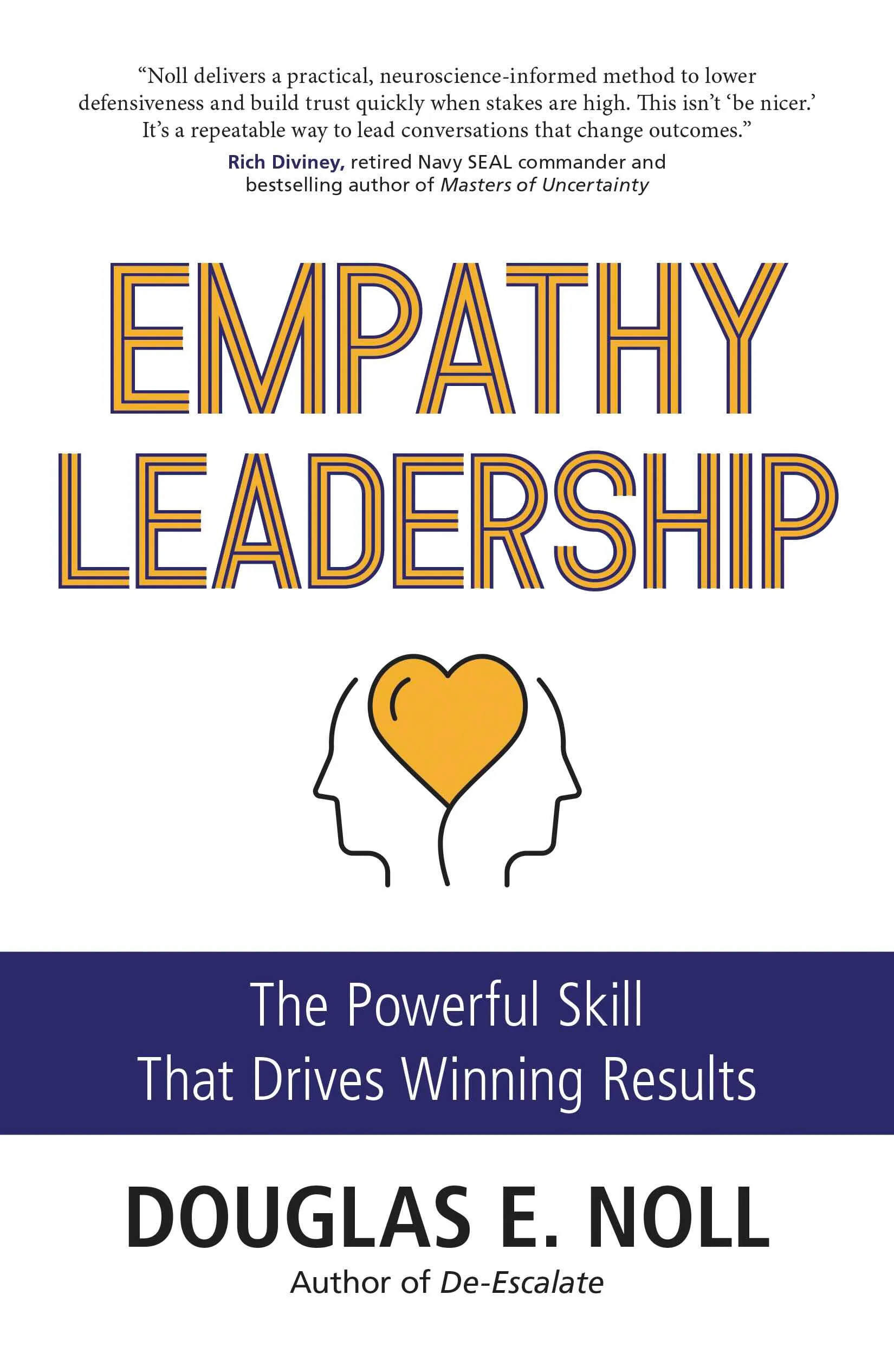
Empathy Leadership: The Powerful Skill That Drives Winning Results is out now. Order on Amazon, or if a 20-minute call would be more useful, Doug's calendar is here.
Emotional Competence Shapes Your Influence as a Leader
This 90-second emotional competence quiz will tell you how your emotions affect the way you are treated at work and how to gain the respect and influence you deserve as a leader.
Take the Free Assessment
Doug’s Books
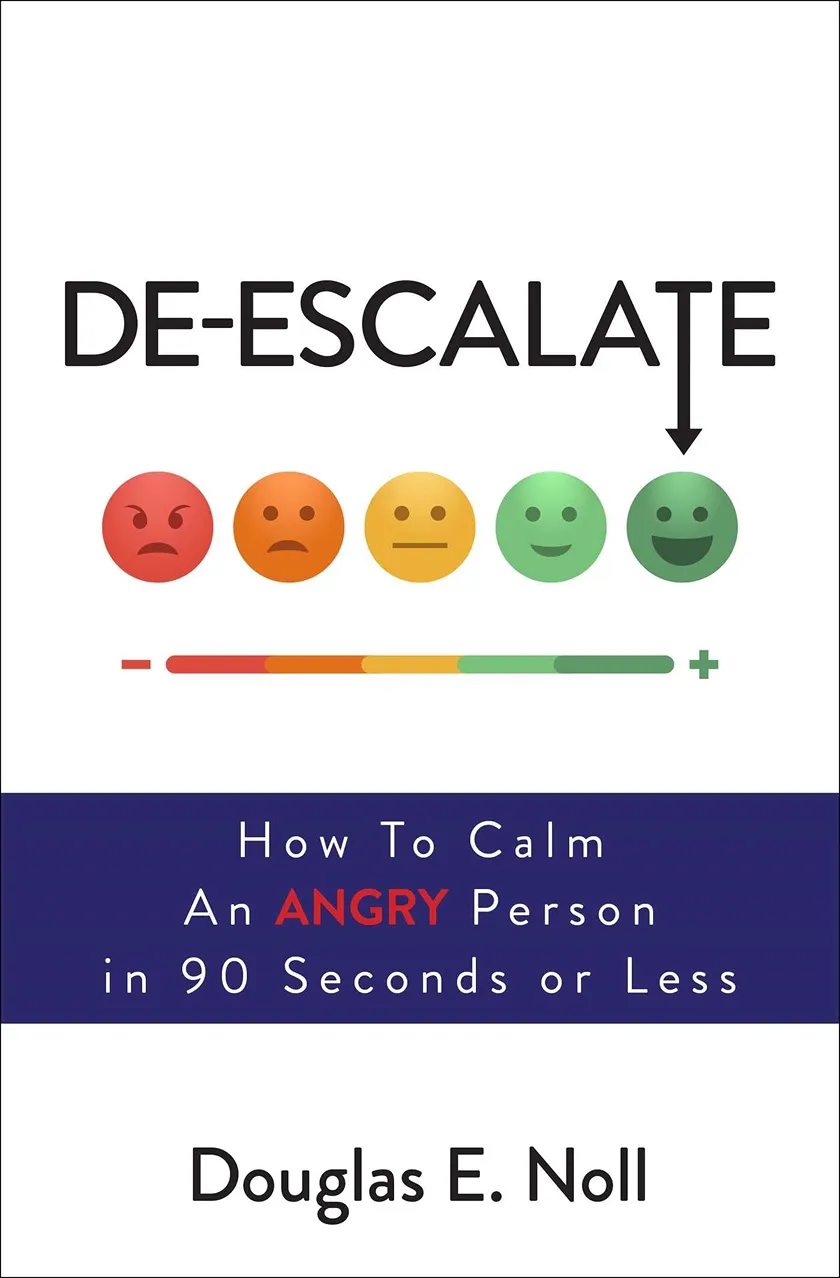
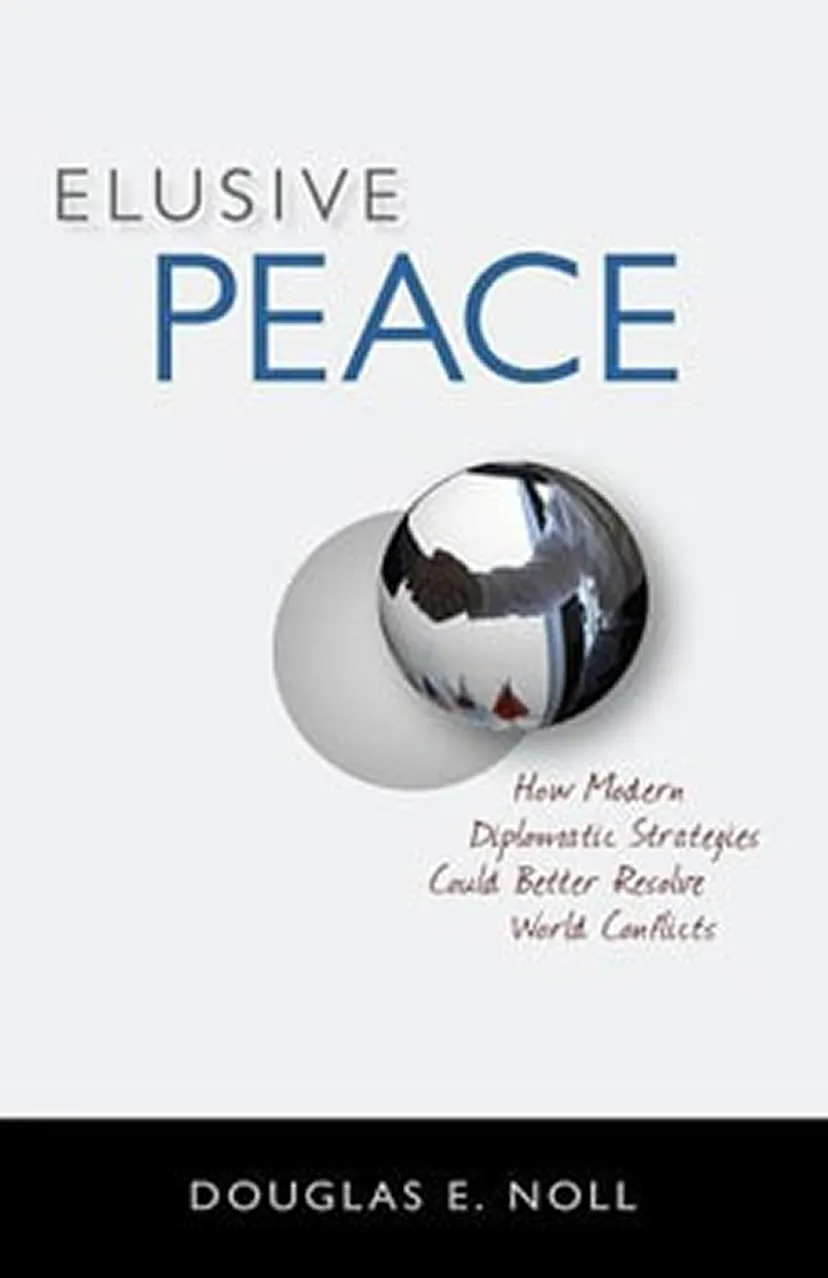
Doug has authored several books on affect labeling and emotional competency, including De-Escalate: How to Calm an Angry Person in 90 Seconds or Less, which won multiple awards and has been adopted by organizations worldwide.
More Blogs
View All