6 Powerful Ways to Respond to an Angry Boss Without Losing Your Position


The Head of Product sat in a meeting watching her CEO take apart the sales forecast in front of the entire leadership team.
He was wrong on three of his five points. She knew it. The CRO knew it. The CFO knew it. Nobody said anything, because they had all seen what happened to the last person who corrected him in a group setting. By the end of the meeting a decision had been made on an incorrect premise and nobody was going to raise the issue later because the moment had passed.
She had six months before her year-end review. If she wanted to influence a single material decision in that time, she was going to have to learn how to respond to an angry boss without losing her position. Here are the six ways to do it, each tested in actual high-stakes corporate settings.
1. Deploy the pre-response pause before the content
When an angry boss says something you disagree with, your instinct is to respond immediately with the correction. The instinct is wrong. The correct move is to pause for three seconds before saying anything.
The pause does two things. It regulates your own nervous system enough that your response comes from reasoning rather than reaction. It also signals to the boss that you are taking their position seriously rather than dismissing it. Both outcomes produce better conversations than the immediate correction would have.
The sentence that fills the pause can be as simple as "Let me think about that for a moment." It buys the three seconds without reading as hesitation.
2. Acknowledge the valid part of their position first
Even an angry boss who is substantially wrong usually has one valid point embedded in their position. Find it. Name it first.
"You are right that the pipeline conversion data has been weaker than we projected." Then, and only then, add your correction. "I think there is a specific reason for that pattern that is worth considering before we adjust the full forecast."
The acknowledgment-first move does specific work. It demonstrates you have actually heard the position rather than defending against it. It lowers the boss's defensive posture because they feel validated. It also makes your correction more credible because you are not dismissing their entire framing.
3. Frame your correction as additional data, not opposition
The correction has to be framed in a specific way that the boss can accept without losing face. The framing that works is "additional data" rather than "opposition to the position".
"I want to add one data point you may not have seen" lands differently than "I think you are wrong about this." Same information. Different ego cost for the recipient.
An angry boss who is positioned to hear new data responds very differently than an angry boss who is positioned as being told they are wrong. The framing is the whole difference.
4. Make the correction small and specific
Do not correct multiple things at once. Pick the single most consequential correction and make only that one.
If the boss is wrong on three points, you cannot correct all three in the same conversation without the exchange becoming a confrontation. Pick the one correction that matters most. Make it specific. Let the other two go.
The two you let go will often correct themselves once the first correction has been accepted, because the boss's position was partially built on the correction you made.
If a 10-person leadership team is losing an hour a week to decisions made on incorrect premises that nobody corrected, that is roughly $208,000 a year in direct cost before counting the downstream impact of the decisions. The exact number is a two-minute input in Doug's cost of conflict calculator.
5. Offer a specific procedural off-ramp
If the exchange is getting hot, offer a specific procedural alternative that lets both parties step back without either losing face.
"I think there is more detail here than we can usefully cover in the next five minutes. Could I put a one-page analysis in front of you by end of day tomorrow and we come back to this with better data?"
The off-ramp preserves everyone. The boss gets to defer the decision without conceding. You get the opportunity to make your case in writing where the ego dynamics are weaker. The analysis you produce overnight is almost always more persuasive than the live correction would have been.
6. Follow up privately within 24 hours
After the meeting, send a short private note to the boss. Not an apology. Not a defence. A brief acknowledgment that you want to continue thinking about the question together.
"I have been thinking about the forecast question since the meeting. I want to make sure I am seeing it the way you are. Could I grab 20 minutes with you tomorrow?"
The follow-up signals that you are still engaged, still respectful, and still working the problem. It also usually produces a private conversation where the correction can be made properly, without the group dynamics that made the live correction unsafe.
Doug Noll teaches Decision-Making Under Stress and Conflict at Pepperdine's Straus Institute, has mediated complex business disputes for 25 years, and co-founded the Prison of Peace Project. His work on navigating difficult senior relationships is built around specific techniques like the six above, tested in environments where losing the relationship had direct career consequences.
If you have a difficult senior relationship you need to navigate without losing your position, Doug runs a 20-minute diagnostic call. Book 20 minutes with Doug.
The Head of Product's year-end review
She used the six techniques consistently over the next six months. By her review, she had successfully influenced four material decisions where her position differed from the CEO's. The CEO's rating of her in the review was higher than any of her previous ratings. She was promoted to Chief Product Officer the following quarter.
For related reads, see difficult manager scripts and keeping composure with difficult people at work.
Responding to an angry boss without losing your position is a specific skill. The six techniques above are the ones that produce the best outcomes across the widest range of difficult senior relationships.
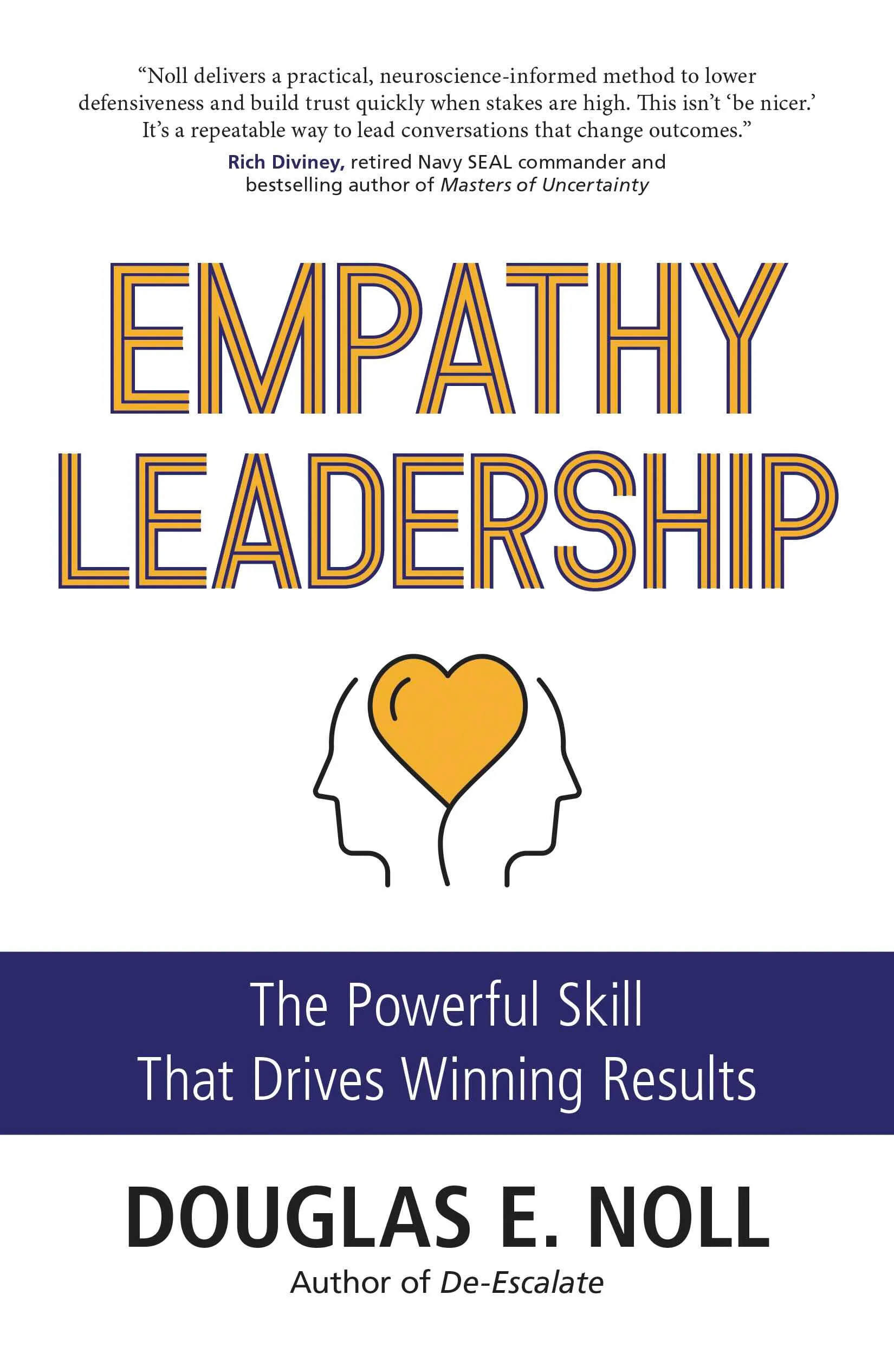
Empathy Leadership: The Powerful Skill That Drives Winning Results is out now. Order on Amazon, or if a 20-minute call would be more useful, Doug's calendar is here.
Emotional Competence Shapes Your Influence as a Leader
This 90-second emotional competence quiz will tell you how your emotions affect the way you are treated at work and how to gain the respect and influence you deserve as a leader.
Take the Free Assessment
Doug’s Books
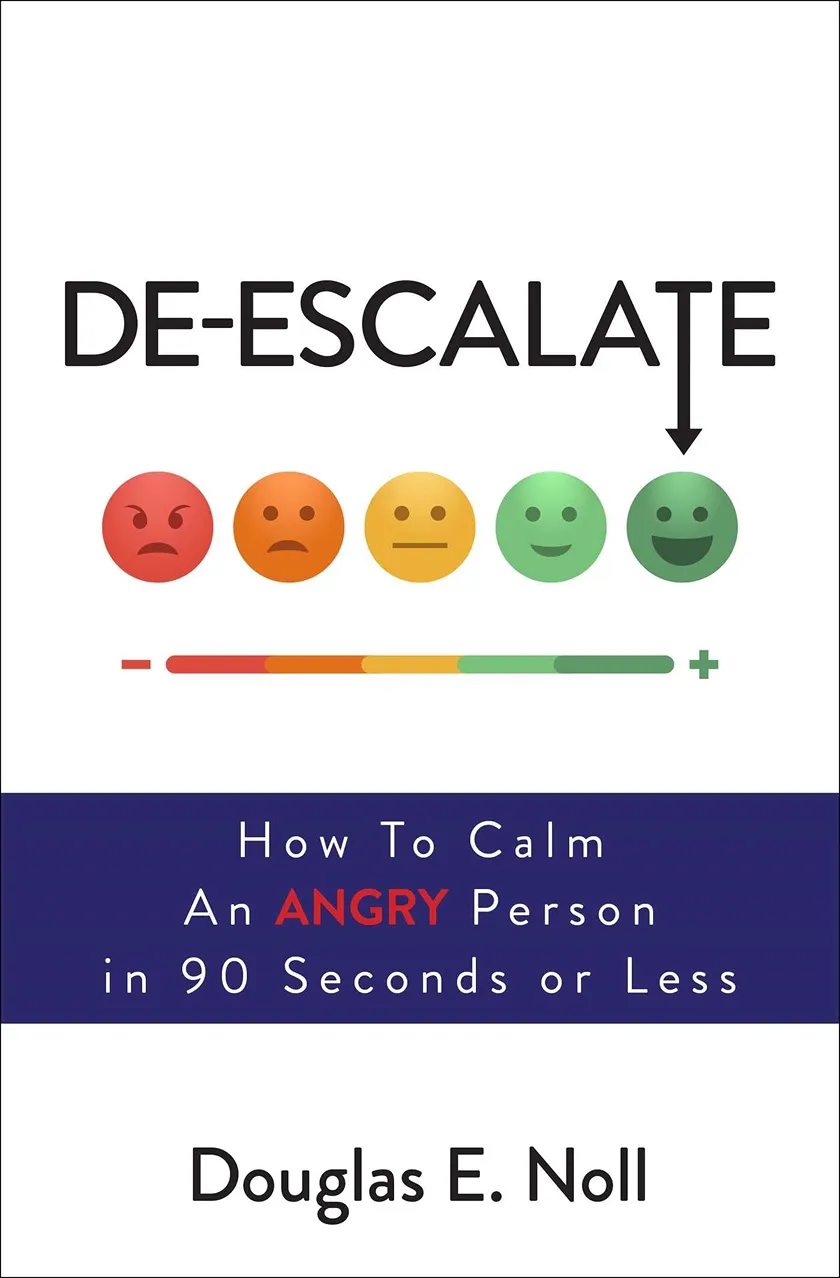
Doug has authored several books on affect labeling and emotional competency, including De-Escalate: How to Calm an Angry Person in 90 Seconds or Less, which won multiple awards and has been adopted by organizations worldwide.



More Blogs
View All