The 5 Shocking Costs of Low Emotional Intelligence in the Corporate World


The private equity firm did a diligence pass on five portfolio companies to understand why three of them were underperforming on operational metrics.
The three underperformers were in different industries, different stages, and had different leadership teams. The pattern that emerged was the same across all three. Low emotional intelligence in the executive layer was costing each company specific operational outcomes that the diligence team could quantify once they knew what to look for.
Here are the five shocking costs of low emotional intelligence in the corporate world, each one financially specific enough to make the budget case for addressing it.
1. Decision latency compounding across the quarter
In an executive team with low emotional intelligence, every decision takes longer. Not because the people are slow but because the emotional friction between executives adds a round of private conversations, a round of positioning, and a round of negotiated agreement before any decision can land.
Across a quarter, this latency compounds in a measurable way. Executive calendar studies in low-EQ companies show executives spending 30 to 45 percent of their time on decision-coordination activities that do not add value, because the decisions themselves could be made in a quarter of the time if the emotional substrate was healthier.
For a company with 20 executives earning an average of $300,000, this is $2.5 million to $4 million a year in direct executive time cost, without counting the opportunity cost of the decisions that were made slower.
2. The attrition tax on top performers
Low emotional intelligence drives top performers out at a predictable rate. The specific mechanism is that top performers have options and tolerate low-EQ environments for shorter periods than their average-performing peers.
The attrition rate differential between top-quartile and average-quartile performers in low-EQ companies is typically 2 to 3 times. In high-EQ companies the differential disappears.
For a 500-person company with 125 top-quartile employees, if the attrition differential is 10 percentage points, that is approximately 12 unnecessary senior exits a year, at a replacement cost of 1.5 to 2 times salary each. At typical senior salaries, this is $5 million to $10 million a year in direct replacement cost before counting lost momentum.
3. The decision quality degradation under emotional pressure
Executive teams with low emotional intelligence make measurably worse decisions in high-pressure moments than teams with high emotional intelligence. The specific mechanism is that under cortisol, the prefrontal cortex loses influence and decisions are made from a more defensive, more reactive, less analytical state.
In quarterly reviews where decisions are being made under board pressure, low-EQ teams defer, over-commit, or make strategic mistakes at a rate 2 to 4 times higher than high-EQ teams in equivalent pressure situations.
The downstream cost is specific and large. Strategic mistakes made in Q1 compound through the year. A single misallocation of capital under emotional pressure in a growth-stage company can be worth 5 to 10 percent of annual revenue.
If an executive team is losing 10 hours a week to decisions that have to be revisited because the first version was made under unmanaged pressure, that is roughly $300,000 a year at exec hourly rates, before counting the compound cost of the strategic mistakes themselves. The exact number is a two-minute input in Doug's cost of conflict calculator.
4. The cross-functional velocity drop
Low-EQ organisations have specific cross-functional pairs that cannot work together without friction. The friction manifests as delayed handoffs, missed signals, rework, and escalations.
In the three underperforming portfolio companies, specific cross-functional pairs showed friction that was costing each company between 15 and 30 percent of cross-functional project velocity. The pairs were always the same. Marketing and Product. Sales and Finance. Engineering and Customer Success. The specific pair varied by company. The pattern of friction was consistent.
For a company running $200 million in revenue with cross-functional dependencies on 60 percent of its work, a 20 percent velocity drag on cross-functional projects translates to roughly $24 million in slowed revenue capture per year.
5. The silent cost of bad news arriving late
In low-EQ organisations, bad news arrives late because the people who first notice it hesitate to raise it. The hesitation is rational: raising bad news in an emotionally unsafe environment produces negative outcomes for the raiser.
Each piece of bad news that arrives three weeks late instead of three days late has a specific compounding cost. The customer is harder to recover. The deal is harder to save. The talent exit is already in motion. The regulatory issue has escalated.
In the three underperforming portfolio companies, late bad news was the single largest driver of operational underperformance, exceeding the cost of all four other factors combined. It is also the hardest to measure because by definition the counterfactual (if the news had arrived earlier) is not observable.
Qualitative post-mortems of the three companies estimated the late-news cost at between $8 million and $20 million per company per year.
Doug Noll teaches Decision-Making Under Stress and Conflict at Pepperdine's Straus Institute, has mediated complex business disputes for 25 years, and co-founded the Prison of Peace Project. His corporate EQ work is designed around producing measurable improvement in each of the five cost categories above, with baseline measurement from day one.
If you have a portfolio company or an operating business showing the patterns above, Doug runs a 20-minute diagnostic call to work out whether an EQ intervention would move the specific metrics. Book 20 minutes with Doug.
The PE firm's second diligence pass
The firm added a specific EQ-outcome assessment to their standard operational diligence. The assessment measures baseline levels of decision latency, top-performer attrition differential, and cross-functional friction, with observational data from sampled real meetings during diligence.
Companies that score poorly on these metrics receive an EQ intervention in the first 90 days post-close. The firm's exit returns on these portfolio companies have been materially higher than their average exit returns in the three years since the assessment was added.
For related reads, see the five essential signs of corporate emotional intelligence that actually move numbers and workplace empathy habits that show up in quarterly numbers.
Low emotional intelligence in the corporate world has a specific price tag. The five costs above are measurable, financially large, and addressable. Any organisation not measuring them is paying them anyway.
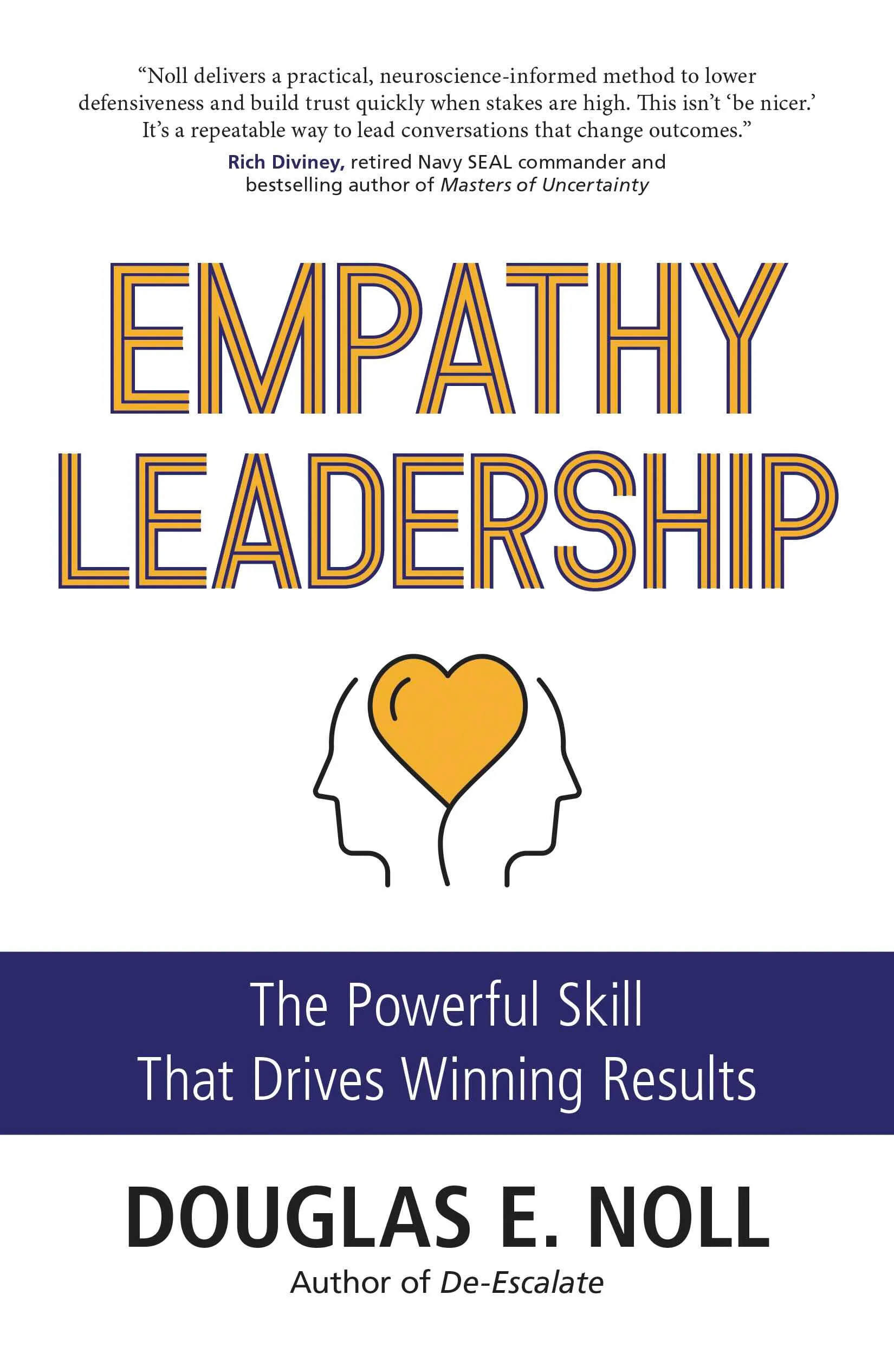
Empathy Leadership: The Powerful Skill That Drives Winning Results is out now. Order on Amazon, or if a 20-minute call would be more useful, Doug's calendar is here.
Emotional Competence Shapes Your Influence as a Leader
This 90-second emotional competence quiz will tell you how your emotions affect the way you are treated at work and how to gain the respect and influence you deserve as a leader.
Take the Free Assessment
Doug’s Books
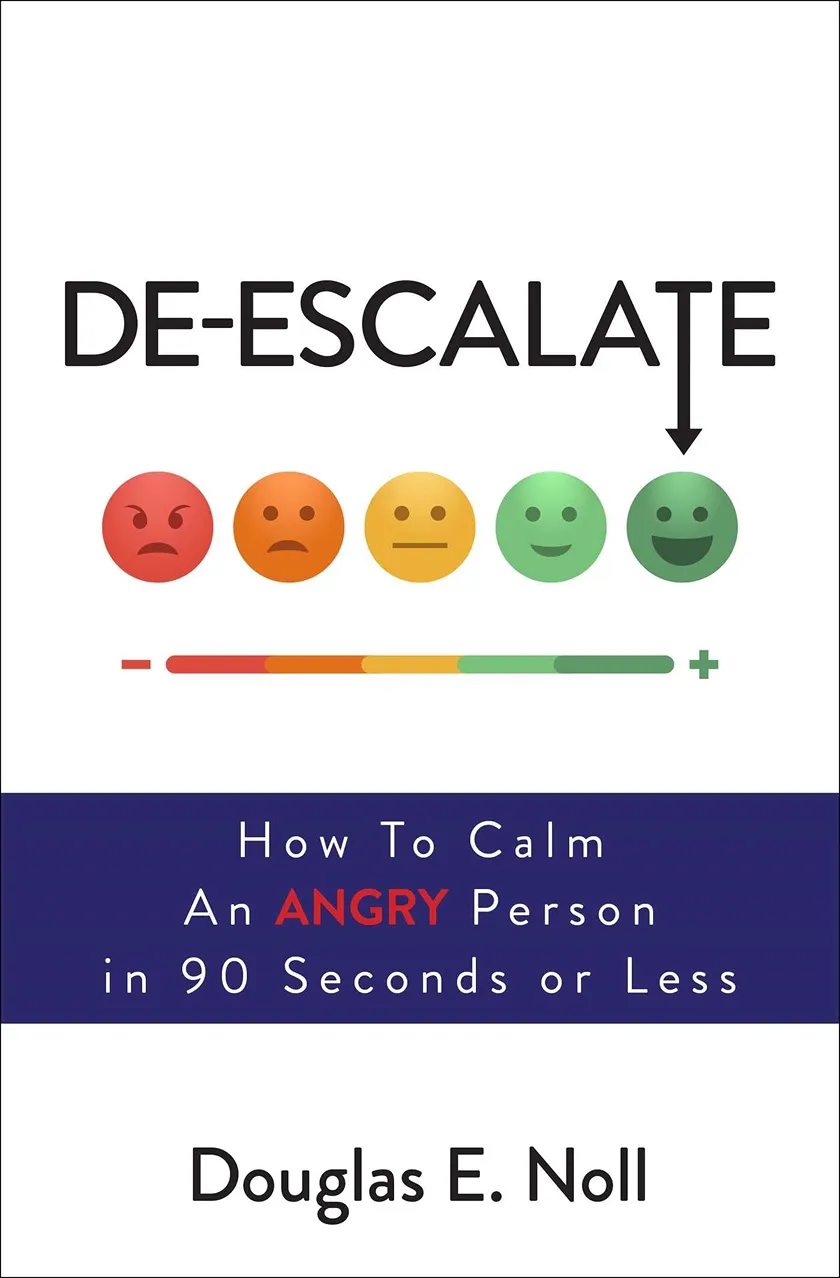
Doug has authored several books on affect labeling and emotional competency, including De-Escalate: How to Calm an Angry Person in 90 Seconds or Less, which won multiple awards and has been adopted by organizations worldwide.

More Blogs
View All