5 Essential Signs of Corporate Emotional Intelligence That Actually Moves Numbers


The CFO asked the Head of Talent one question in the budget meeting and waited.
"How do I know your emotional intelligence programme is actually working, in a way I can show the board?"
She had answers. Participant satisfaction. Pre-post self-assessment. Verbatim quotes. She had three slides of them ready. She also knew, as she opened her mouth, that none of them were the kind of answer the CFO was asking for.
Corporate emotional intelligence either shows up on the P&L or it is theatre. Here are the five observable signs that a programme is actually working, each of which is measurable and reportable in a way the board can act on.
1. The average time from problem identification to escalation drops
In a team with low emotional intelligence, bad news travels slowly because people avoid raising it. In a team with high emotional intelligence, bad news travels fast because people have been shown it is safe to raise.
The measurable version is specific. Pick five categories of operational problem your team routinely handles. Measure the average time between the problem being observable in the data and the problem being raised to the executive layer. Baseline it. Re-measure quarterly.
Programmes that work show a measurable reduction in this latency within six months. Programmes that do not, do not.
This single metric correlates strongly with revenue outcomes, because the compounding cost of late escalation is enormous and the compounding benefit of early escalation is proportionally large.
2. The number of decisions that have to be revisited drops
A decision made in a leadership meeting with poor emotional intelligence is a decision made with incomplete information, because the person who disagreed stayed quiet. That decision has to be revisited later, often in a worse context.
Count the number of material decisions revisited per quarter. In teams with low EQ, this number is high and relatively constant. In teams with improving EQ, this number drops measurably within two quarters, as the quality of the original decision improves because dissent is being surfaced earlier.
This is a boring metric. It is also one of the most reliable indicators of whether the behaviour has changed, because it measures a specific operational outcome rather than a self-reported attitude.
3. The top-performer attrition rate drops
High performers leave organisations with low emotional intelligence more often than any other category of employee. The specific mechanism is that high performers have options, and they use their options when the emotional environment at work degrades.
Measure attrition in the top performance quartile specifically. In teams with improving corporate emotional intelligence, this metric shows measurable change within three quarters. If the broader attrition number does not move but the top-quartile number does, the programme is working on the exact segment that matters most financially.
The replacement cost math is well understood. Each senior top-performer exit avoided is worth 1.5 to 2 times annual salary.
If an executive team is losing one senior exit per quarter to specific emotional-intelligence failures, that is roughly $600,000 to $1,200,000 a year in direct replacement cost before counting lost momentum. The exact number is a two-minute input in Doug's cost of conflict calculator.
4. The frequency of cross-functional friction incidents drops
Count the number of cross-functional conflicts that reach the leadership layer per quarter. These are the conflicts between functions that could not be resolved at the manager level and had to be escalated.
In organisations with low emotional intelligence, this number is high and tends to concentrate around specific pairs of functions. In organisations with improving EQ, the frequency drops and the concentration pattern breaks up. The leaders in the specific function pairs are starting to resolve friction without escalation.
This metric is particularly valuable because it is objective, operationally derived, and already being tracked by most leadership teams in some form. It just has not usually been positioned as an EQ outcome metric.
5. The number of initiatives that die quietly in month three drops
Low-EQ organisations initiate projects enthusiastically and let them die quietly a few months in, when the initial momentum fades and nobody wants to be the person to raise the question of whether the project is actually working.
Count the number of initiatives started in a given quarter that are still being actively worked at month six. In organisations with improving EQ, this ratio improves because leaders are willing to kill underperforming initiatives openly rather than letting them die silently.
Killing more initiatives is a positive EQ outcome. It indicates leaders are willing to admit when something is not working and to redirect resources, which is a specific behavioural change that EQ programmes should produce and that most do not.
Doug Noll teaches Decision-Making Under Stress and Conflict at Pepperdine's Straus Institute, has mediated complex business disputes for 25 years, and co-founded the Prison of Peace Project. His EQ programmes are designed to produce measurable change in all five of the metrics above, with specific accountability to the baseline measurement from day one.
If you have an EQ programme and want the measurement framework your CFO will actually believe, Doug runs a 20-minute diagnostic call before any proposal. Book 20 minutes with Doug.
The Head of Talent's second budget meeting
She came back three weeks later with a different measurement framework. Five metrics. Baseline numbers. Target movement within six months. The CFO approved the budget conditionally on this framework being tracked and reported quarterly.
Six months later three of the five metrics had moved materially. One had moved marginally. One was flat. The CFO renewed the programme and asked her to extend it to a second business unit.
For related reads, see the five shocking costs of low emotional intelligence in the corporate world and workplace empathy habits that show up in quarterly numbers.
Corporate emotional intelligence is measurable. The five signs above are the ones that correlate with financial outcome, and they are what differentiate a programme that works from a programme that scores 4.5 on the exit survey.
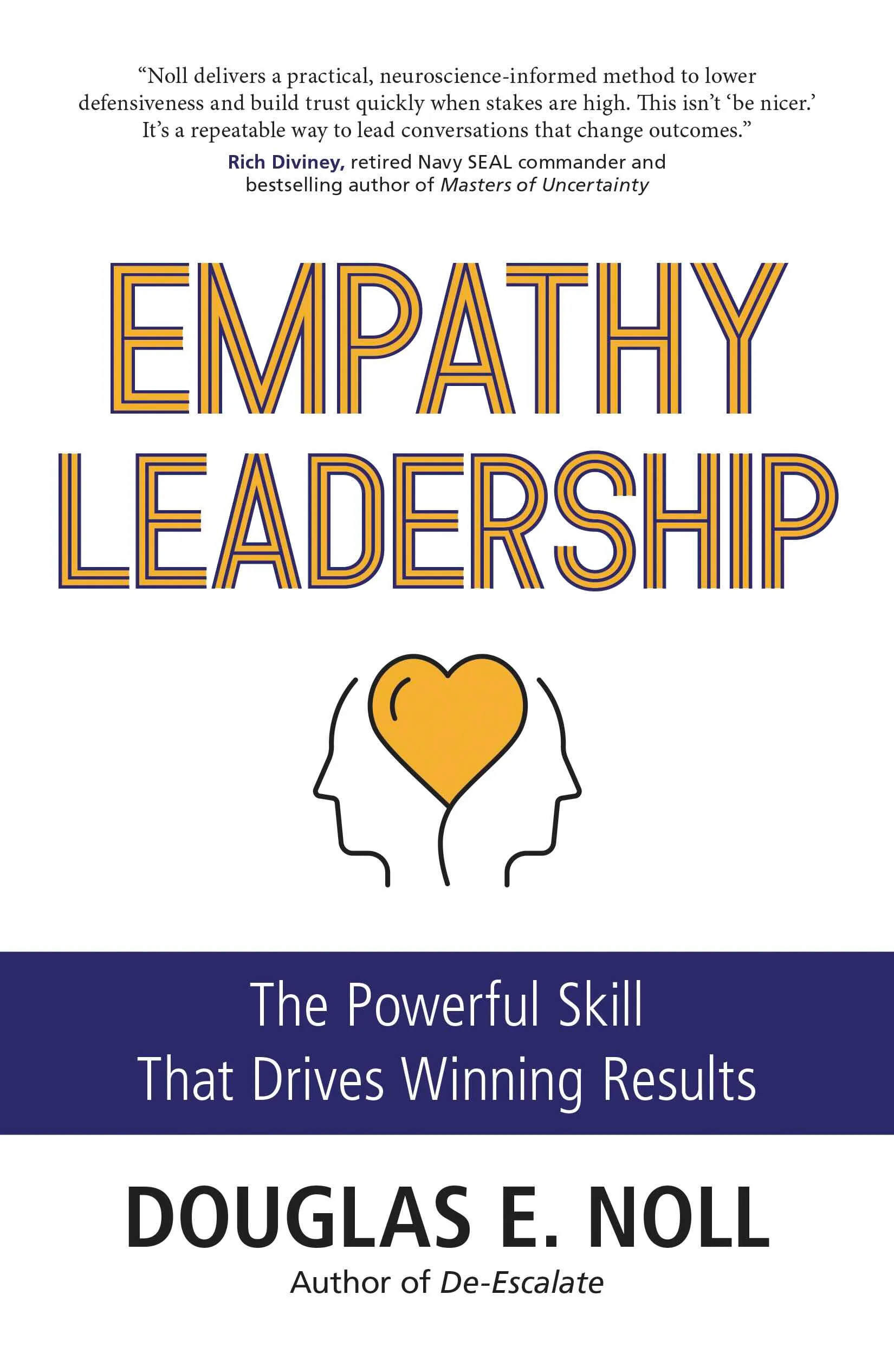
Empathy Leadership: The Powerful Skill That Drives Winning Results is out now. Order on Amazon, or if a 20-minute call would be more useful, Doug's calendar is here.
Emotional Competence Shapes Your Influence as a Leader
This 90-second emotional competence quiz will tell you how your emotions affect the way you are treated at work and how to gain the respect and influence you deserve as a leader.
Take the Free Assessment
Doug’s Books
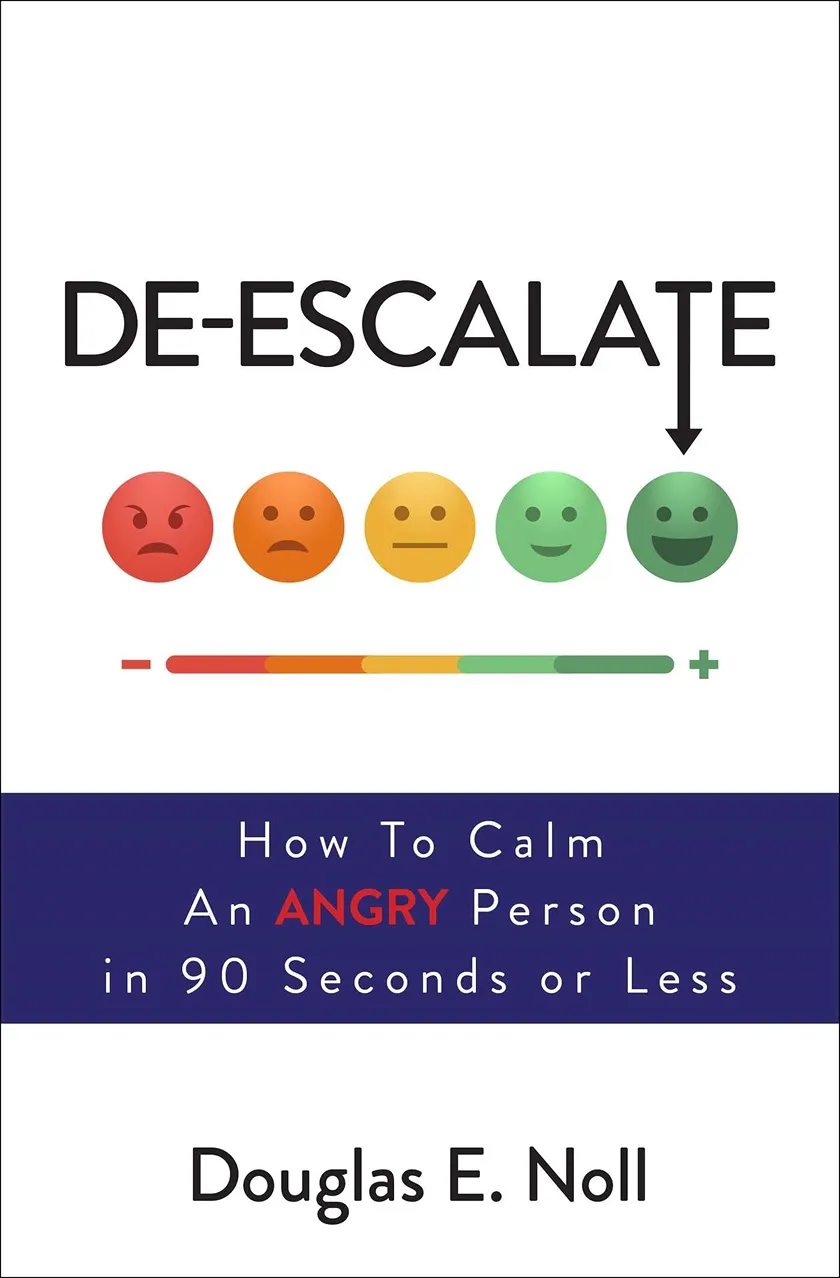
Doug has authored several books on affect labeling and emotional competency, including De-Escalate: How to Calm an Angry Person in 90 Seconds or Less, which won multiple awards and has been adopted by organizations worldwide.