De-escalating anger Why “Calm down” enrages them
%201.avif)

“Calm down” is one of the most expensive phrases in leadership.
A client is angry.
An employee is escalating.
A partner feels betrayed.
A team member is raising their voice.
You say:
“Calm down.”
The room gets worse.
If one angry client interaction turns into a lost $250,000 account, the phrase was not harmless.
If one employee conflict becomes HR escalation, legal review, and resignation, the cost can cross $300,000.
If one executive meeting spirals into 4 follow up meetings at $5,000 per hour, the damage is immediate.
“Calm down” does not reduce anger.
It validates the threat.
The diagnosis
You believe “calm down” is a regulation tool.
It is not.
It is an accusation.
The nervous system hears:
“You are the problem.”
“Your emotion is unacceptable.”
“You are out of control.”
“You are embarrassing yourself.”
That message activates the amygdala harder.
Cortisol rises.
The prefrontal cortex, responsible for reasoning and impulse control, loses even more influence.
Now the angry person is not just angry about the original issue.
They are angry about being judged for being angry.
You doubled the conflict.
Why anger gets louder
Anger is rarely the first emotion.
It is the protective emotion.
Under anger, there is usually something more specific.
Disrespect.
Fear.
Shame.
Powerlessness.
Betrayal.
Disappointment.
When you say “calm down,” you ignore all of that.
The person’s nervous system still feels threatened, unheard, or exposed.
So it increases intensity.
The brain learns:
“My emotion has not landed yet.”
So the volume rises.
The tone sharpens.
The accusation becomes stronger.
The person repeats the same point again.
Not because they lack intelligence.
Because their nervous system is still fighting for recognition.
The five reasons “calm down” fails
1. It invalidates emotional reality
The angry person is experiencing real physiological activation.
Heart rate rises.
Muscles tense.
Cortisol increases.
Attention narrows.
Telling them to calm down does not change that biology.
It denies it.
Denied emotion does not disappear.
It intensifies.
2. It creates status threat
No adult wants to be managed like a child.
“Calm down” places you above them.
It communicates superiority.
Status threat activates the amygdala.
Now the person is defending dignity, not discussing the issue.
3. It shifts the focus to behavior too early
Yes, tone matters.
Yes, boundaries matter.
But if you correct tone before naming emotion, the person feels controlled.
Controlled people escalate.
Regulated people can hear boundaries.
Sequence matters.
Emotion first.
Boundary second.
4. It makes the leader the enemy
Before “calm down,” the person may be angry about the problem.
After “calm down,” they are angry at you.
You moved from responder to target.
That is poor conflict control.
5. It blocks the return to logic
The prefrontal cortex cannot regain control while threat is increasing.
“Calm down” increases threat.
So the person becomes less able to reason, not more.
You cannot command logic back into an activated brain.
You have to lower threat first.
The neuroscience of anger
The amygdala detects threat before conscious reasoning begins.
When anger appears, the nervous system has already decided something is dangerous.
That danger can be physical, but in leadership conflict it is usually social.
Disrespect.
Unfairness.
Exclusion.
Humiliation.
Loss of control.
Once the amygdala activates, cortisol rises.
When cortisol rises:
- Listening decreases
- Impulse control weakens
- Memory narrows
- Attribution bias increases
- Defensive behavior intensifies
The prefrontal cortex cannot fully process explanation until activation drops.
That is why facts fail during anger.
That is why “calm down” fails.
The person does not need a command.
They need emotional accuracy.
The counterintuitive protocol
Do not tell them to calm down.
Tell them what they feel.
When someone is angry, say:
“You are angry.”
Pause.
Then go deeper:
“You feel disrespected.”
Pause.
Or:
“You feel this has not been fair.”
Pause.
Or:
“You are worried this is going to get worse.”
Pause.
Short.
Direct.
Declarative.
No explanation.
No defense.
No “I understand.”
Accurate emotional labeling reduces amygdala activation.
Cortisol begins to drop.
The prefrontal cortex starts to reengage.
Now the person can think.
Now boundaries can land.
The scripts
When a client says:
“This is ridiculous. Your team completely wasted my time.”
Do not say:
“Please calm down.”
Say:
“You are angry.”
Pause.
“You feel let down.”
Pause.
Then:
“Now we are going to fix what can be fixed.”
When an employee says:
“This is unfair. You people never listen.”
Do not say:
“Calm down and be professional.”
Say:
“You feel this has not been fair.”
Pause.
“You feel ignored.”
Pause.
Then:
“The standard still matters, and we are going to discuss it clearly.”
When a colleague says:
“I am sick of this. Nothing changes.”
Do not say:
“You need to relax.”
Say:
“You are frustrated.”
Pause.
“You feel powerless.”
Pause.
Then:
“What change would actually matter here?”
When an executive raises their voice in a meeting:
Do not say:
“Let’s all calm down.”
Say:
“There is frustration in the room.”
Pause.
“There is concern that this decision creates risk.”
Pause.
Then:
“Now we will separate the risk from the reaction.”
The leadership standard
De-escalation does not mean tolerating abusive behavior.
It means sequencing the response correctly.
Wrong sequence:
“Calm down.”
“Watch your tone.”
“Here are the facts.”
Correct sequence:
“You are angry.”
“You feel disrespected.”
Pause.
“The tone still needs to change.”
“Now we will deal with the issue.”
The boundary comes after regulation.
If you set the boundary before regulation, it lands as control.
If you set the boundary after regulation, it lands as leadership.
The 30-second replacement
Remove “calm down” from your vocabulary.
Replace it with this:
“You are angry.”
Pause.
“You feel [deeper emotion].”
Pause.
Then hold the standard.
Examples:
“You are angry.”
“You feel dismissed.”
Pause.
“We still need to speak directly without attacking.”
Or:
“You are frustrated.”
“You feel this has been handled badly.”
Pause.
“Now we are going to identify the next action.”
Or:
“You are upset.”
“You feel blamed.”
Pause.
“We still need to talk about accountability.”
That is control without force.
The cost of getting this wrong
If “calm down” escalates one employee conflict into resignation, the cost can exceed $250,000.
If it escalates one client conflict into churn, the cost can exceed the entire annual contract value.
If it turns one executive disagreement into political resistance, the delay can cost six or seven figures.
The phrase is short.
The invoice is not.
Anger does not need to be suppressed.
It needs to be decoded.
Stop saying “calm down.”
Name the emotion.
Lower the threat.
Then lead.
Emotional Competence Shapes Your Influence as a Leader
This 90-second emotional competence quiz will tell you how your emotions affect the way you are treated at work and how to gain the respect and influence you deserve as a leader.
Take the Free Assessment
Doug’s Books
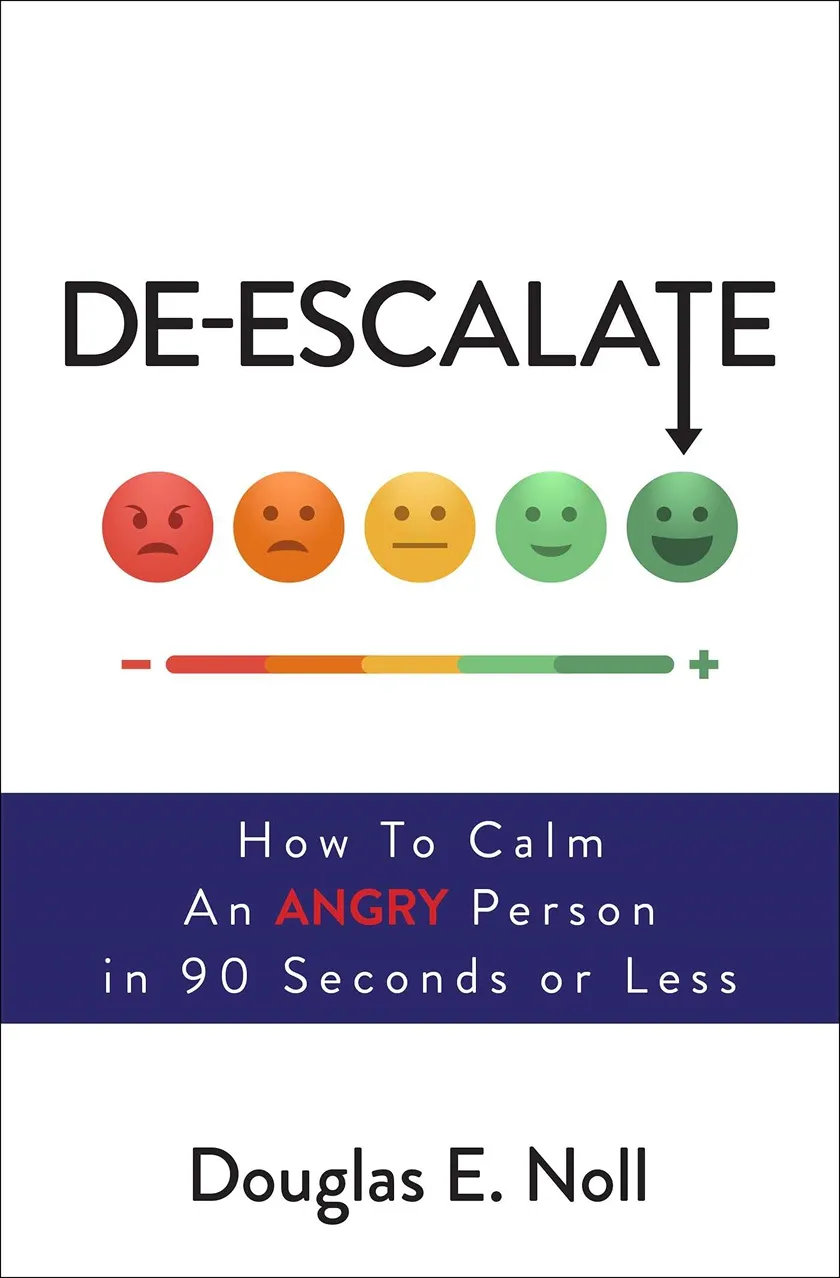
Doug has authored several books on affect labeling and emotional competency, including De-Escalate: How to Calm an Angry Person in 90 Seconds or Less, which won multiple awards and has been adopted by organizations worldwide.