5 Powerful Ways to End Workplace Arguments in Under 90 Seconds


The team lead walked into the open-plan office and heard the argument escalating from twenty feet away.
Two of her engineers were going at it over a code review. The specific technical disagreement was legitimate. The temperature in the exchange was not. By the time she reached them, three other engineers were listening and the conversation had moved from the code to each other's judgment. She had about 90 seconds before this became something she would have to escalate to HR.
She used the five powerful moves below. The argument ended in under 90 seconds. Both engineers were back to work in under five minutes. HR never heard about it.
1. Name the state of the room out loud
The first move is to say what everyone is already feeling. "This has escalated and I can tell both of you are frustrated." Two sentences. Nothing else. Do not try to fix it, do not take sides, do not reference the content.
The naming does specific work. Both parties hear their state acknowledged by a third person with authority. The acknowledgment reduces the pressure they feel to escalate further to make their point. The room temperature drops a few degrees in the moment it takes to say the words.
This move usually buys you 15 seconds of attention from both parties. That is enough for the second move.
2. Separate the parties physically
Within those 15 seconds, physically move the parties. "Marcus, come with me for 10 minutes. Priya, give us 10 minutes and we will come back to this." Physical separation disrupts the escalation loop because the two nervous systems are no longer feeding each other visually and audibly.
This is simple and almost nobody does it. The instinct is to resolve the conflict in place. Separation is faster, more effective, and preserves everyone's dignity because the audience disappears.
The 10 minutes is not a cooling-off period. It is working time for move three.
3. Hear one party fully without interrupting
Take one party into a private space and let them talk for the full 10 minutes without interrupting them. You are not resolving the conflict in this conversation. You are letting the first party discharge enough of the activation that they can return to the room able to think.
Pick whichever party was more visibly escalated. Letting the more escalated party go first produces faster overall resolution because their regulation is on a longer timeline.
Do not advise, do not take sides, do not draft a response. Listen. Occasionally name what you are hearing. "You feel that your technical judgment is being dismissed." The naming helps the party hear themselves and settle.
If a team of 12 engineers is losing an average of 90 minutes a month to unresolved peer conflict, that is roughly $75,000 a year in direct time cost, before counting the quality cost on the shipping product. The exact number is a two-minute input in Doug's cost of conflict calculator.
4. Repeat the process with the other party, within the hour
The second party now gets the same 10 minutes with you, within the hour. The order is important. If you let the second party wait a full day, the activation hardens into a story and resolution becomes harder.
Same rules. Listen without advising. Name what you hear. Do not reference what the first party said. The second party gets the same quality of attention regardless of who you think was more at fault.
By the end of this 10-minute conversation, both parties have been heard. Both are substantially more regulated than they were in the open-plan moment. Both are ready for move five.
5. Bring them back together for a short structured conversation
Bring the two parties into the same private space for 10 to 15 minutes. Open with one sentence. "I have heard both of your positions and I am not here to decide who was right. I am here to help you both agree on how you want to work on the next version of this code review."
The structured conversation focuses on the operational question, not the interpersonal one. The parties exchange specific positions on the technical question, agree a path forward, and leave the room.
The interpersonal issue often does not require resolution once the operational one is handled. Both parties go back to work, the technical disagreement is resolved on merits, and the open-plan incident becomes a non-event.
When this does not work
This protocol works for 85 to 90 percent of in-the-moment workplace arguments. The 10 to 15 percent where it does not work are situations where the conflict has deeper roots and requires a longer-form intervention. In those cases, the protocol still buys you time to arrange the longer intervention without the current moment escalating further.
Any protocol that works 85 percent of the time in 90 seconds is a protocol worth having built in before the next escalation.
Doug Noll teaches Decision-Making Under Stress and Conflict at Pepperdine's Straus Institute, has mediated complex business disputes for 25 years, and co-founded the Prison of Peace Project. The five-move protocol above is drawn directly from the de-escalation work he developed with maximum security inmates, where the stakes of a failed de-escalation were physical rather than reputational.
If your team leaders need the capability to resolve in-the-moment workplace arguments in under 90 seconds, Doug runs a 20-minute diagnostic call before any proposal. Book 20 minutes with Doug.
The team lead's third intervention
She used the protocol twice more over the following three months. Both times the arguments ended inside 90 seconds. Neither escalated. One of the engineers involved asked her to show him the protocol so he could use it with his own team. By the end of the year, the protocol was in use across the engineering function.
For related reads, see resolving workplace conflict without a lawsuit and four critical de-escalation techniques every leader should memorise.
Workplace arguments do not have to escalate. The five-move protocol above resolves most of them in under 90 seconds. The capability belongs in every team lead's hands before the next escalation.
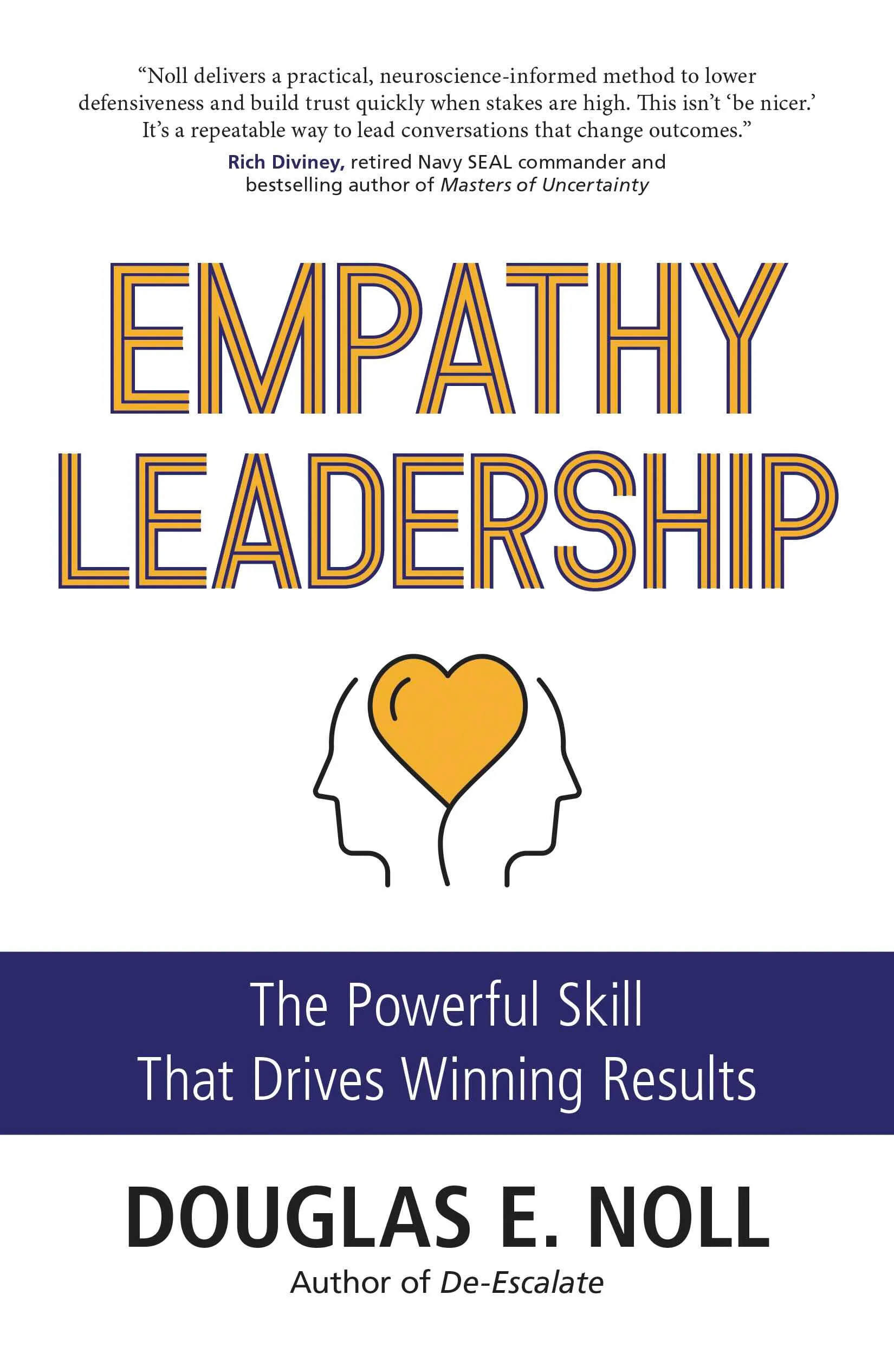
Empathy Leadership: The Powerful Skill That Drives Winning Results is out now. Order on Amazon, or if a 20-minute call would be more useful, Doug's calendar is here.
Emotional Competence Shapes Your Influence as a Leader
This 90-second emotional competence quiz will tell you how your emotions affect the way you are treated at work and how to gain the respect and influence you deserve as a leader.
Take the Free Assessment
Doug’s Books
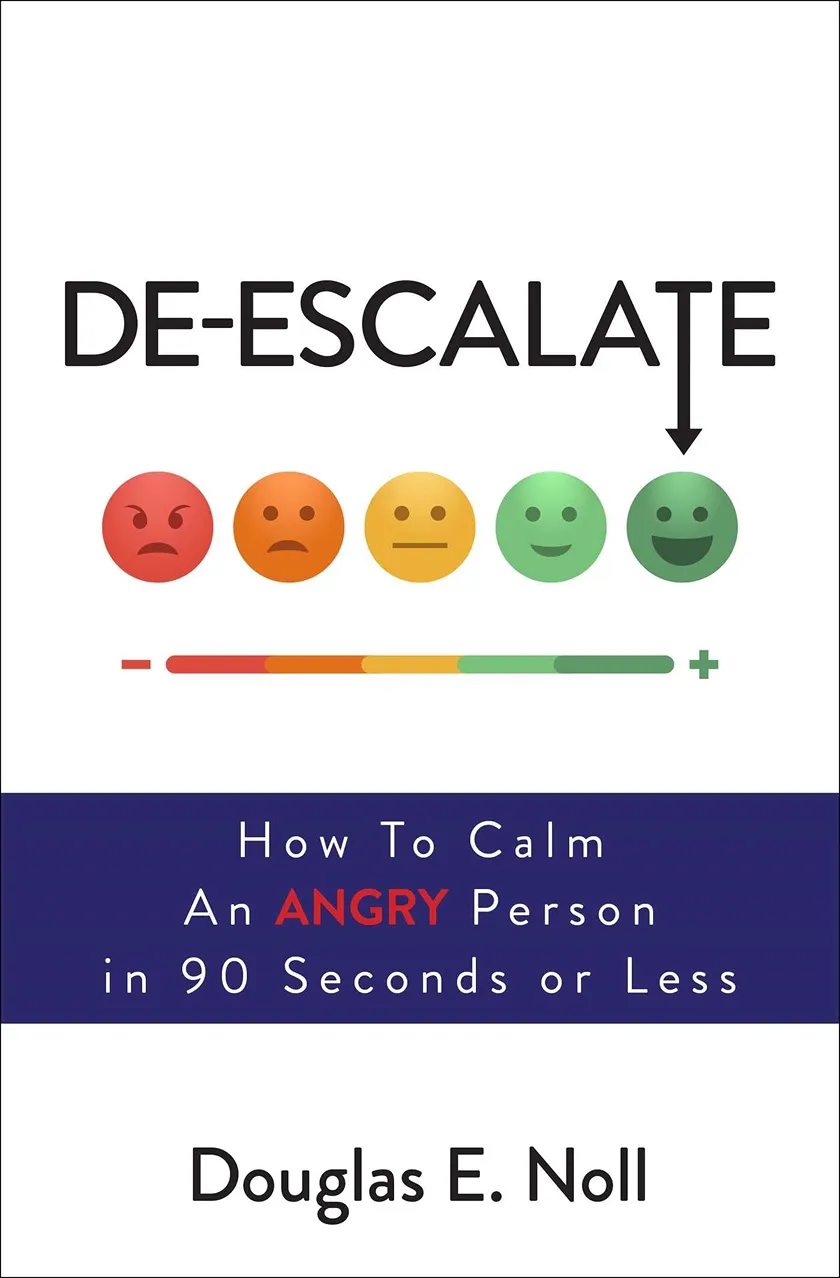
Doug has authored several books on affect labeling and emotional competency, including De-Escalate: How to Calm an Angry Person in 90 Seconds or Less, which won multiple awards and has been adopted by organizations worldwide.
More Blogs
View All