Employee Retention: Stop Burnout Without “Perks”
%201.avif)

Burnout is not solved with snacks, wellness stipends, meditation apps, or an extra day off after the damage is done.
Those are cosmetic repairs.
If a high performer earning $150,000 burns out and leaves, replacement cost can reach 150 to 200 percent of salary.
That is $225,000 to $300,000 for one resignation.
If 4 strong employees leave in a year, the cost crosses $1 million before you count lost client trust, delayed execution, team morale, and management distraction.
This is the Retention Tax.
And most companies keep paying it because they treat burnout like a benefits problem.
It is not.
Burnout is a nervous system problem.
The diagnosis
You believe burnout comes from too much work.
That is incomplete.
Burnout comes from too much threat without enough control, recovery, or emotional recognition.
A heavy workload alone does not destroy people.
A heavy workload combined with silence, pressure, unclear priorities, emotional invalidation, and no sense of agency destroys people.
The amygdala reads constant pressure as danger.
Cortisol stays elevated.
The prefrontal cortex, responsible for focus, judgment, creativity, and self-control, loses efficiency.
The employee still performs for a while.
Then the system begins to fail.
They become slower.
Sharper.
Quieter.
Less creative.
Less emotionally available.
Less willing to go beyond the job description.
Then they leave.
Leadership calls it sudden.
It was not sudden.
The nervous system had been resigning for months.
The five reasons perks fail
1. Perks do not reduce threat
A wellness benefit does not matter if the manager still creates panic every Monday morning.
The amygdala does not calm down because the company offers yoga.
It calms down when the environment becomes predictable, emotionally accurate, and fair.
If the source of burnout is chronic threat, perks become decorative.
They do not touch the cause.
2. Perks can feel insulting
When someone is exhausted and leadership offers a token benefit, the employee hears:
“We are not going to change the system. Here is a small reward for surviving it.”
That increases resentment.
Resentment lowers discretionary effort.
If a 30 person team earning an average of $110,000 loses 10 percent discretionary effort, that is $330,000 in lost performance annually.
A perk that ignores reality becomes another form of invalidation.
3. Perks do not restore control
Burnout accelerates when people feel powerless.
They cannot change priorities.
They cannot question deadlines.
They cannot say no.
They cannot name overload without being judged.
Powerlessness activates threat.
Perks do not restore agency.
Clear priorities do.
Managerial regulation does.
Honest workload decisions do.
4. Perks do not fix bad management
Most burnout is transmitted through leadership behavior.
Urgent tone.
Constant interruptions.
Unclear standards.
Last-minute changes.
Public correction.
Emotional volatility.
A bad manager with good perks still creates attrition.
If one manager drives 3 employees earning $120,000 to leave, and replacement cost is 150 percent of salary, the cost is $540,000.
The perk budget was never the issue.
The manager’s nervous system was.
5. Perks arrive too late
Companies usually respond after burnout is visible.
By then, the employee is already emotionally detached.
They have stopped believing the organization will change.
They are updating their resume quietly.
Late perks do not rebuild trust.
Regulation has to happen before the person disconnects.
The neuroscience of burnout
Burnout is sustained biological activation.
The amygdala keeps detecting threat.
Cortisol stays high.
The prefrontal cortex weakens under pressure.
When this continues, the employee loses capacity for:
- Creative thinking
- Emotional regulation
- Long-term planning
- Patience
- Memory
- Decision quality
- Social connection
This is why burned out employees do not just feel tired.
They think differently.
They relate differently.
They decide differently.
The brain shifts from growth to protection.
Protection mode is not where high performance lives.
The retention protocol
Stop asking:
“What perk can we add?”
Ask:
“What threat can we remove?”
Step 1. Name the emotional reality
When someone looks drained, do not say:
“Hang in there.”
Say:
“You are exhausted.”
Pause.
If they push back, say:
“You have been carrying too much for too long.”
Pause.
This is not therapy.
It is accuracy.
Accurate emotional labeling reduces amygdala activation. Cortisol declines. The prefrontal cortex starts to return.
Step 2. Identify the pressure source
After regulation, ask:
“What is creating the most pressure right now?”
Not:
“How can we support you?”
That question is too vague.
Ask for the pressure source.
Deadlines.
Role confusion.
Client demands.
Manager behavior.
Unclear priorities.
Too many meetings.
Lack of control.
Burnout becomes solvable only when the threat is named.
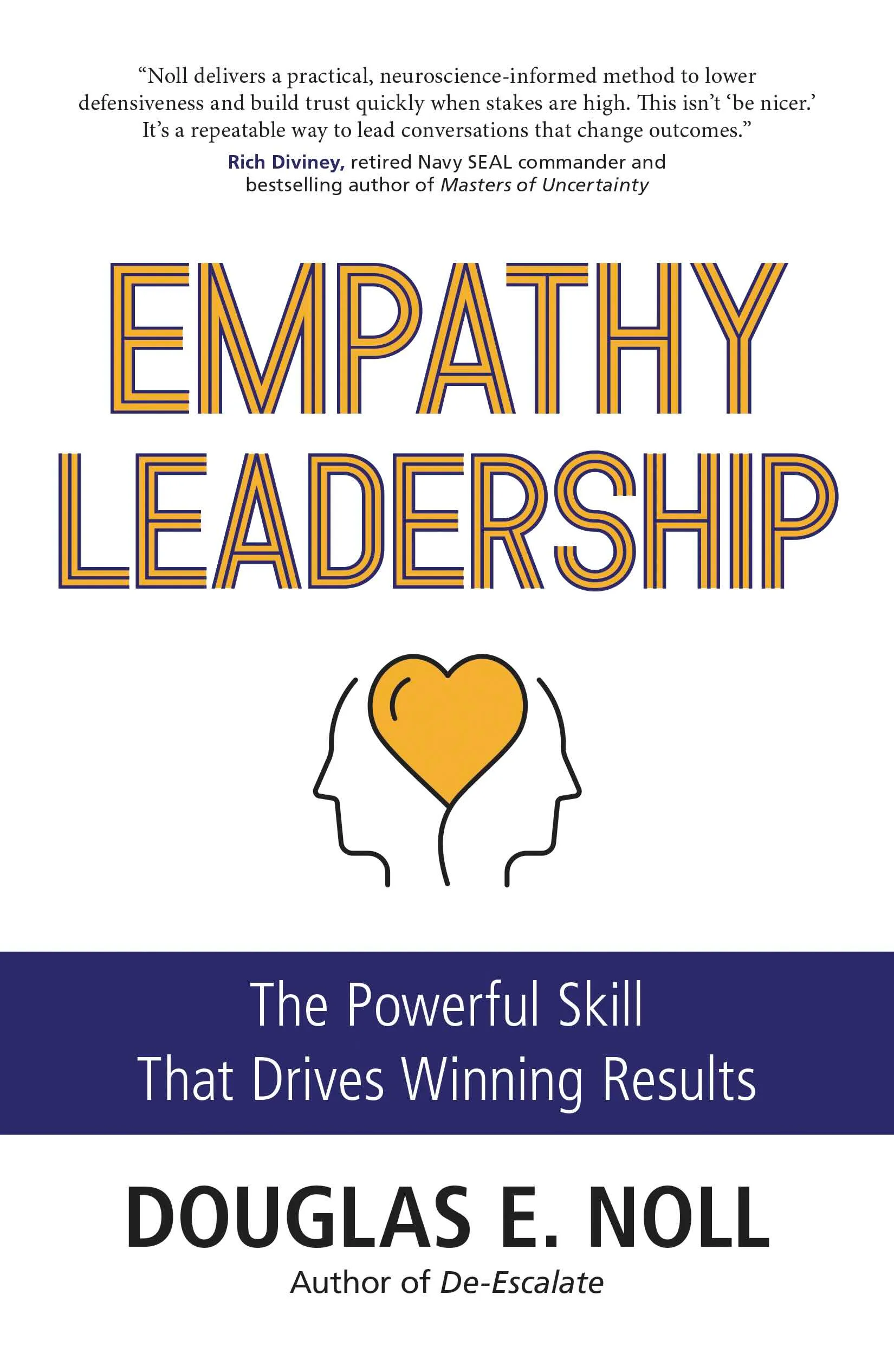
This is the neuroscience at the heart of Doug Noll's new book, Empathy Leadership: The Powerful Skill That Drives Winning Results.
Step 3. Remove one load
Do not promise cultural change.
Remove one load immediately.
Cancel one recurring meeting.
Move one deadline.
Clarify one decision owner.
Stop one low-value task.
Protect one focus block.
Reduce one approval layer.
Small removals create nervous system proof.
The employee sees that the environment can change.
Trust begins to return.
Step 4. Restore agency
Burned out employees need control back.
Ask:
“What decision do you need more authority over?”
Or:
“What should you stop asking permission for?”
Agency lowers threat.
Lower threat restores energy.
Step 5. Hold the standard without adding panic
Retention does not mean lowering expectations.
It means removing unnecessary threat so people can meet expectations.
Say:
“The standard remains high.”
Pause.
“We are removing the noise around it.”
That is leadership.
The scripts that retain people
When someone says:
“I’m just tired.”
Say:
“You are exhausted.”
Pause.
When someone says:
“It’s fine. I’ll manage.”
Say:
“You are carrying more than you are saying.”
Pause.
When someone says:
“I do not know how long I can keep doing this.”
Say:
“You are burned out.”
Pause.
When someone says:
“There is too much going on.”
Say:
“You are overwhelmed by the volume.”
Pause.
Then ask:
“What is the one thing that needs to come off your plate first?”
Short. Direct. Regulating.
No motivational speech.
No perk pitch.
No fake positivity.
The leadership standard
Retention is not built with perks.
Retention is built when the nervous system learns:
Bad news is safe.
Overload can be named.
Priorities can be clarified.
Managers will not punish honesty.
Performance standards are high but not chaotic.
That is emotional safety.
Not comfort.
Not indulgence.
Not softness.
Safety means people can tell the truth early enough for leaders to act.
If burnout prevention saves 3 employees earning $150,000 each, and replacement cost is 150 percent, that preserves $675,000.
If it restores 5 percent productivity across a $10 million payroll, that adds another $500,000 in recovered value.
That is over $1 million without adding a single perk.
Your best people do not need another benefit.
They need a workplace that stops burning their nervous system for output.
Remove threat.
Restore agency.
Keep the standard.
Emotional Competence Shapes Your Influence as a Leader
This 90-second emotional competence quiz will tell you how your emotions affect the way you are treated at work and how to gain the respect and influence you deserve as a leader.
Take the Free Assessment
Doug’s Books
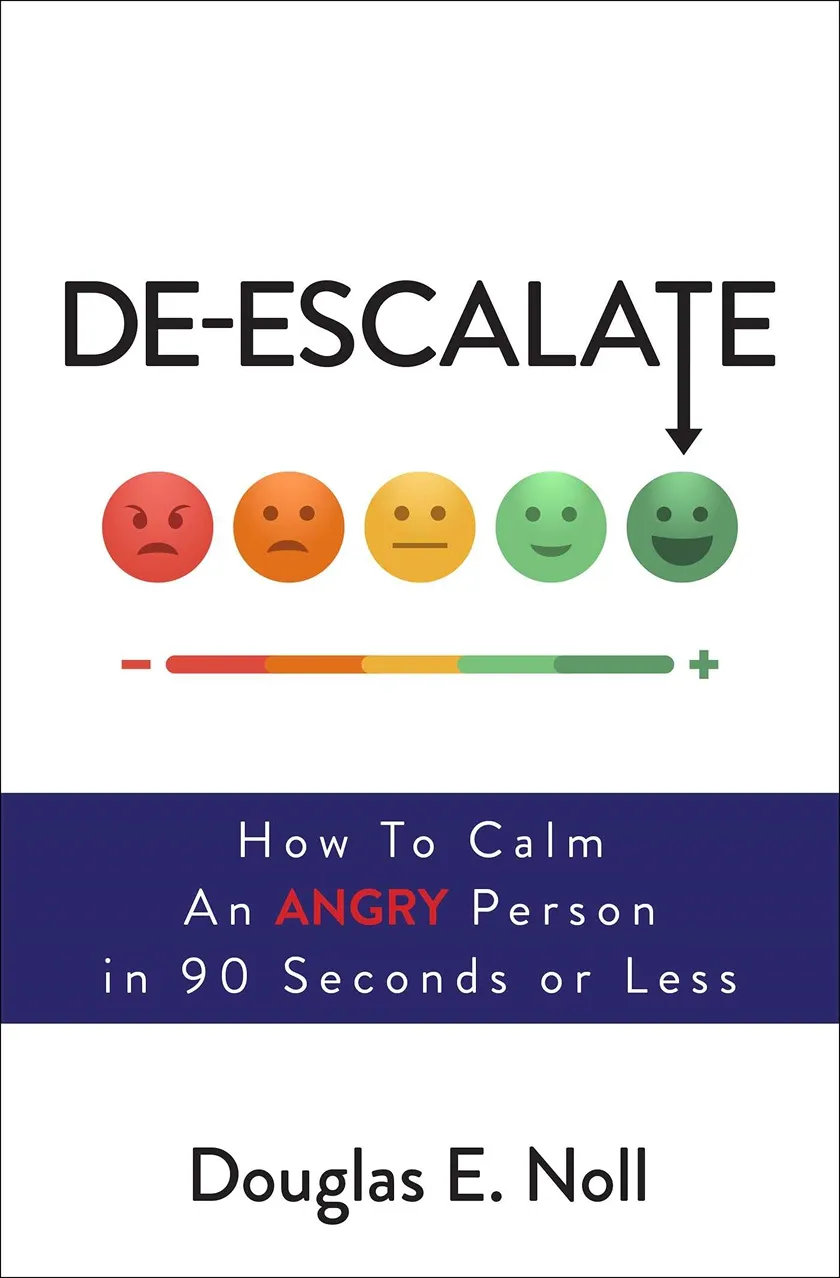
Doug has authored several books on affect labeling and emotional competency, including De-Escalate: How to Calm an Angry Person in 90 Seconds or Less, which won multiple awards and has been adopted by organizations worldwide.