What Emotional Mastery for Leaders Looks Like in a Boardroom Crisis


The board meeting was supposed to be a routine quarterly review.
Fifteen minutes in, the lead director raised a question about the customer concentration risk the CEO had been minimising for two quarters. The CEO's face went red. He pushed back from the table. He said one sentence he could not take back, which was that if the board did not trust his judgment on this he could not continue to run the company. The room went silent. The chair called a 20-minute break.
That was the moment the company's valuation at exit changed by somewhere between 10 and 15 percent, 18 months before the actual exit happened. Not because of what the CEO said, but because of what the board saw: a CEO who did not have emotional mastery under board-level pressure.
Here is what emotional mastery for leaders actually looks like in a boardroom crisis, with the four-step protocol that makes it accessible.
The pattern the board was watching for
Boards do not primarily evaluate CEOs on strategy or operational competence, because they can verify both of those with data. They evaluate CEOs on judgment under pressure, because the moments that determine company value are usually moments of pressure, and the CEO's response in those moments is what boards cannot delegate.
A CEO who loses composure under hard questions is a CEO the board starts quietly planning to replace. The replacement does not happen immediately. It happens over two or three quarters, as the board builds the case, identifies candidates, and prepares the transition.
The CEO in this case did not know he was being replaced. The board had already started.
What emotional mastery looked like for the CEO who survived the equivalent moment
A different CEO, in a different company, in a comparable situation, handled it differently. The lead director asked a comparably hard question about operational decline. The CEO's response had four specific components, each of which is trainable.
Step 1: Acknowledge the physical response, silently. The CEO felt the heat in his face. He noticed it before he spoke. The noticing bought him one second.
Step 2: Deploy the pause. He said, "Give me a moment with that one." Three seconds. The board watched him think. The three seconds did not read as weakness. They read as seriousness.
Step 3: Name the emotional state in the room. "I can tell this is a question you have been sitting on for a while and I want to address it properly. I also want to say that the data on this does look bad from where you sit." Two sentences. He named his own understanding of the board's position before offering his analysis.
Step 4: Give the actual answer. Having regulated himself and acknowledged the room, he answered the question substantively. The answer was not perfect. It was substantially better than the answer that would have come out immediately, and it was delivered from a state the board could evaluate rather than one they had to accommodate.
The board watched this exchange and made a specific judgment. This CEO had emotional mastery under board-level pressure. The company's value as the board constructed it in that moment was higher than it had been going into the meeting.
If a leadership team is losing eight hours a quarter to a single executive's emotional dysregulation under board pressure, that is roughly $500,000 a year at exec hourly rates in direct cost, before counting the strategic cost of decisions made under duress. The exact number is a two-minute input in Doug's cost of conflict calculator.
Why this is harder than it looks
The four-step protocol takes about 10 seconds. The capability to execute it requires three things that are not obvious.
Physiological self-awareness. You have to notice the heat in your face before you speak. Most executives have never developed this noticing. They go from stimulus to response without an awareness gap.
The courage to pause publicly. Three seconds of silence in a boardroom feels like 30 to the person pausing. Executives who have not rehearsed the pause tend to fill it with hedge words or defensive phrasing. The pause has to be clean.
The composure to name the other party's position. The instinct under pressure is to defend. Naming the other party's position accurately is counter-instinctual and requires practice.
Each of these is trainable. None of them are taught in standard executive coaching or leadership programmes.
What the first CEO could have done
The first CEO could have deployed the same protocol. He had three seconds between the lead director's question and his response. He could have used them. The entire trajectory of the next 18 months would have been different.
He did not have the capability built, so he could not deploy it. The capability has to exist before the moment demands it.
Doug Noll was named 2018 Neutral of the Year by the National Academy of Distinguished Neutrals. He teaches Decision-Making Under Stress and Conflict at Pepperdine's Straus Institute. The four-step protocol above is drawn from 25 years of mediating high-stakes conversations where failure to regulate had immediate consequences.
Doug runs a quarterly Roundtable with six to eight founders working the same leadership-room problem in one room. The next one is $7,500 a seat. See if the Roundtable fits.
What the first CEO is doing now
He is going through a specific protocol-building programme, with his new coach, to develop the capability he did not have in that board meeting. He is not CEO of that company any more. The board decided to make the change six months after the meeting. The company's exit valuation was lower than it would have been if he had been able to regulate in the key moments.
He has told two other CEOs the story. Both have taken emotional regulation seriously since.
For related reads, see seven reasons emotional intelligence in the c-suite fails the pressure test and what emotion regulation for executives actually looks like.
Emotional mastery for leaders is not a trait. It is four steps, deployed consistently, by executives who have decided the next ten seconds are worth training for.
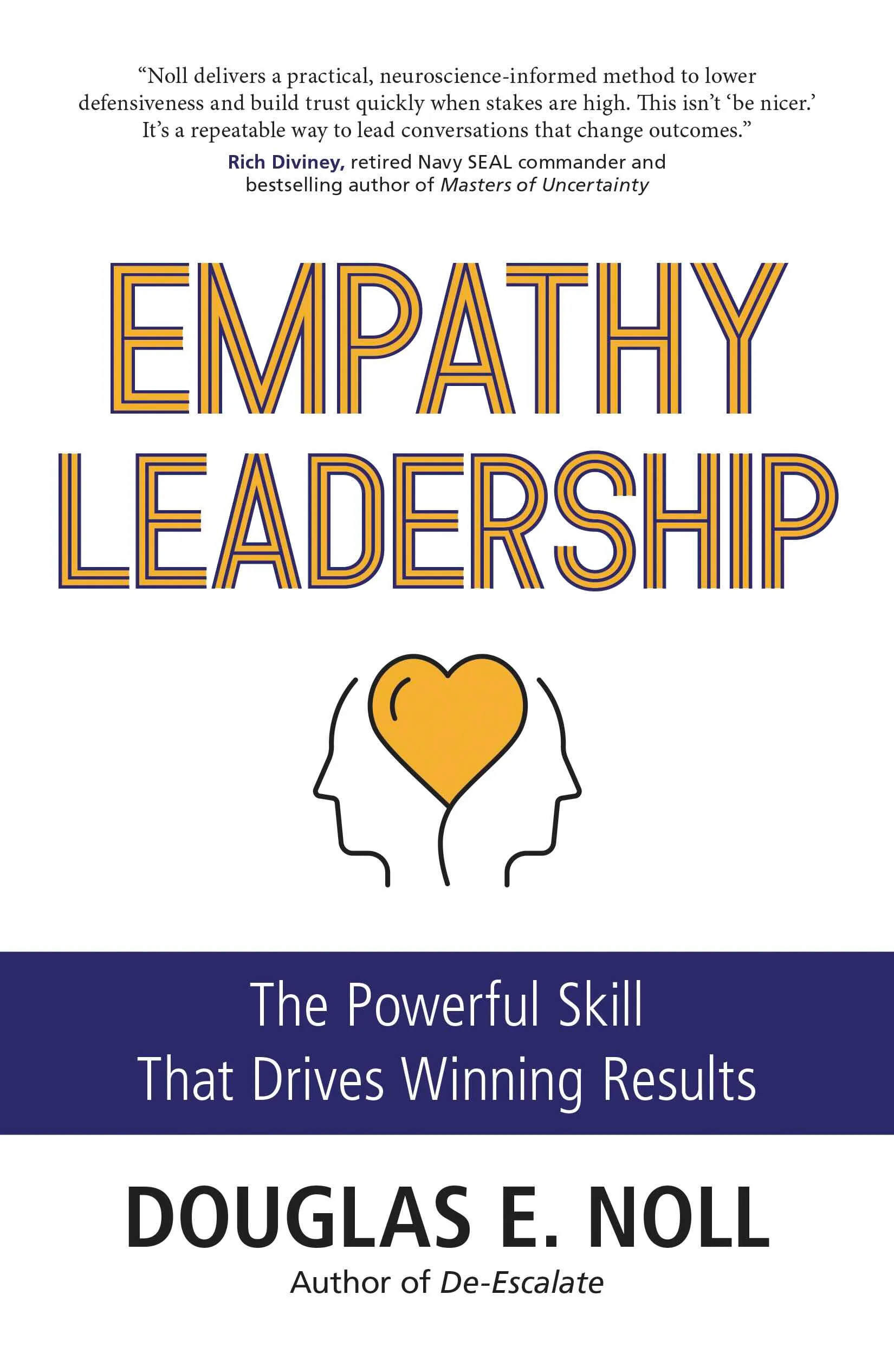
Empathy Leadership: The Powerful Skill That Drives Winning Results is out now. Order on Amazon, or if a 20-minute call would be more useful, Doug's calendar is here.
Emotional Competence Shapes Your Influence as a Leader
This 90-second emotional competence quiz will tell you how your emotions affect the way you are treated at work and how to gain the respect and influence you deserve as a leader.
Take the Free Assessment
Doug’s Books
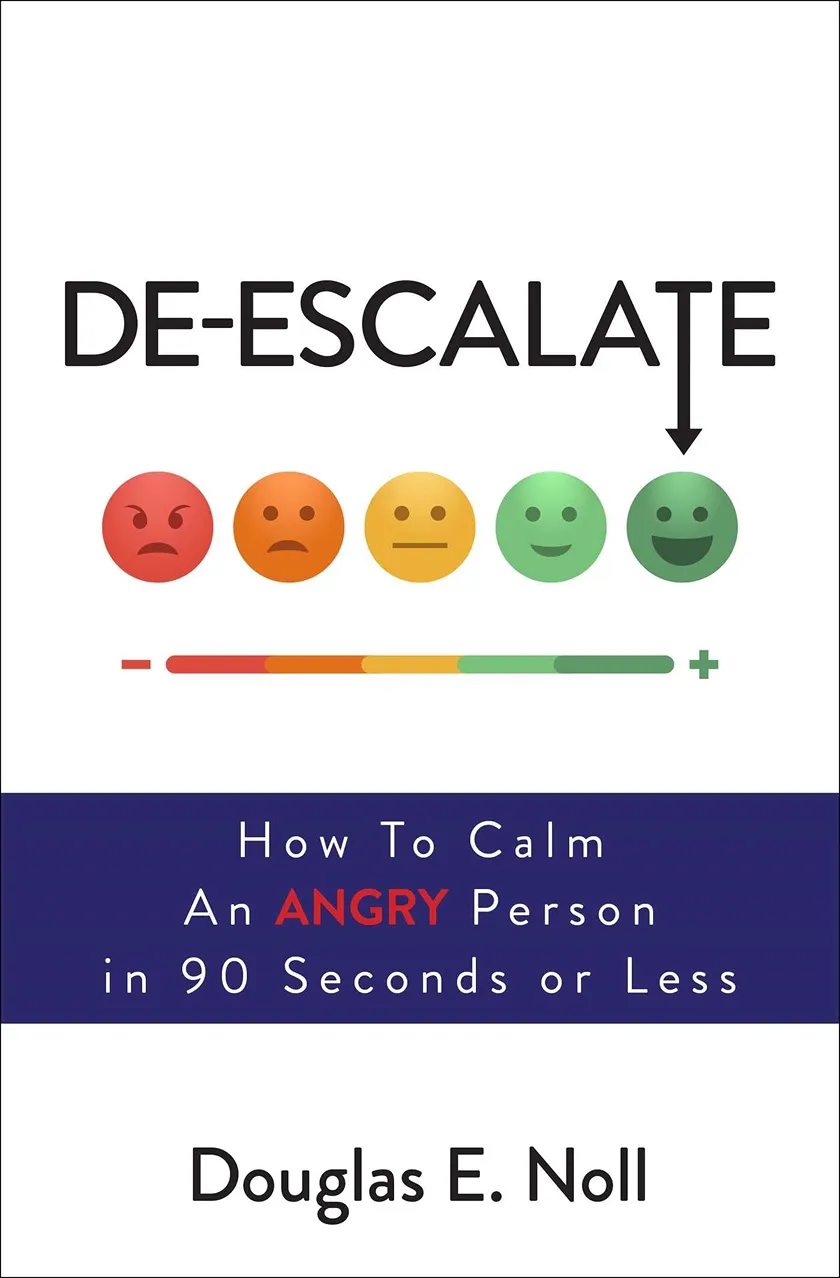
Doug has authored several books on affect labeling and emotional competency, including De-Escalate: How to Calm an Angry Person in 90 Seconds or Less, which won multiple awards and has been adopted by organizations worldwide.