The 6 Essential De-Escalation Strategies for Conflict Resolution Executives Should Know


The in-house counsel sat down with the Head of Operations and laid out the three conflicts the company was heading toward.
Two were between senior employees. One was between the company and a long-term client. All three had the specific pattern that produces litigation if nothing changes: positions hardening, counsel involvement increasing, and the window for resolution narrowing week by week.
The six essential de-escalation strategies below were tested in high-stakes legal mediation across 25 years. They translate directly to the executive meeting room, with specific modifications for the context. Each one is deployable in a 20-minute conversation.
1. The structured private session before any joint conversation
Before bringing conflicted parties into the same room, each party gets a structured private session of at least 90 minutes. The session is not for preparation. It is for the party to name the actual grievance, which is usually not the stated one.
Executives who skip this step and run joint sessions first consistently fail. The joint session cannot find the actual grievance because the actual grievance has not been identified by either party privately. The joint session processes surface positions, produces hollow resolutions, and the conflict re-emerges within six months.
The private session is the single highest-leverage investment in de-escalation. It is also where most executive mediators cut corners because it is time-consuming and expensive. The strategies that work preserve it.
2. Anchor the joint session on a specific event, not a pattern
Once the actual grievance is identified in the private sessions, the joint session anchors on a specific event rather than a general pattern. "The event in Q2 where the roadmap was changed without consulting your function" rather than "the pattern of not being consulted."
Specific events are addressable. Patterns are not. Sessions that try to resolve patterns run long and produce no resolution. Sessions anchored on specific events resolve the specific event and let the pattern unwind naturally.
The specialist's job is to find the specific event in the private sessions and bring it into the joint session with permission from both parties.
3. Deploy affect labeling at the moment the specific event lands
When the specific event is named in the joint session, both parties typically have a physiological response. The specialist names it. "That just landed hard for both of you. Take a moment with it."
The regulation move preserves the room. Without it the first party to recover from the activation attacks or defends, the other party reciprocates, and the session fails. With it, both parties get back to a state where productive conversation is possible.
This is the technique the specialist uses most frequently in a session and it is the one most workplace mediators do not have in their toolkit.
If an executive team is spending six weeks a year dealing with unresolved disputes that approach legal escalation, that is roughly $750,000 a year in direct time cost before counting legal exposure. The exact number is a two-minute input in Doug's cost of conflict calculator.
4. Produce the operational agreement before the emotional closure
In high-stakes de-escalation, parties often do not reach warmth. They reach functionality. The resolution that holds is a specific written agreement about behaviours and procedures going forward. The agreement is boring. Boring is what makes it durable.
The emotional closure follows the agreement, not the other way around. Parties who sign specific agreements first and then experience their relationship normalising report more stable outcomes than parties who try to achieve emotional closure first.
The agreement should specify behaviours, cadences, escalation protocols, and review schedules. It should be short enough that both parties can remember it without reference and specific enough that both parties can execute it without interpretation.
5. Involve the parties' managers in the agreement execution
Agreements that leave execution to the conflicted parties often fail. The parties revert to their previous dynamics within three months. Agreements that involve the parties' managers in monitoring execution hold materially longer.
The involvement is structural. The managers are briefed on the agreement and given specific accountability for watching the specified behaviours. The parties know they are being watched by someone with authority over their continued employment, which creates the behavioural reinforcement the agreement needs.
This is uncomfortable work for the managers but it is what makes the resolution durable. Any agreement without this layer should be considered temporary.
6. Schedule the 90-day review before leaving the room
Every agreement ends with a specific scheduled review date 90 days later. All parties commit to the review before the session ends. This small commitment changes behaviour over the following 90 days because the parties know they will be assessed on whether the agreement held.
The review itself is usually short. The point is not the content of the review. The point is the commitment to the review, which creates ongoing accountability for the agreement.
Agreements that end with the session fade. Agreements that end with a scheduled review hold.
Doug Noll teaches Decision-Making Under Stress and Conflict at Pepperdine's Straus Institute, has mediated complex business disputes for 25 years, and co-founded the Prison of Peace Project. The six strategies above are drawn directly from legal mediation practice where failure to produce durable resolution had financial and procedural consequences.
If you have a workplace or executive conflict heading toward escalation, Doug runs a 20-minute diagnostic call to work out whether rapid structured de-escalation is feasible. Book 20 minutes with Doug.
The counsel's eighteen-month review
All three conflicts were resolved using some version of the six strategies. None escalated to formal legal process. The direct cost of the resolutions was less than one twentieth of what the legal process would have cost if any of them had escalated. All three resolution agreements were still in force at the 18-month review.
For related reads, see resolving workplace conflict without a lawsuit and four critical failures of most corporate mediation.
De-escalation strategies for conflict resolution at the executive level are specific and durable. The six above are the ones that most consistently produce resolutions that hold past the twelve-month mark.
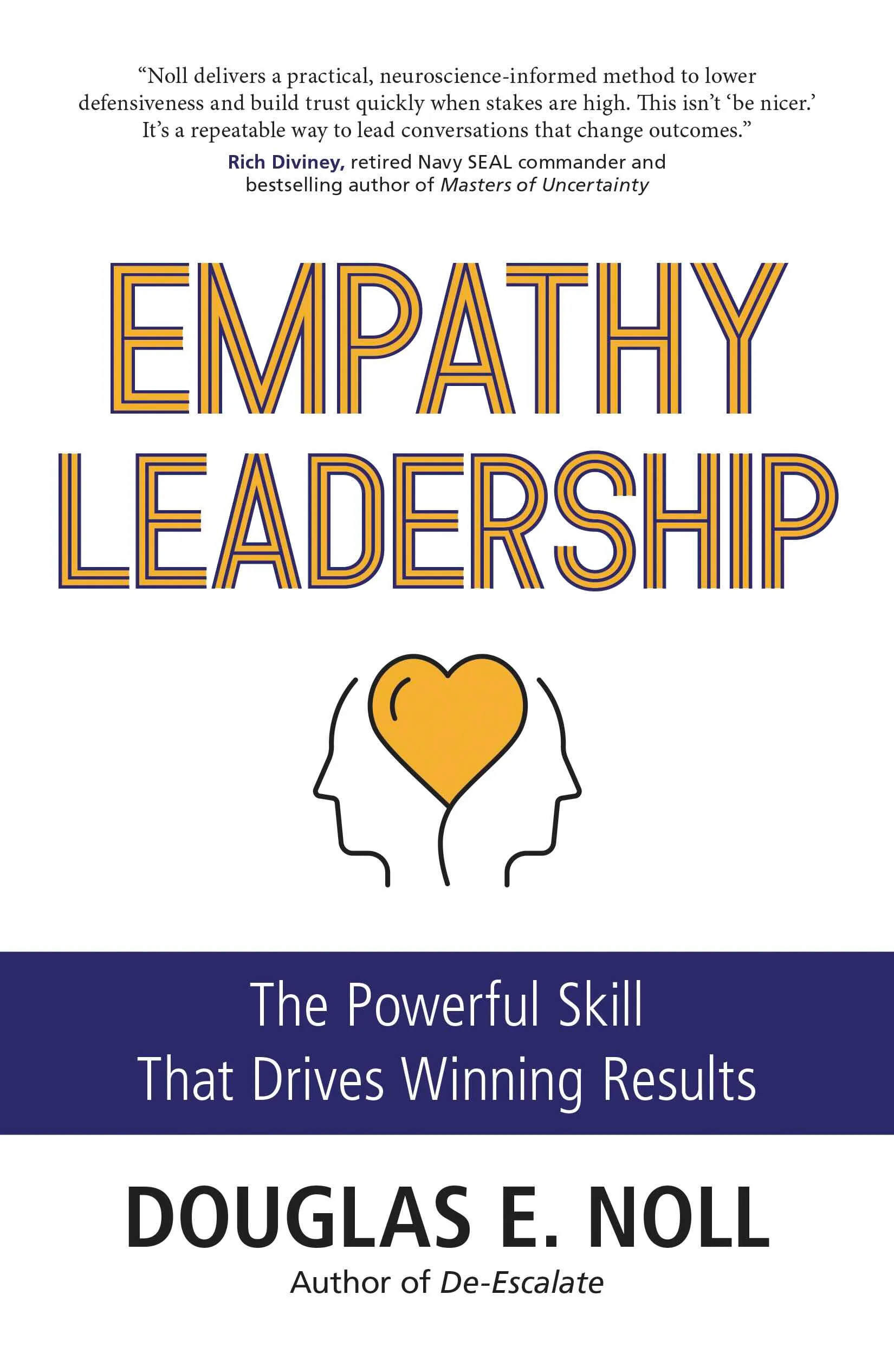
Empathy Leadership: The Powerful Skill That Drives Winning Results is out now. Order on Amazon, or if a 20-minute call would be more useful, Doug's calendar is here.
Emotional Competence Shapes Your Influence as a Leader
This 90-second emotional competence quiz will tell you how your emotions affect the way you are treated at work and how to gain the respect and influence you deserve as a leader.
Take the Free Assessment
Doug’s Books
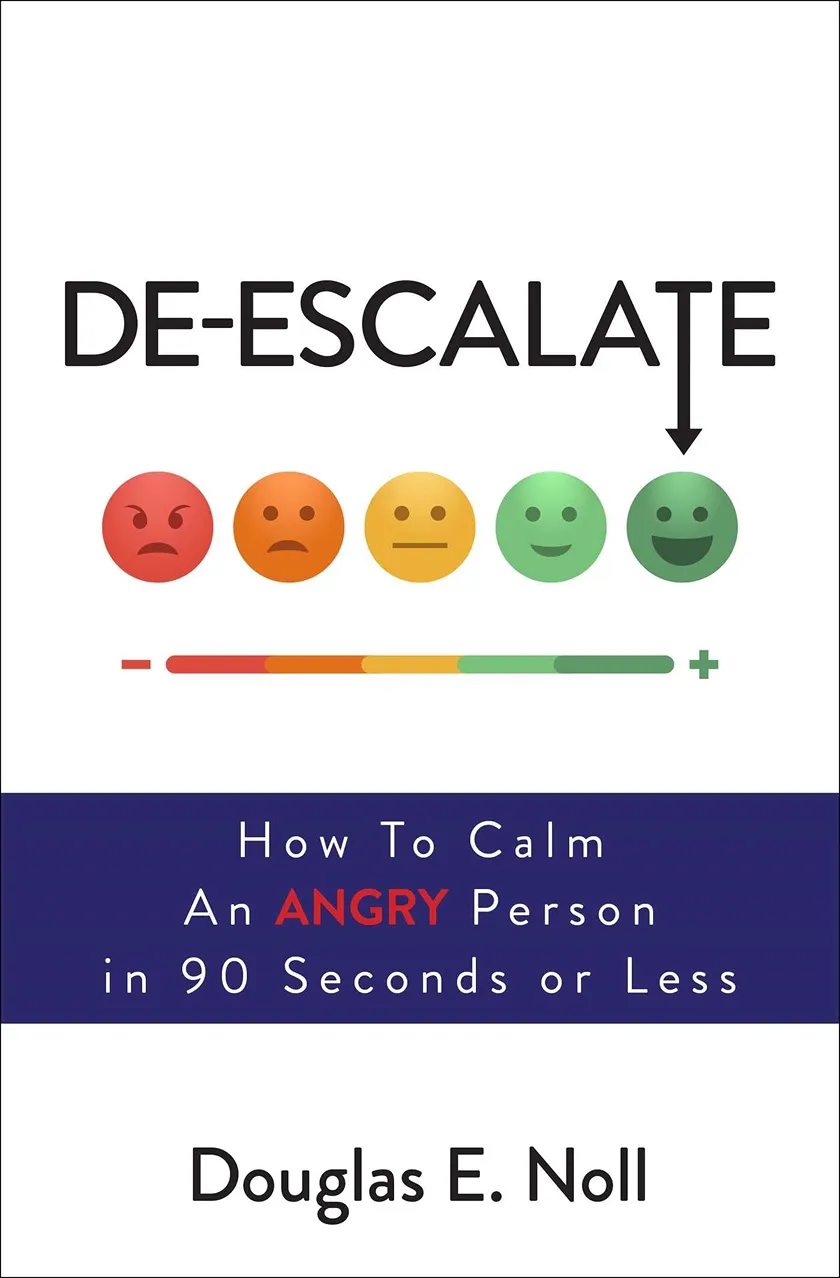
Doug has authored several books on affect labeling and emotional competency, including De-Escalate: How to Calm an Angry Person in 90 Seconds or Less, which won multiple awards and has been adopted by organizations worldwide.