Affect Labeling: A neuroscience hack for anger
%201.avif)

Anger costs money fast.
One angry client call can destroy a $100,000 account.
One angry executive meeting can burn $10,000 in leadership time.
One angry employee interaction can become HR escalation, resignation, or litigation risk.
If a team of 10 managers spends 3 hours a week dealing with anger, conflict, and emotional fallout, at $100 per hour, that is $156,000 a year.
That is before lost productivity, churn, legal fees, and reputation damage.
Anger is not the real problem.
Unlabeled anger is.
The diagnosis
You believe anger is a behavior problem.
Someone raises their voice.
Interrupts.
Accuses.
Blames.
Withdraws.
Sends the hostile email.
You focus on the behavior.
You tell them to calm down.
You explain the facts.
You defend your position.
You correct the record.
The anger increases.
Because anger is not logical in the moment.
It is biological.
When someone feels disrespected, unheard, embarrassed, threatened, or treated unfairly, the amygdala activates.
Cortisol rises.
The prefrontal cortex, responsible for reasoning, impulse control, and judgment, loses influence.
Now the person is not thinking clearly.
They are defending the self.
Logic cannot enter until threat decreases.
Book a Meeting with Doug Noll Are you ready to transform your organization and master the skills of emotional competency? Doug Noll offers specialized consulting and training for executives who want to drive winning results through leadership empathy.
Why anger escalates
Anger rarely arrives alone.
It usually sits on top of another emotion.
The loud emotion is anger.
The hidden emotion is usually one of these:
1. Disrespect
The person feels talked down to, ignored, or dismissed.
Say:
“You feel disrespected.”
Pause.
2. Fear
The person is worried about risk, failure, embarrassment, or consequences.
Say:
“You are worried this could go badly.”
Pause.
3. Shame
The person feels exposed or inadequate.
Say:
“You felt embarrassed by how that landed.”
Pause.
4. Powerlessness
The person feels trapped or without control.
Say:
“You feel like you have no control here.”
Pause.
5. Betrayal
The person expected loyalty, fairness, or protection and did not get it.
Say:
“You feel betrayed.”
Pause.
If you only respond to the anger, you miss the emotional engine underneath it.
Miss the engine, and the anger keeps running.
The neuroscience of affect labeling
Affect labeling means naming the emotion out loud.
Not explaining it.
Not debating it.
Not fixing it.
Just naming it with precision.
“You are angry.”
“You feel ignored.”
“You are frustrated this keeps happening.”
When emotion is accurately labeled, the amygdala reduces activation.
Cortisol begins to drop.
The prefrontal cortex starts coming back online.
That means the person can think again.
This is why affect labeling works faster than reasoning.
Reasoning requires the prefrontal cortex.
Anger suppresses the prefrontal cortex.
Affect labeling helps restore it.
You are not persuading the angry person.
You are helping their brain regain access to logic.
The five mistakes leaders make with anger
1. They correct the facts first
An angry person says something inaccurate.
The leader jumps in:
“That is not what happened.”
Now the person feels even more unheard.
Accuracy delivered too early becomes gasoline.
2. They use fake empathy
“I understand.”
No, you do not.
At least, their nervous system does not believe you.
Generic empathy does not reduce threat.
Specific emotional labeling does.
3. They defend intent
“That was not my intention.”
Intent does not regulate impact.
The person is reacting to what landed, not what you meant.
Defending intent keeps the focus on you.
Affect labeling keeps the focus on their emotional state.
4. They move too fast into solutions
Anger needs regulation before resolution.
If you offer solutions while cortisol is high, the person hears dismissal.
They are not ready to solve.
They are still trying to be seen.
5. They punish the emotion
“Watch your tone.”
Sometimes tone must be addressed.
But if you address tone before emotion, threat increases.
The person now feels both angry and controlled.
Regulate first.
Set standards second.
The 90-second protocol
When anger appears, use this sequence.
Step 1. Ignore the words
Do not attach to the accusation.
The words are surface noise.
Listen for the emotion underneath.
Step 2. Label the emotion
Use one short sentence.
“You are angry.”
Pause.
“You feel disrespected.”
Pause.
“You are frustrated this has not been fixed.”
Pause.
Step 3. Go one layer deeper
Anger is usually protecting something.
Say:
“You are worried this will happen again.”
Pause.
Or:
“You feel like no one is taking this seriously.”
Pause.
Step 4. Wait for the shift
Look for the signs.
Shoulders drop.
Voice slows.
Breathing changes.
Repetition decreases.
The person says, “Exactly.”
That is the nervous system settling.
Step 5. Ask one clean question
Only after regulation, ask:
“What do you want to happen now?”
Or:
“What outcome are you trying to protect?”
Now problem solving can begin.
The scripts
When an employee says:
“This is completely unfair.”
Do not explain policy.
Say:
“You feel this has not been fair.”
Pause.
When a client says:
“You people have wasted my time.”
Do not defend the timeline.
Say:
“You are frustrated and feel let down.”
Pause.
When a colleague says:
“No one listens around here.”
Do not defend the team.
Say:
“You feel ignored.”
Pause.
When a manager says:
“I am sick of dealing with this.”
Do not tell them to stay professional.
Say:
“You are exhausted by this.”
Pause.
When a partner says:
“You went behind my back.”
Do not explain your intention.
Say:
“You feel betrayed.”
Pause.
Short.
Direct.
Emotion first.
Explanation later.
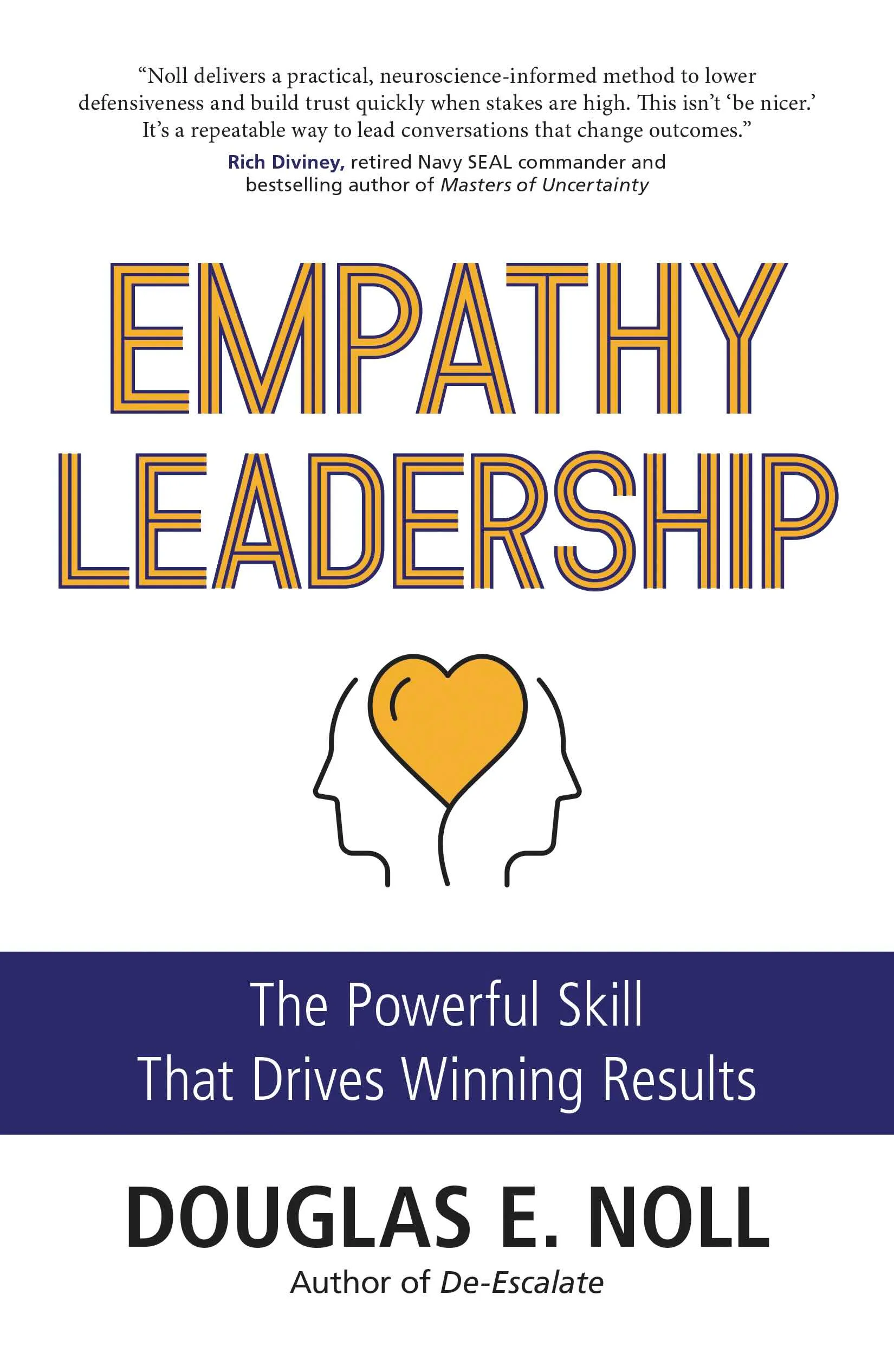
This is the neuroscience at the heart of Doug Noll's new book, Empathy Leadership: The Powerful Skill That Drives Winning Results.
The leadership standard
Affect labeling is not agreement.
It is not surrender.
It is not therapy.
It is nervous system control.
You can say:
“You are angry.”
Pause.
Then:
“The decision still stands.”
You can say:
“You feel disrespected.”
Pause.
Then:
“The behavior still has to change.”
You can say:
“You are frustrated.”
Pause.
Then:
“Here is what we can do next.”
Regulation does not remove accountability.
It makes accountability possible.
If affect labeling prevents just one client escalation worth $100,000, one resignation costing $250,000, and 100 hours of management cleanup at $100 per hour, the value exceeds $360,000.
Anger does not need to be crushed.
It needs to be decoded.
Name the emotion.
Lower the threat.
Then lead.
Emotional Competence Shapes Your Influence as a Leader
This 90-second emotional competence quiz will tell you how your emotions affect the way you are treated at work and how to gain the respect and influence you deserve as a leader.
Take the Free Assessment
Doug’s Books
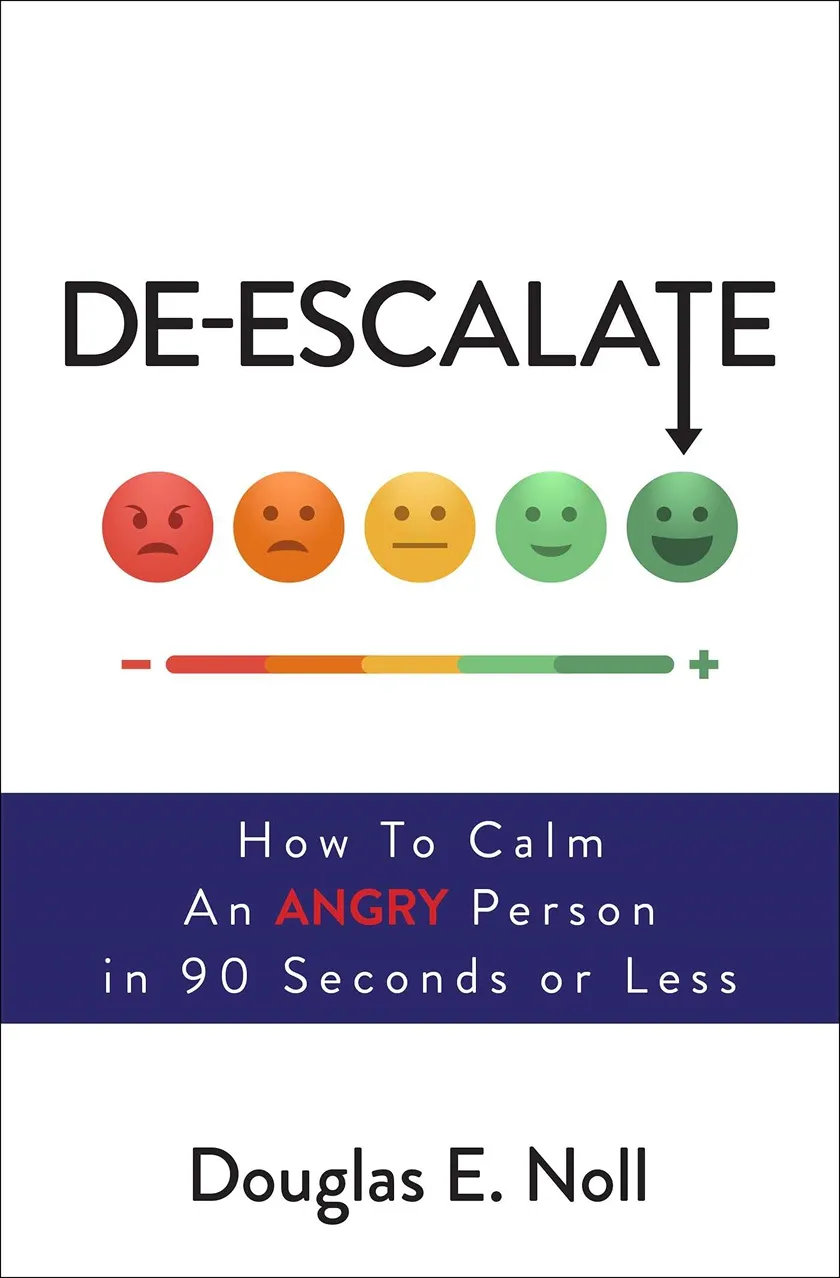
Doug has authored several books on affect labeling and emotional competency, including De-Escalate: How to Calm an Angry Person in 90 Seconds or Less, which won multiple awards and has been adopted by organizations worldwide.