The Skip-Level Program That Widened the Distance It Was Meant to Close
%201.avif)

The program looked good on paper. Every VP would hold a skip-level with two individual contributors per month, scheduled through HR, tracked on a compliance dashboard, with a standard set of questions to guide the conversation. The goal, stated plainly in the kickoff memo, was to close the distance between leadership and frontline staff.
Six months after launch, the engagement survey showed something the HR team had not expected. The specific question asking whether employees felt leadership understood their day-to-day work had dropped four points since the program began, not risen.
The HR director sat in on three of the scheduled sessions to see what was actually happening in them. All three followed an almost identical, stilted pattern. The VP read from the standard question list. The employee gave short, safe answers. Both parties visibly counted down the thirty minutes.
What the formal structure had actually communicated
The program's design had solved for consistency and compliance, which are reasonable things for HR to want to measure. It had not solved for the actual condition that makes a skip-level conversation useful, which is a degree of psychological safety that a scheduled, dashboard-tracked, script-driven meeting cannot easily produce.
An employee invited to a mandatory, calendar-driven meeting with a standard question list correctly reads the situation as procedural rather than personal. The format itself signals that the meeting exists to satisfy a compliance requirement, not because the VP is specifically curious about that employee's experience. Employees responded rationally to that signal by giving safe, generic answers, the same way anyone gives a safe answer to a form they suspect is being logged somewhere.
The four-point drop in the survey was not a sign the program had failed to build connection. It was a sign the program had made the absence of real connection newly visible, by putting leadership physically in the room on a regular schedule and having them leave without actually closing any distance at all. What employees were reading was not the words but the format, which is the same signal channel the amygdala tracks for safety cues.
How much is one unresolved conflict really costing your company?
What the HR director changed
She removed the standard question list entirely and replaced it with a single instruction to every VP: open by asking what the employee is working on that they find genuinely hard right now, and then just listen, without offering a solution, for at least five minutes before saying anything else.
She also dropped the compliance dashboard's visibility to individual VPs, keeping only an aggregate completion rate, to remove the incentive to treat the meeting as a box to check. The change in format was small. The change in what VPs actually said in the room, once she sat in on a second round of sessions, was substantial. Employees spoke roughly three times as long once the meeting stopped feeling like an audit.
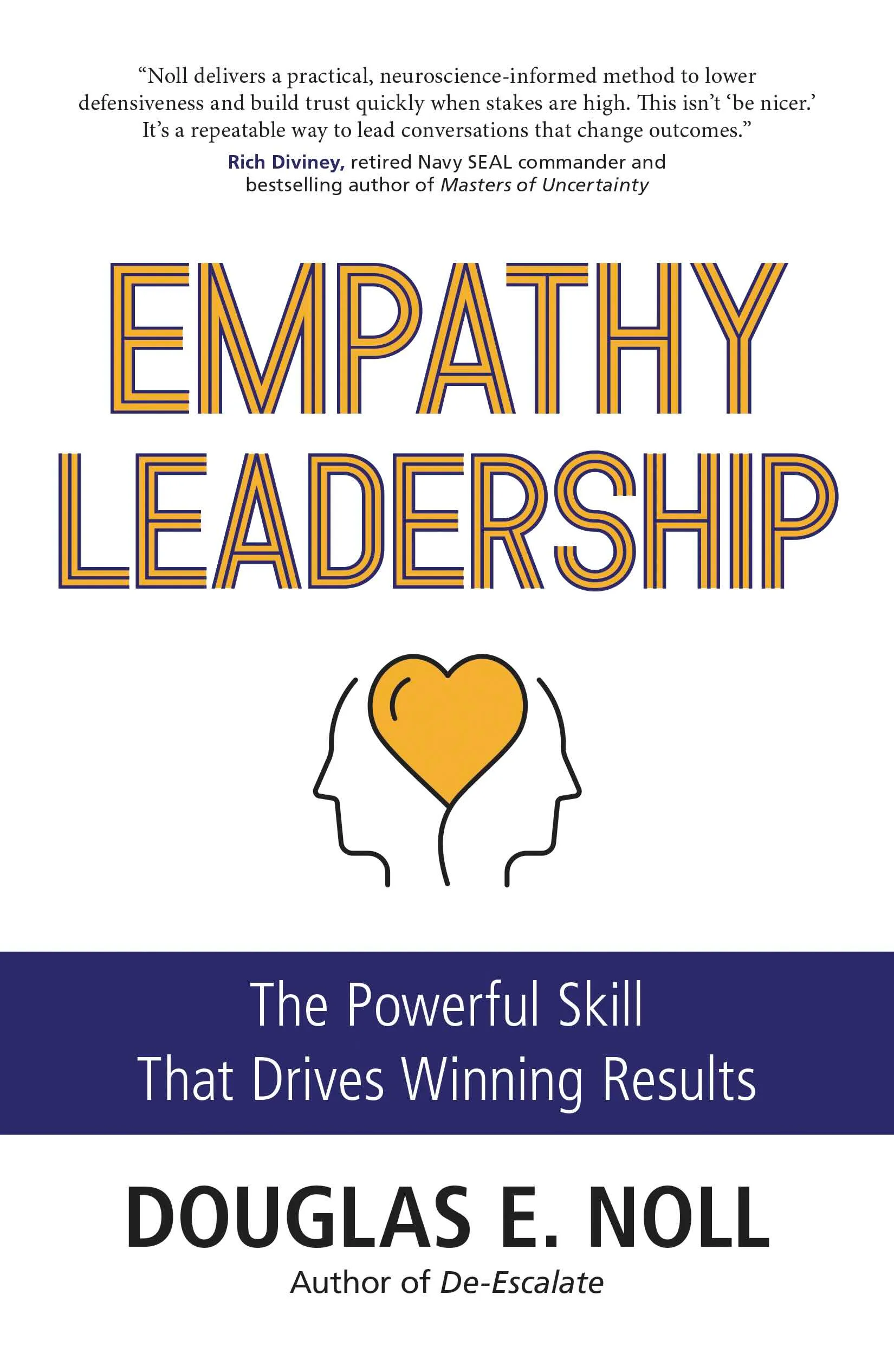
Doug Noll's new book Empathy Leadership: The Powerful Skill That Drives Winning Results lays out why a scheduled, scripted conversation can widen the exact distance it was built to close. See it here.
What the survey looks like now
The next engagement survey, run a year after the redesign, showed the leadership-understanding question recovering past its original baseline, not just back to where it started. The program still exists on the calendar. It no longer runs on a script.
The HR director keeps one lesson from the experience close at hand: a structure built to guarantee a behavior happens is not the same as a structure built to make that behavior genuine, and employees can always tell the difference.
Emotional Competence Shapes Your Influence as a Leader
This 90-second emotional competence quiz will tell you how your emotions affect the way you are treated at work and how to gain the respect and influence you deserve as a leader.
Take the Free Assessment
Doug’s Books
Doug has authored several books on affect labeling and emotional competency, including De-Escalate: How to Calm an Angry Person in 90 Seconds or Less, which won multiple awards and has been adopted by organizations worldwide.