The Nominating Committee's Blind Spot
%201.avif)

The scorecard had eleven criteria.
Independence. Sector expertise. Functional expertise, weighted toward finance and technology. Public company experience. Time availability, assessed against other commitments. Governance track record. Two diversity criteria. Geographic coverage. Network relevance. Committee readiness.
It was a good scorecard. The committee had spent real time on it and it had been reviewed by a search firm that specialises in this.
Over four years they seated six directors using it. Two were excellent, two were adequate, and two were, in the honest assessment of the chair, a net negative on the board's functioning.
The scorecard had ranked all six similarly.
What separated the two who worked
The chair did this analysis himself, four years in, because the committee's process was clearly not predicting anything and he wanted to know why.
He went back through the minutes and his own notes and looked for what the two effective directors did that the others did not.
It was not preparation. All six read the packs, at least initially.
It was not expertise. One of the two net-negative directors had the deepest sector knowledge of anyone on the board.
What the two effective ones did was change their position in a meeting.
He counted it. Over roughly sixteen meetings, the two effective directors had each visibly shifted their stated view during a discussion between eight and eleven times. Of the other four, the highest count was two and one had never done it.
Why that behaviour predicts everything else
A director who cannot move in a meeting is not participating in a deliberative body. They are delivering a position that was formed before they arrived, which means the meeting cannot use them for anything except a vote.
The compounding effect is worse. A director who never moves teaches everyone else that moving is not what this room does. Two of them, on a board of nine, is enough to convert the whole thing into a sequence of prepared positions.
And the specific director with the deepest sector expertise was the most damaging, because his expertise made his immovability defensible. Nobody could argue with him on his own subject, so his positions stood by default, and the board slowly stopped examining anything in that domain.
The capability underneath
Changing your position in front of peers requires holding two things simultaneously: your existing view and a new piece of information that contradicts it, without the contradiction registering as a threat.
That is a specific and unevenly distributed capability. It correlates with emotional intelligence measures rather than with anything on the scorecard, and it is more or less invisible in an interview process, because interviews assess whether someone can articulate a view rather than whether they can revise one.
The two effective directors had it. The four others were, by any conventional standard, more impressive on paper.
What they added to the process
One session, ninety minutes, in the final stage.
The candidate is given a real decision the board faced in the previous eighteen months, with the pack that was circulated at the time. They are asked to form a view and present it.
Then two directors argue the other side, properly, with information that was not in the original pack.
They are not assessing whether the candidate ends up in the right place. They are watching one thing: what happens when the new information lands.
Three responses show up. The candidate incorporates it and revises. The candidate incorporates it and explains why their original position holds anyway, with reference to the new information. Or the candidate restates their original position with more force.
The first two are both fine. The third is disqualifying and it has disqualified four candidates since they introduced it, two of whom scored highest on the original scorecard.
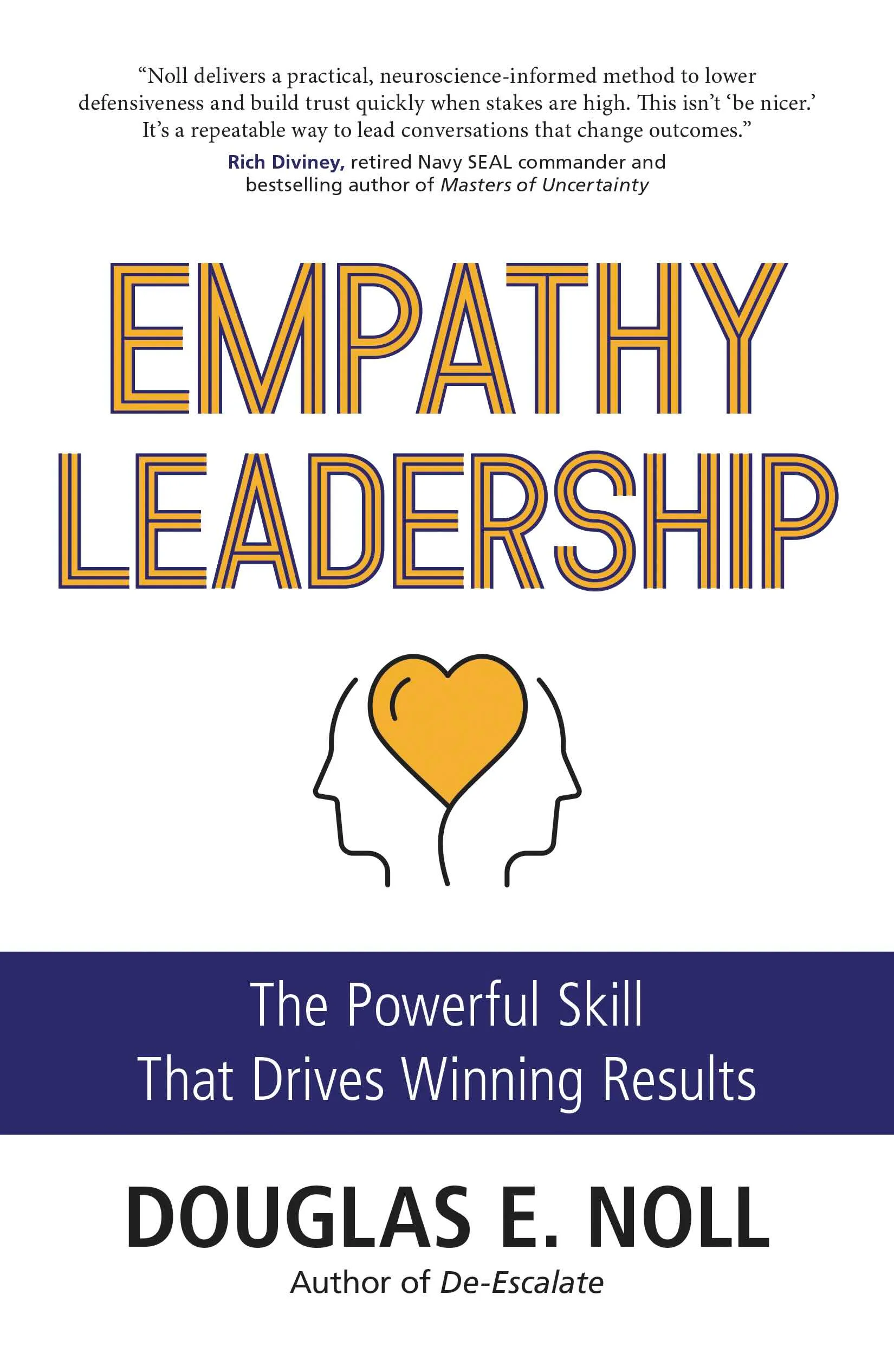
Doug Noll's new book Empathy Leadership: The Powerful Skill That Drives Winning Results covers assessing the capability to hold a position and a challenge at the same time. Pre-order it on Amazon.
The reference question they added
One question, asked to every reference.
"Tell me about a time they changed their mind in a meeting. What was it about and what caused it?"
If the referee cannot produce an example, that is the finding. Most people who have this capability have used it often enough that examples come readily, and most people who lack it have referees who pause for a long time.
What it costs to get this wrong
The chair's assessment, which he gives to other chairs who ask, is that a single immovable director on a nine-person board reduces the board's effective deliberative capacity by considerably more than one ninth.
Two of them changes the character of the room entirely, and it happens gradually enough that nobody notices until you look at the minutes and realise that no discussion in four meetings has changed anybody's mind about anything.
For related reads, see Executive Function Beyond Reaction and The Conflict Model Operating System.
If your nominating process keeps producing impressive directors and a static room, book a no-obligation Zoom call with Doug Noll.
Emotional Competence Shapes Your Influence as a Leader
This 90-second emotional competence quiz will tell you how your emotions affect the way you are treated at work and how to gain the respect and influence you deserve as a leader.
Take the Free Assessment
Doug’s Books
Doug has authored several books on affect labeling and emotional competency, including De-Escalate: How to Calm an Angry Person in 90 Seconds or Less, which won multiple awards and has been adopted by organizations worldwide.