The Independent Director Who Saved the Company From Its CEO
%201.avif)

She had watched it happen eight times.
The pattern was consistent enough that she could predict the meeting. The CEO would present a new market entry, the board would ask questions, the questions would be answered plausibly, and the entry would proceed. Eleven to fourteen months later it would be quietly wound down, having consumed somewhere between $2 million and $5 million.
Eight times in four years. Four different geographies, two adjacent verticals, two product extensions.
Each individual decision had been defensible. Nobody had ever objected in a way that stuck.
Why nobody stopped it
Because each entry was presented as new.
That is the mechanism and it is worth being precise about. The CEO did not present a pattern. He presented a specific opportunity, with specific research, and specific reasons why this one was different from anything that had come before.
The board evaluated each one on its merits, as boards are constituted to do, and on its merits each one was reasonable.
What nobody did was put the eight of them on a single page.
There is a confirmation bias at work in the CEO, who genuinely believed each entry was different, and a structural failure in the board, which had no mechanism for aggregating decisions across time. Board packs are quarterly. Patterns are annual.
The question she asked
In her ninth meeting on the subject, she did not object to the entry.
She said, "Before we discuss this one, I want to put something on the table. This is the ninth market entry we have approved in four years. Seven of the previous eight were wound down within fourteen months. I would like to spend twenty minutes on why that is, before we spend an hour on whether this one is different."
She had a page. One page, eight rows, four columns. Entry, date, capital consumed, outcome.
Nobody had ever seen the eight of them together.
The CEO's first response was that the comparison was unfair because the circumstances varied. He was correct and it did not matter.
The chair, who had approved all eight, looked at the page for a long time and said, "This is a pattern and I have been in the room for every one of them."
What made it work and what it cost
The intervention worked because of three specific choices she made.
She did not object to the proposal. Objecting would have put her in an argument about this entry, which she would have lost on the merits, as everyone before her had.
She brought the aggregate. A pattern is not visible from inside a sequence of individually reasonable decisions. Making it visible is a mechanical act that requires only that somebody do the work of assembling it.
She named the room's role, including her own. "We approved these." Not "you kept doing this." That single word choice is the difference between an intervention the room can accept and one it has to defend against.
What it cost her was the relationship with the CEO, which had been warm and became correct. He is professional and he has not been unfair to her. They do not speak outside meetings any more.
She has said, privately, that she would do it again and that she underestimated what it would feel like.
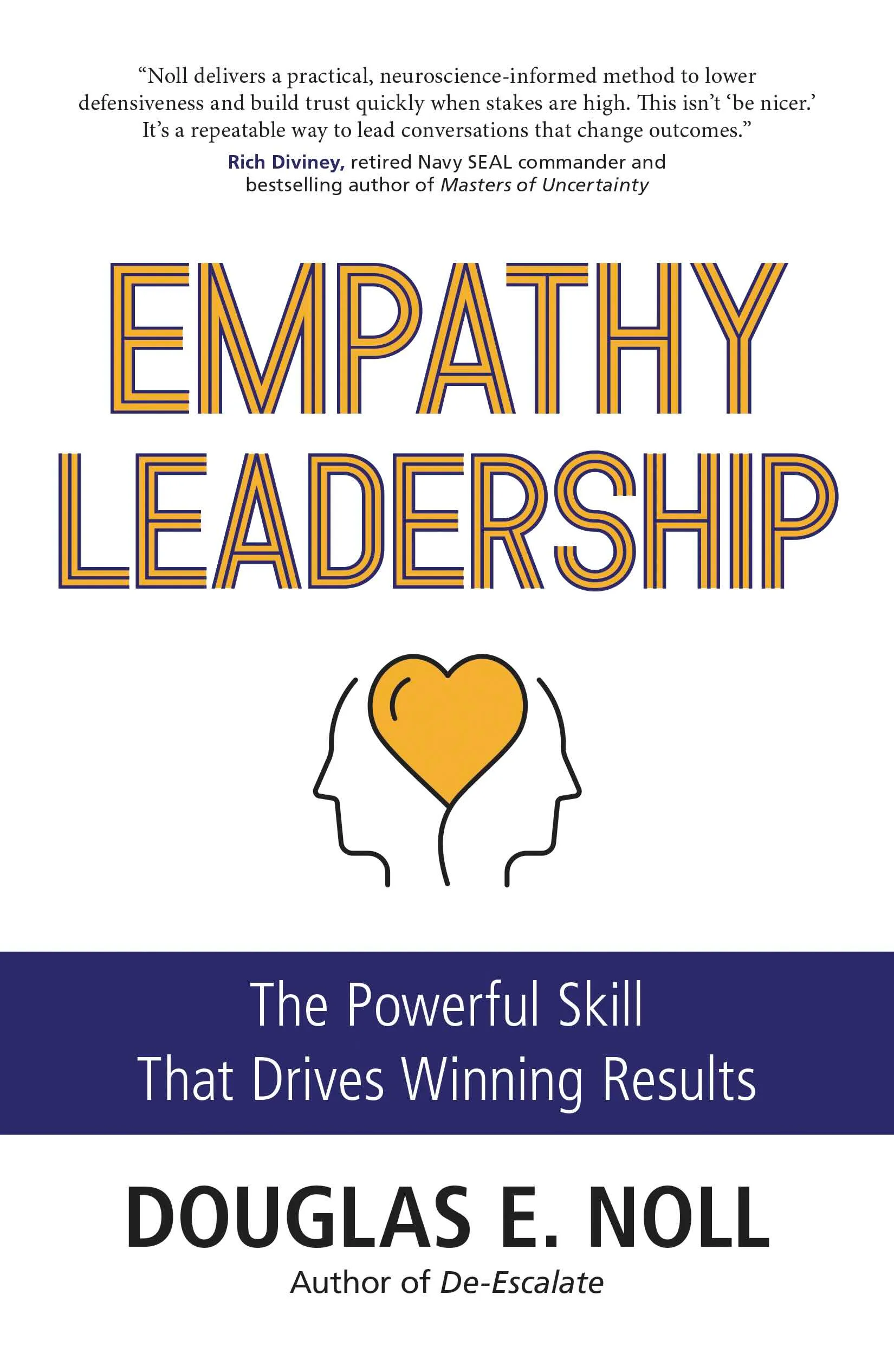
Doug Noll's new book Empathy Leadership: The Powerful Skill That Drives Winning Results covers raising the thing a room has organised itself around not seeing. Pre-order it on Amazon.
What happened after
They did not approve the ninth entry. They spent two meetings on why the previous eight had failed and found a common cause that had been invisible from inside any single one of them, which was that the company's implementation model required a density of local relationships that took roughly three years to build and every entry had been evaluated on an eighteen-month payback.
That is a genuine strategic finding. It had been sitting in eight post-mortems that nobody had read together.
The company has entered two markets since. Both are performing. Both were underwritten on a four-year horizon.
The mechanism worth installing
Any board can do this and almost none do.
Once a year, produce a single page listing every material decision the board approved in the previous three years and its outcome. No analysis. Just the list.
It takes an afternoon of somebody's time. It is the only instrument that makes patterns visible in a body that meets quarterly and evaluates things individually.
Most boards that run it for the first time find something they did not know about themselves.
For related reads, see Naming the Elephant Without Fear and Honest Leadership.
If you are on a board watching a pattern that nobody has named, book a no-obligation Zoom call with Doug Noll.
Emotional Competence Shapes Your Influence as a Leader
This 90-second emotional competence quiz will tell you how your emotions affect the way you are treated at work and how to gain the respect and influence you deserve as a leader.
Take the Free Assessment
Doug’s Books
Doug has authored several books on affect labeling and emotional competency, including De-Escalate: How to Calm an Angry Person in 90 Seconds or Less, which won multiple awards and has been adopted by organizations worldwide.