Workplace Conflict: Why HR Training Hasn’t Worked
%201.avif)

Most HR conflict training fails because it teaches scripts to a brain that is already in threat mode.
A manager sits through a 2 hour workshop.
Learns active listening.
Learns policy steps.
Learns how to “stay professional.”
Then conflict happens.
The employee gets defensive.
The manager feels attacked.
The conversation escalates.
HR gets called again.
If one unresolved conflict consumes 10 hours of HR and management time at a blended cost of $150 per hour, that is $1,500 per incident.
If a company handles 20 recurring conflict issues per quarter, that is $30,000 every 3 months.
Over a year, that is $120,000 in visible conflict cost.
That does not include turnover, disengagement, legal risk, or delayed execution.
This is the Training Failure Tax.
And it exists because HR training teaches behavior while ignoring biology.
The diagnosis
You believe workplace conflict is a communication problem.
So HR teaches communication.
Use better phrasing.
Follow the conversation framework.
Stay calm.
Document the issue.
Escalate when needed.
None of that works once the amygdala activates.
The moment someone feels blamed, dismissed, embarrassed, or powerless, the nervous system shifts into defense.
Cortisol rises.
The prefrontal cortex, responsible for reasoning, impulse control, and judgment, loses influence.
Now the person is not listening for policy.
They are listening for threat.
The manager is doing the same.
Two activated nervous systems cannot follow a script.
They can only defend.
The five reasons HR training fails
1. It teaches words instead of regulation
Most conflict training gives managers phrases.
“I understand your concern.”
“Let’s work through this.”
“I hear what you’re saying.”
These phrases sound professional.
They do not reduce threat.
The nervous system calms when emotion is named accurately, not when corporate language is performed.
2. It starts too late
HR usually enters after the conflict has hardened.
By then, the emotional memory is already encoded.
The employee has a story.
The manager has a story.
The team has taken sides.
Now the issue is no longer behavior.
It is identity, status, and perceived injustice.
Late training cannot undo months of threat reinforcement in one meeting.
3. It overuses logic
Managers are taught to explain expectations, policies, and consequences.
That works only after regulation.
When cortisol is high, logic sounds like attack.
The employee hears correction as humiliation.
The manager hears resistance as disrespect.
Both sides escalate.
4. It confuses professionalism with suppression
HR training rewards controlled language.
But controlled language without emotional accuracy feels fake.
People learn to mask anger, resentment, and fear.
Suppression keeps cortisol elevated.
The conflict does not disappear.
It goes underground.
Underground conflict becomes passive aggression, silence, avoidance, and eventual resignation.
5. It avoids the real emotion
Most workplace conflict sits on a few predictable emotions.
People feel overlooked.
They feel embarrassed.
They feel pressured.
They feel powerless.
They feel treated unfairly.
HR training rarely teaches managers how to name those emotions directly.
So managers talk around the issue.
The nervous system stays activated.
The conflict continues.
The neuroscience HR ignores
The amygdala detects social threat before conscious reasoning begins.
In the workplace, threat includes:
- Public correction
- Loss of status
- Being ignored
- Being blamed
- Feeling excluded
- Perceived unfairness
Once threat is detected, cortisol rises.
When cortisol rises:
- Listening drops
- Defensiveness increases
- Memory narrows
- Empathy decreases
- Problem solving weakens
This is why smart people become irrational in conflict.
It is not a character defect.
It is an activated nervous system.
Traditional HR training assumes people can access reasoning under pressure.
That assumption is wrong.
Regulation must come first.
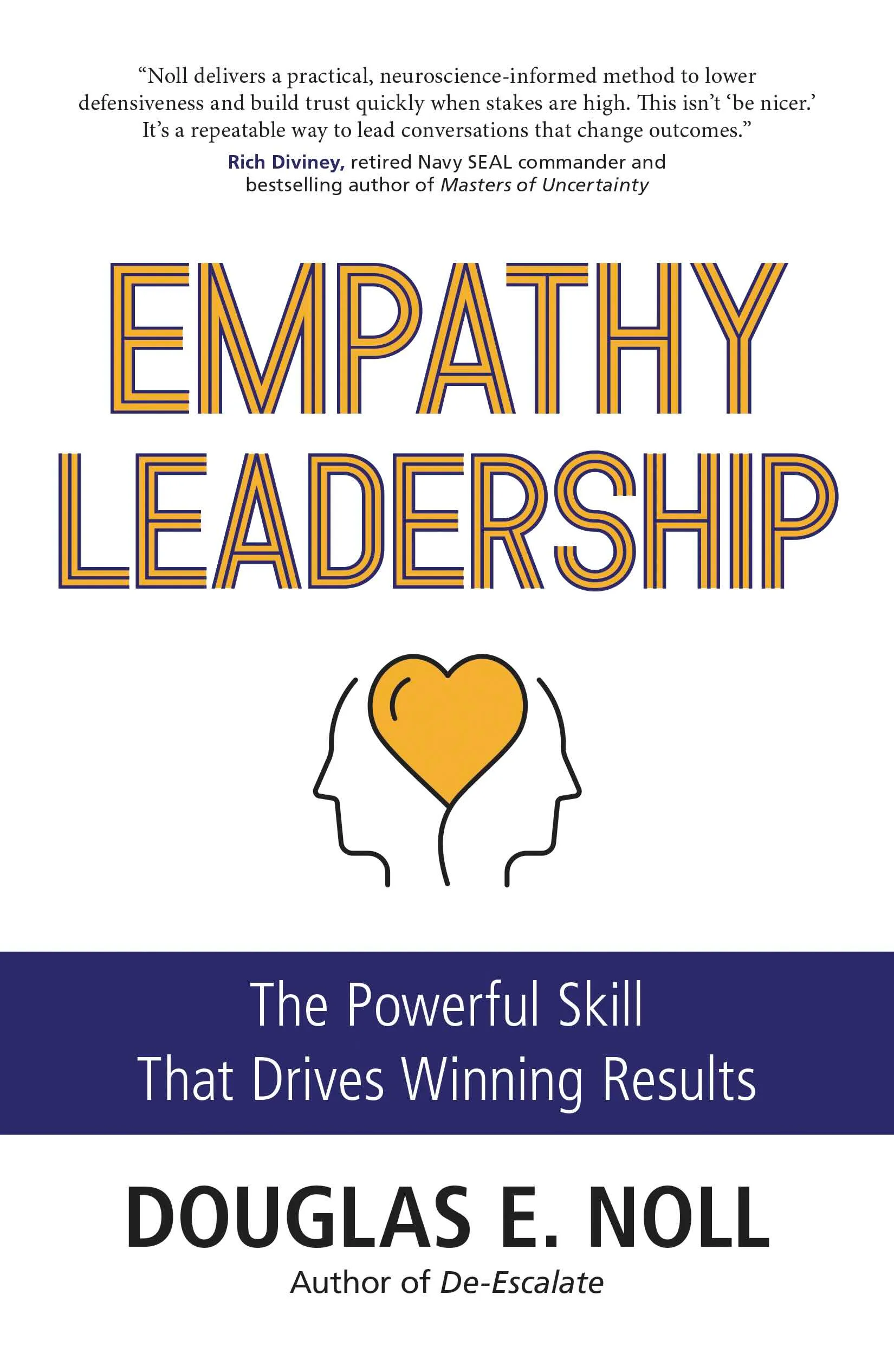
This is the neuroscience at the heart of Doug Noll's new book, Empathy Leadership: The Powerful Skill That Drives Winning Results.
The counterintuitive protocol
Stop teaching managers to sound empathetic.
Teach them to regulate emotion.
When an employee says:
“This is unfair.”
Do not say:
“I understand your concern.”
Say:
“You feel this has not been fair.”
Pause.
When a manager says:
“They are being difficult.”
Say:
“You are frustrated that they keep pushing back.”
Pause.
When a team member shuts down in a meeting, say:
“You seem disappointed.”
Pause.
Short. Declarative. Precise.
No explanation.
No fixing.
No HR script.
Accurate emotional labeling reduces amygdala activation. Cortisol declines. The prefrontal cortex begins to reengage.
Only then do policies, expectations, and accountability work.
After regulation, ask:
“What outcome are you trying to protect?”
Or:
“What needs to change from here?”
Now the conversation has cognitive capacity again.
The new HR operating rule
Do not start with policy.
Start with emotion.
Then move to accountability.
The sequence is:
- Name the emotion.
- Pause.
- Let the nervous system settle.
- Ask one clear question.
- Move to standards or next steps.
This is not therapy.
This is conflict control.
If better regulation prevents just 2 resignations a year from employees costing $250,000 each to replace, that is $500,000 preserved.
If it reduces HR conflict time by 30 percent across a $120,000 annual conflict workload, another $36,000 returns immediately.
The return is measurable.
HR training has failed because it trains scripts.
Conflict requires biology.
Regulate the nervous system first.
Then the policy can land.
Emotional Competence Shapes Your Influence as a Leader
This 90-second emotional competence quiz will tell you how your emotions affect the way you are treated at work and how to gain the respect and influence you deserve as a leader.
Take the Free Assessment
Doug’s Books
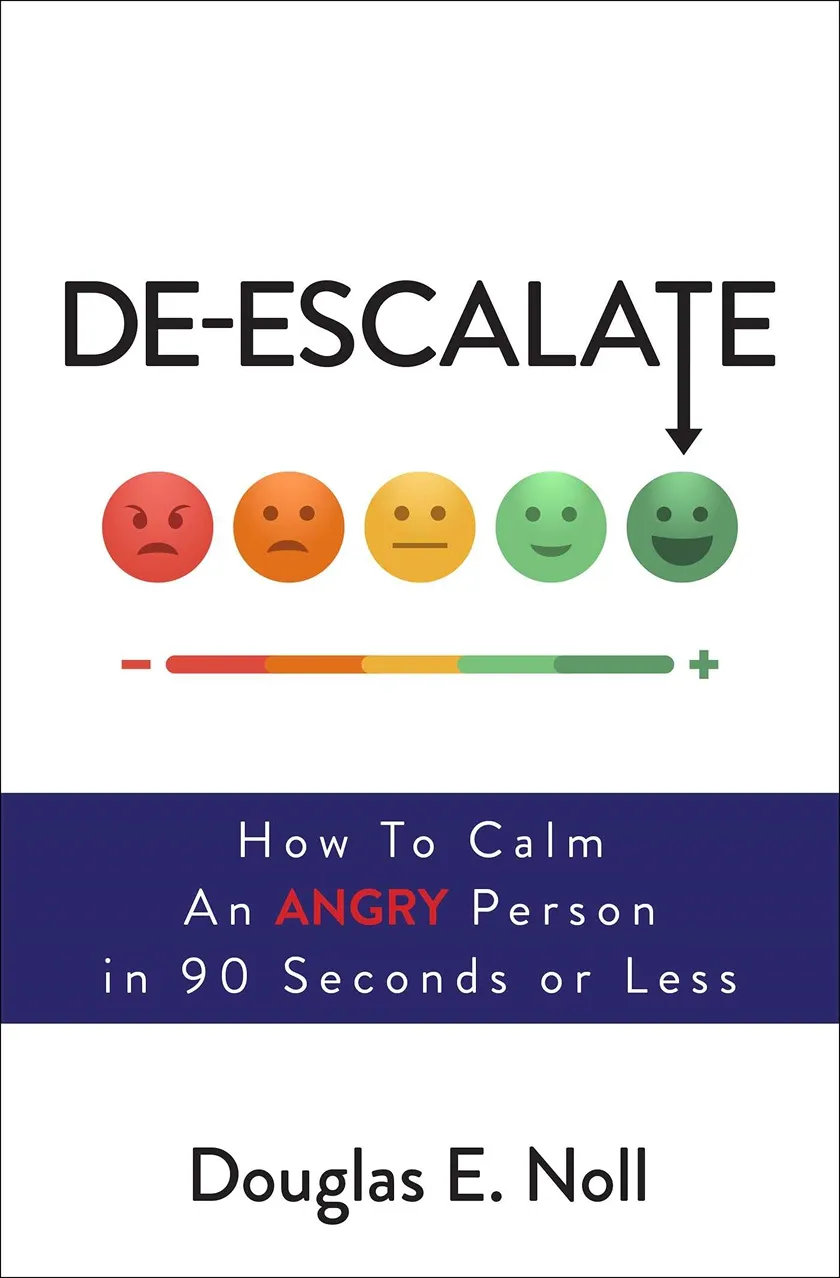
Doug has authored several books on affect labeling and emotional competency, including De-Escalate: How to Calm an Angry Person in 90 Seconds or Less, which won multiple awards and has been adopted by organizations worldwide.


More Blogs
View All

October 26, 2026
De-Escalation Training for Large Companies: 7 Shocking Reasons Yours Isn't Working
Read Blog

October 26, 2026
What Enterprise De-Escalation Programs Get Wrong: 5 Operational Fixes
Read Blog

October 23, 2026
6 Powerful Reasons De-Escalation Training for Employees Doesn't Scale (and the Fix)
Read Blog