Why the Founder's Bad Day Costs the Company Eighty Thousand Dollars
%201.avif)

He had a bad morning.
Traffic, a call with a customer who was leaving, and a personal thing he was not talking about. He walked into the 9:15 standup eleven minutes late and said, "Let's go, quickly, I have a hard stop."
Somebody gave an update he thought was vague. He cut in. "That is not an answer. What is the actual status?"
The standup ended four minutes early. He felt fine about it. He had been direct, he had kept the meeting tight, and he had moved on to a day that got better from there.
Forty people worked in that office. Nine were in the room.
The arithmetic nobody runs
Here is the part most founders have never sat down and calculated.
Nine people absorbed the state directly. Mirror neurons mean that observing a stress response in another person produces a partial version of that response in the observer. You do not need to be the target. Watching is enough.
Those nine people then went to their next meetings, their next Slack threads, their next one-on-ones. Call it three interactions each in the following two hours. That is roughly twenty-seven people carrying a downstream version of eleven minutes.
Elevated cortisol reduces working memory, narrows attention, and impairs the kind of flexible thinking that knowledge work runs on. Estimates on the size of the effect vary, but the direction does not. Call it a twenty percent reduction in effective cognitive capacity for something in the range of two hours.
Twenty-seven people. Two hours. Twenty percent. That is roughly eleven fully productive hours evaporated.
At a fully loaded cost of $120 an hour for a mid-market technology team, that is about $1,300 from one standup.
Do it twice a week and you are at $135,000 a year. That number does not include the decisions made worse during those two hours, which is where the real cost lives.
The part that makes it hard to see
He did nothing that would show up in a survey. He was not abusive. He did not raise his voice. If you had asked him that afternoon whether the standup went badly, he would have said it went fine, and by his own standards it did.
That is the whole problem. Emotional contagion from a leader is invisible to the leader, because the leader is the source. You do not experience your own weather. You experience everyone else's compliance with it.
His head of engineering described it later in a way that stuck. "When you are in a mood, we spend the morning managing your mood instead of the roadmap. You never see that part."
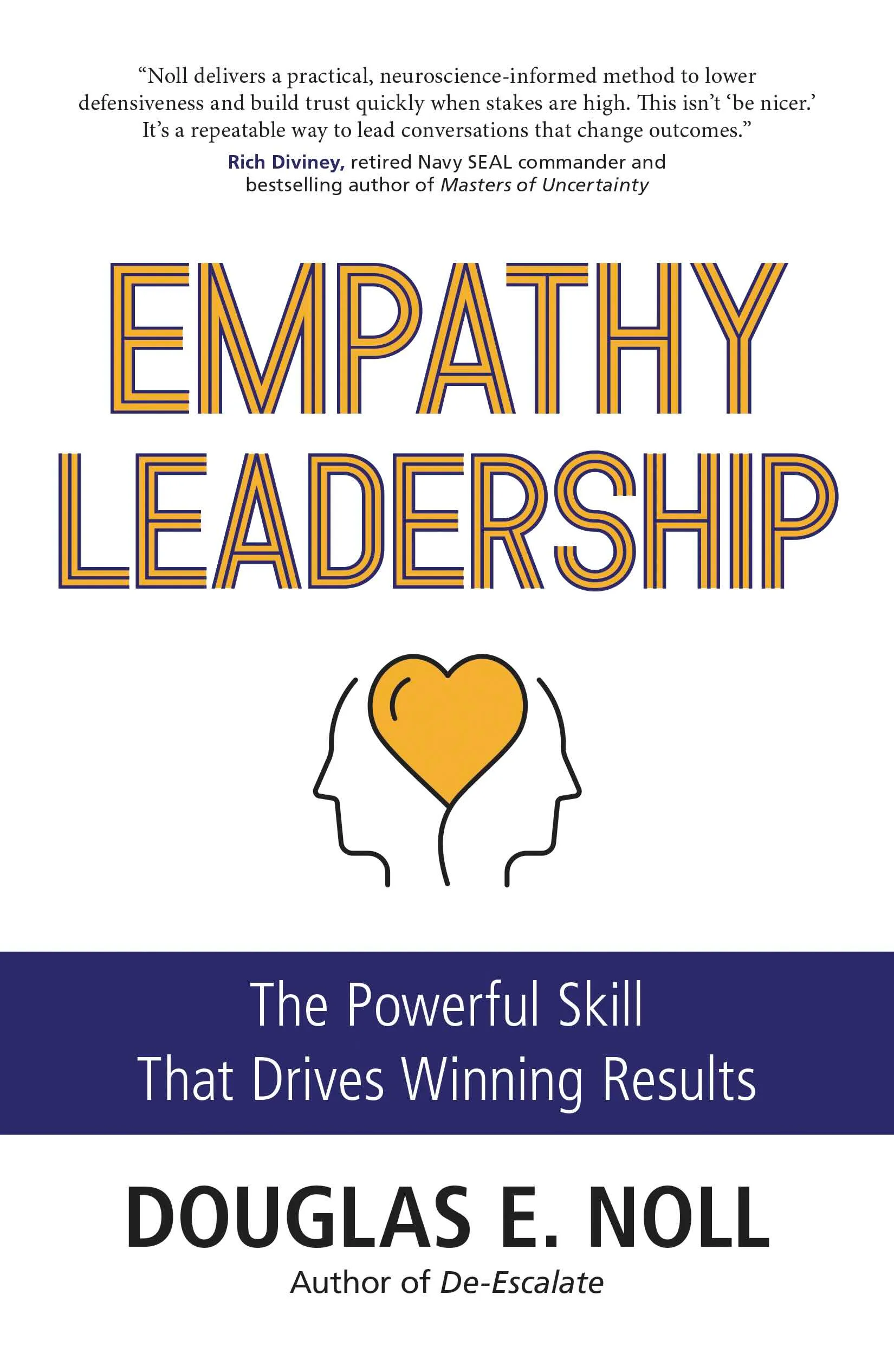
Doug Noll's new book Empathy Leadership: The Powerful Skill That Drives Winning Results covers how leaders interrupt their own contagion before it reaches the room. Pre-order it on Bookshop.
What he installed
Not composure. Composure is the wrong target and it does not work, because suppressing a state does not stop it from transmitting. It just makes it ambiguous, and ambiguous stress is worse for a room than declared stress.
He installed a sentence.
When he walked into a room in a bad state, he said so, in one line, without explanation or apology. "I am carrying a bad morning that has nothing to do with any of you. If I come across short in the next hour, that is what it is."
That is it. Eight seconds.
The effect is disproportionate to the effort. When people can attribute a leader's state to a named external cause, they stop scanning for whether they caused it. The scanning is what costs the hours, not the mood.
This is the same mechanism as affect labeling, pointed inward. Naming your own state reduces its intensity for you and removes the ambiguity for everyone else. Two effects, one sentence.
The rule for the two hours before anything that matters
He added a second habit that was less about the team and more about the decisions.
Before any conversation with real stakes, a board call, a termination, a customer escalation, a pricing decision, he checked his own state first. Not to fix it. To know it.
If the state was hot, he moved the conversation if he could. If he could not move it, he named it going in.
The rule he gave his own leadership team was simpler than anything in a management book. Do not make consequential decisions inside a dysregulated nervous system. Yours or theirs.
For related reads, see Mirror Neurons and Stress Contagion and The Burnout Bill.
What to take from the number
The $1,300 is not the point. The estimate is rough and the inputs are arguable.
The point is that a founder's internal state is an operating variable with a real cost attached, and almost no company treats it as one. You track burn, headcount, pipeline, and churn. You do not track the thing that quietly modulates the output of every person who reports to you.
You do not have to be calm. You have to be legible.
If you suspect your own state is costing your company more than you can see from the inside, book a no-obligation Zoom call with Doug Noll.
Emotional Competence Shapes Your Influence as a Leader
This 90-second emotional competence quiz will tell you how your emotions affect the way you are treated at work and how to gain the respect and influence you deserve as a leader.
Take the Free Assessment
Doug’s Books
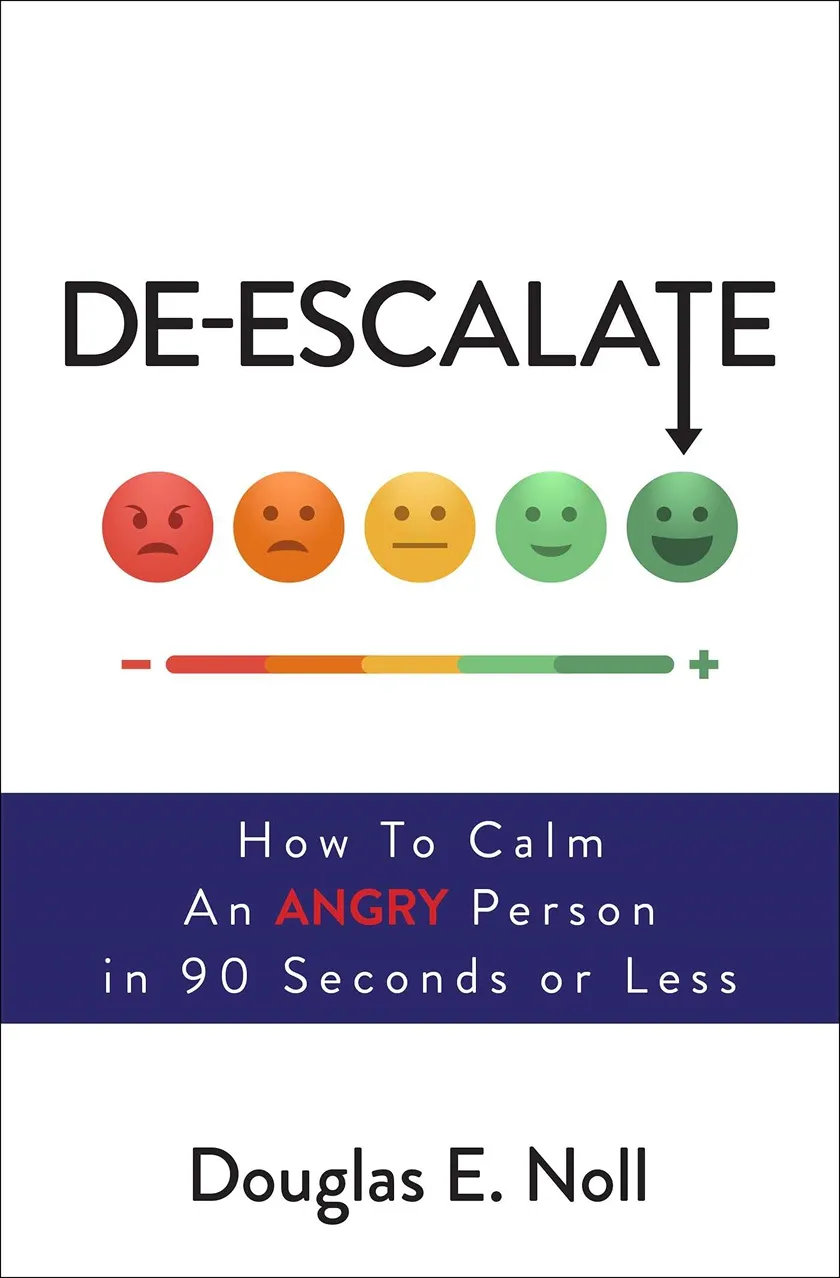
Doug has authored several books on affect labeling and emotional competency, including De-Escalate: How to Calm an Angry Person in 90 Seconds or Less, which won multiple awards and has been adopted by organizations worldwide.
More Blogs
View All

October 23, 2026
6 Powerful Reasons De-Escalation Training for Employees Doesn't Scale (and the Fix)
Read Blog

October 23, 2026
How Executive Dispute Mediation Actually Resolves a Board-Level Rupture
Read Blog

October 22, 2026
4 Critical Failures of Most Corporate Mediation (and the Approach That Works)
Read Blog