Psychological Safety Handle Bad News Without Panic
%201.avif)

Bad news does not destroy organizations.
Panic does.
A missed target, client complaint, compliance risk, failed launch, or employee issue is costly.
But the real cost begins when leaders react with blame, urgency, or emotional volatility.
If one delayed disclosure turns a $50,000 operational issue into a $500,000 client loss, the damage is not the original mistake.
The damage is the fear system around the mistake.
That is the Panic Tax.
And leaders create it every time bad news feels unsafe to deliver.
The diagnosis
You believe psychological safety means people feel comfortable.
Wrong.
Psychological safety means people can tell the truth early without fearing humiliation, punishment, or emotional attack.
The moment bad news appears, the amygdala activates.
Cortisol rises.
The prefrontal cortex, responsible for judgment, sequencing, and problem solving, loses efficiency.
If the leader panics, the room mirrors that panic.
Now the team stops thinking clearly.
They protect themselves.
They filter information.
They delay disclosure.
They manage optics instead of risk.
Bad news hidden for 24 hours is expensive.
Bad news hidden for 30 days is catastrophic.
The five ways leaders make bad news worse
1. The blame reflex
A problem appears.
The leader asks:
“Who did this?”
That question activates threat instantly.
People stop sharing facts and start protecting themselves.
Containment slows because the room is now managing fear.
The better first question is:
“What do we know for certain?”
Facts before blame.
Containment before accountability.
2. The emotional spike
The leader’s tone sharpens.
Pacing increases.
Questions become rapid fire.
The team reads danger.
Mirror neurons spread the leader’s stress across the room.
Now everyone is activated.
Activated brains narrow.
Narrow brains miss options.
One dysregulated leader can turn one problem into ten.
3. The information fog
Under pressure, teams dump details.
Emails.
Timelines.
Screenshots.
Excuses.
Partial facts.
More information does not help when the nervous system is flooded.
It increases cognitive load.
The prefrontal cortex needs sequence, not noise.
Without sequence, panic expands.
4. The punishment memory
If people have seen others punished for raising bad news, they remember.
The nervous system stores that event as threat.
Next time, they hesitate.
That hesitation costs money.
If a product defect is reported 2 weeks late and delays a $3 million launch by one month, the cost can exceed $250,000 in deferred revenue.
The silence began with memory.
5. The fake calm problem
Some leaders suppress panic and perform composure.
The room detects the incongruence.
The words say:
“We are fine.”
The body says:
“We are not safe.”
The amygdala trusts signals more than speeches.
Fake calm does not create safety.
Regulated honesty does.
The neuroscience of bad news
The amygdala detects threat before conscious reasoning begins.
Bad news carries multiple threats at once:
- Status loss
- Revenue loss
- Reputation damage
- Client risk
- Career risk
- Legal exposure
Cortisol rises fast.
When cortisol rises:
- Listening declines
- Memory narrows
- Defensive behavior increases
- Creativity drops
- Strategic thinking weakens
The prefrontal cortex cannot lead while the amygdala is driving the room.
This is why psychological safety matters.
It is not a culture slogan.
It is the condition required for the brain to process risk cleanly.
The counterintuitive protocol
Do not ask for solutions first.
Regulate the room first.
When someone brings bad news, say:
“You are worried about how this will land.”
Pause.
If they hesitate, say:
“You seem concerned there may be consequences.”
Pause.
If the room tightens, say:
“There is pressure in the room.”
Pause.
Short. Declarative. Precise.
No blame.
No reassurance.
No forced positivity.
Accurate emotional labeling reduces amygdala activation. Cortisol declines. The prefrontal cortex begins to reengage.
Now ask:
“What do we know for certain?”
Then:
“What is still unknown?”
Then:
“What is the next containment action?”
This sequence matters.
Emotion first.
Facts second.
Containment third.
The bad news operating system
Use this process every time bad news appears.
1. Stabilize
Name the emotional reality.
“This is concerning.”
“There is pressure here.”
“You are worried about the impact.”
2. Separate facts from story
Ask:
“What do we know?”
“What are we assuming?”
“What is not confirmed?”
3. Contain damage
Ask:
“What action reduces harm in the next 24 hours?”
Do not solve everything.
Stop the bleeding first.
4. Assign ownership
Ask:
“Who owns the next update?”
“When will we know more?”
Clarity reduces anxiety.
5. Review accountability after regulation
Only after containment do you ask:
“What failed in the system?”
“What needs to change?”
“Who is responsible for prevention?”
Accountability delivered too early creates threat.
Accountability delivered after regulation creates learning.
The leadership standard
Bad news is a test of the leader’s nervous system.
If the leader reacts with panic, the organization learns to hide.
If the leader regulates the room, the organization learns to report early.
Early reporting saves money.
If psychological safety reduces one delayed disclosure from a $500,000 crisis to a $50,000 fix, the return is immediate.
Bad news is not the enemy.
Late bad news is.
Panic creates silence.
Regulation creates truth.
Emotional Competence Shapes Your Influence as a Leader
This 90-second emotional competence quiz will tell you how your emotions affect the way you are treated at work and how to gain the respect and influence you deserve as a leader.
Take the Free Assessment
Doug’s Books
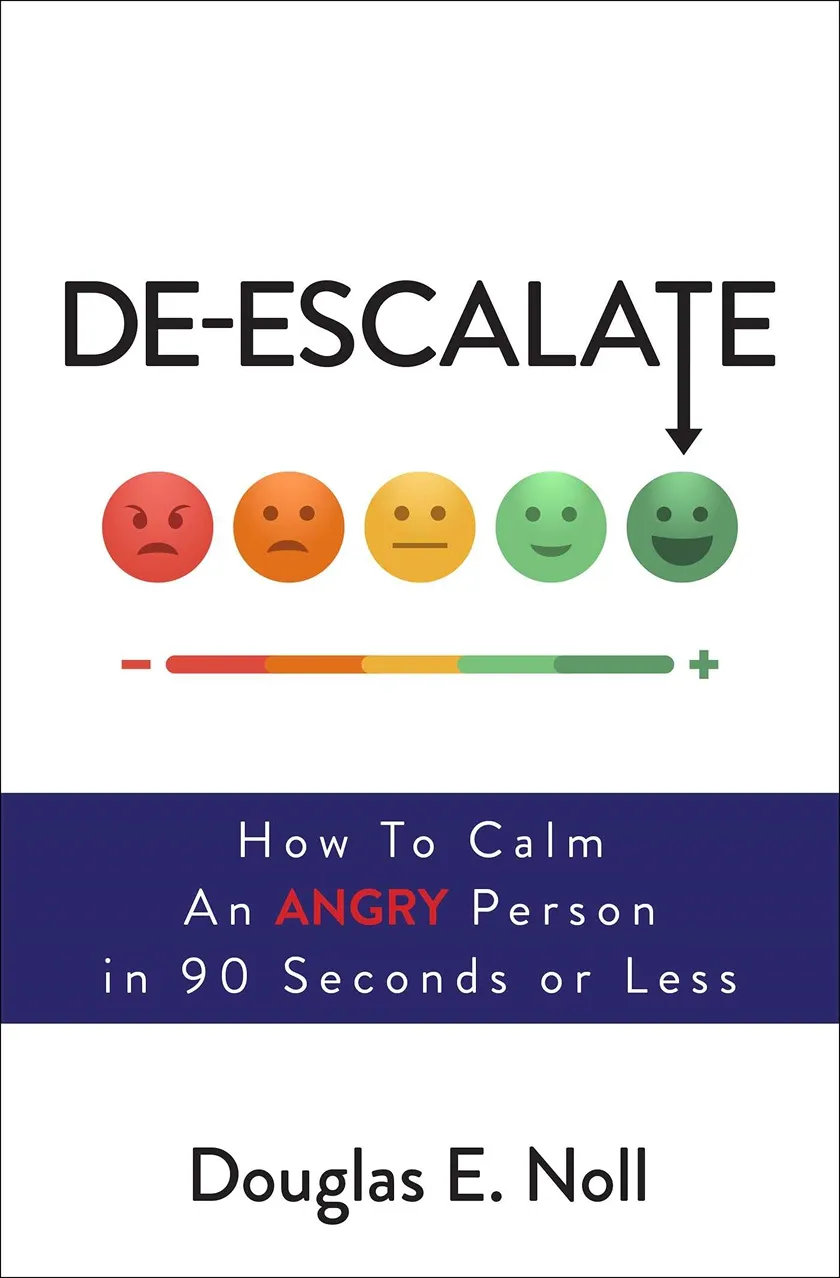
Doug has authored several books on affect labeling and emotional competency, including De-Escalate: How to Calm an Angry Person in 90 Seconds or Less, which won multiple awards and has been adopted by organizations worldwide.