5 Hidden Reasons Empathy Training in the Workplace Fades by Month Three


The dashboard was ready for the quarterly leadership review.
Twelve weeks after the empathy training programme ended, the Director of Talent Development pulled the data her team had been tracking. Participant satisfaction scores: strong. Pre-post self-assessment: lifted. Verbatim quotes from participants: enthusiastic.
Observed behaviour change in actual team meetings, assessed by two trained observers: approximately zero.
She knew what the executive team would ask when she presented this. She also knew the answer, because the pattern was identical to the two previous programmes her predecessor had run. She just did not know how to say it without implicating the budget.
Here are the five hidden reasons empathy training in the workplace fades by month three, and the one design decision that reverses it.
1. The content lives in a part of the brain the workplace cannot reach
Empathy training taught in a classroom is encoded in declarative memory. The participant knows what to do and can explain it. The moment the participant needs it, they are usually under pressure. Pressure activates the amygdala, cortisol rises, and the parts of the brain that would retrieve declarative content become harder to access.
The behaviour that shows up in a conflict is procedural, not declarative. Procedural memory is built by repetition under conditions similar to the real-world situation. A classroom is not similar to a real-world conflict in any way that matters. The content never transfers because it was never encoded in a form that could survive the environment it was for.
2. The leader above the trained person never changed
A manager comes out of empathy training. Their first attempt to use the new approach is in a conversation with their own director, who did not go through the training and responds the way they always have. The manager tries again. Same response. By the fourth attempt, the manager has concluded that the programme worked in theory but not in this environment, which is a specific and false conclusion.
The behaviour did not fail. It failed to be reinforced. The person responsible for reinforcing it was not in the room when it was trained.
If a leadership team pushes an empathy programme downward without going through it themselves, the programme has a six-month lifespan before it becomes an inside joke.
3. The programme measured what the vendor could deliver, not what the business needed
Vendor measurement tends toward survey data, participant quotes, and self-assessment deltas. All three are easy to produce and almost unrelated to behaviour.
The measurements that would predict business outcomes are harder. Observed behaviour in real meetings. Retention of top performers. Time-to-decision on friction-prone cross-functional calls. The vendor does not offer these because they are expensive to collect and often produce uncomfortable data. The business accepts the vendor's measurement set because setting up a different one requires effort the business did not budget for.
The result is that the programme passes its evaluation and fails its purpose, and the gap is invisible until someone like the Director of Talent Development actually goes and looks.
If a 15-person team is losing an hour a day to one unresolved thing, that is roughly $280,000 a year on standard productivity rates. The exact number for your team is a two-minute input in Doug's cost of conflict calculator.
4. The programme was a single event, not a system
The research on behaviour change is clear. Single-event training produces a short-lived enthusiasm and no durable change. Spaced repetition over four to six months, with real-world practice between sessions, is the design that produces behaviour change that survives.
Most corporate budgets are set up to buy events, not systems. The event has a clear SKU, a fixed cost, and a predictable delivery date. The system has none of those. So vendors sell events and businesses buy events, and both parties know, at some level, that the events will not work. The event budget is a political purchase as much as a developmental one.
5. The vendor never trained for real conflict
A programme that teaches empathy using scripted vignettes with volunteer peers is not training for the environment where empathy is required. The real environment is a specific person, with a specific history, in a specific room, with specific stakes. Nothing about a vignette is any of those things.
The vendors who produce transferable behaviour change tend to have run their protocols in environments where the stakes were real before they put them in corporate training. Legal mediation. Clinical settings. Prisons. Those environments do not forgive weak training design.
Doug Noll teaches Decision-Making Under Stress and Conflict at Pepperdine's Straus Institute, has mediated complex business disputes for 25 years, and co-founded the Prison of Peace Project, now active in 15 California prisons and in Greece and Italy. The protocols he teaches corporate leadership teams were tested first in environments where failure had consequences.
If you're evaluating whether to equip your leadership layer with a programme that holds past Monday, Doug runs a 20-minute diagnostic call before any proposal. Book 20 minutes with Doug.
The design decision that reverses all five
A programme that holds past month three is designed around one principle: train the behaviour in the environment it needs to show up in, with the people it needs to work on.
In practice this means managers rehearse the protocol with their own directors, in the actual meeting cadence they share, with a trained observer present to flag what to adjust. The content is identical to any other empathy training. The design is radically different. The behaviour transfers because it is being learned in the environment it has to survive.
This is more expensive than a workshop. It is less expensive than running three programmes in a row that do not work.
For related reads, see the six essential elements of empathy training for managers that actually sticks and workplace empathy habits that show up in quarterly numbers.
The Director of Talent Development presented the quarterly dashboard. She was honest about the numbers. The CFO asked the right question, which was what she would do differently with the next $340,000. She had the answer. She had just written it.
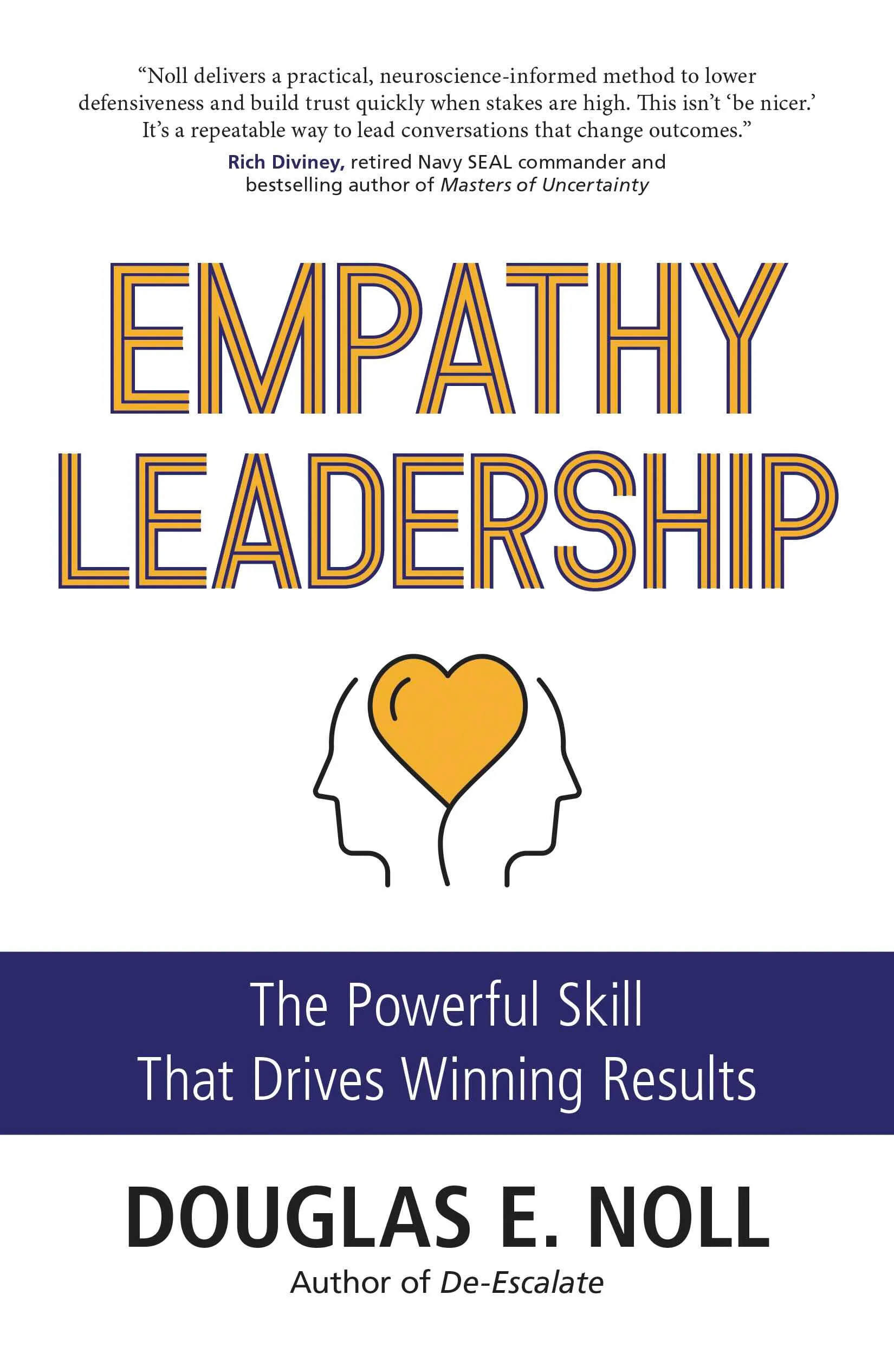
Empathy Leadership: The Powerful Skill That Drives Winning Results is out now. Order on Amazon, or if a 20-minute call would be more useful, Doug's calendar is here.
Emotional Competence Shapes Your Influence as a Leader
This 90-second emotional competence quiz will tell you how your emotions affect the way you are treated at work and how to gain the respect and influence you deserve as a leader.
Take the Free Assessment
Doug’s Books
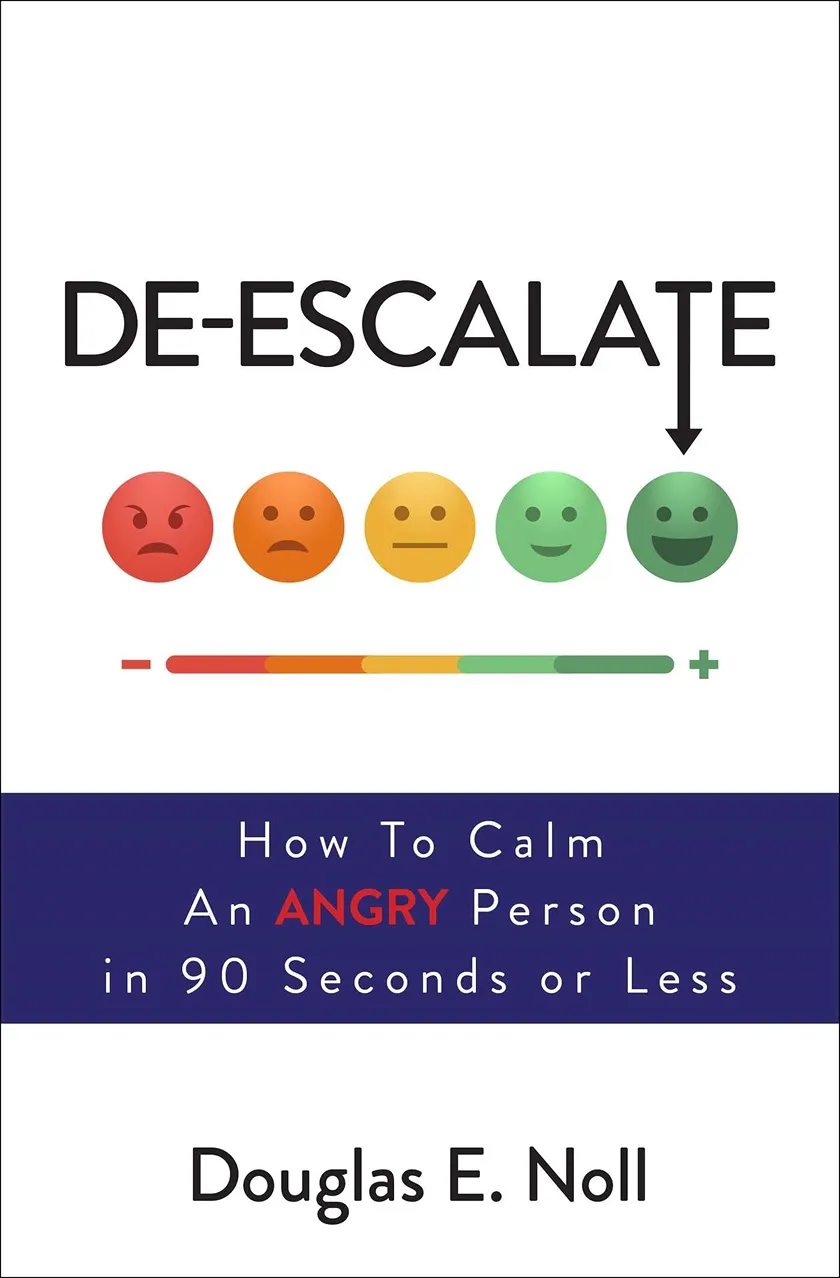
Doug has authored several books on affect labeling and emotional competency, including De-Escalate: How to Calm an Angry Person in 90 Seconds or Less, which won multiple awards and has been adopted by organizations worldwide.



More Blogs
View All
October 21, 2026
The 6 Essential Elements of Empathy Training for Managers That Actually Sticks
Read Blog

October 20, 2026
7 Powerful Things to Look For in Empathy Training for Leaders
Read Blog

October 20, 2026
What Corporate Emotional Intelligence Training Actually Changes (and the 6 Programmes That Fail)
Read Blog