6 Powerful Conflict De-Escalation Techniques for Hybrid Teams


The product director watched the Slack thread escalate in real time.
Two engineers in different time zones were going at it over an architecture decision. The messages were short, pointed, and getting worse. The director had five minutes before the engineer in the earlier time zone would log off for the night with a thread full of hostility still visible to the rest of the team.
Hybrid teams produce conflict in specific places that in-person teams do not. The 15-second escalation in a Slack thread, the ambiguous tone in an email, the delay between a message and the response that fills the delay with interpretation. Here are six de-escalation techniques designed specifically for hybrid team conflict.
1. Move the conflict out of text, immediately
The single most important move in hybrid team de-escalation is to get the conflict out of text. "I am going to move this to a 15-minute video call. Both of you, please join in 10 minutes." Say it in the thread. Then do it.
Text amplifies conflict in specific ways that voice and video reduce. The reader supplies tone from their own emotional state. The time between messages fills with interpretation. The permanent record means the conflict can be re-read, forwarded, and remembered.
Video with audio contains the conflict in time, provides tone, and ends when the call ends. The de-escalation surface is substantially better.
Every hybrid team leader should have the "I am going to move this to a call" move memorised and deployable in under 30 seconds.
2. Name what is probably happening across the time zone gap
Hybrid conflicts often involve a time zone gap that is doing invisible work. One party sent a message at the end of their day expecting an answer the next morning. The other party received the message at the start of their day and read it with the morning energy, then responded, then logged off. The first party reads the response with evening tiredness and interprets it badly.
Name this out loud. "I think there is a time zone dynamic happening here. Marcus sent the first message at 6pm his time, Priya replied at 9am her time, and now we are in a different emotional context. Let me acknowledge that before we talk about the content."
The naming disrupts the escalation because both parties recognise themselves in the description.
3. Use affect labeling in writing, carefully
In hybrid team conflict, written affect labeling can work if it is deployed carefully. "I can tell both of you are frustrated with this and I want to acknowledge that before we go further." Short. Direct. Not performative.
The risk with written affect labeling is that it reads as hollow or scripted. The protective measure is specificity. Name the specific thing both parties are feeling, not a generic emotion. "You are frustrated that this decision keeps getting revisited" lands better than "I know you are frustrated."
The written form has to work harder than the spoken form to feel genuine. When it works, it does the same regulation work.
4. Set a specific written norm for the team about escalation protocol
Hybrid teams need a written norm about what happens when a Slack thread escalates. "If a thread goes more than three back-and-forths with no resolution, anyone can call for a 15-minute video call and the thread pauses until the call happens."
The norm removes the ambiguity about who has authority to escalate. The engineer who was about to log off can call the pause before leaving. The engineer in the other time zone can call it instead of continuing the thread. The move is explicit and sanctioned.
Teams without this norm end up with threads that run for days, pulling in more people and hardening positions. Teams with the norm resolve the same conflicts in 30 minutes.
If a 60-person hybrid engineering team is losing an average of four hours a week to Slack-thread conflicts that escalate without norms, that is roughly $1.2 million a year in direct time cost. The exact number is a two-minute input in Doug's cost of conflict calculator.
5. Build a specific recovery ritual after any escalated written conflict
After a Slack thread has escalated and been resolved, the parties involved usually leave with residual tension that the rest of the team can see. The de-escalation is not complete until the residual tension has been addressed.
The recovery ritual is simple. Within 24 hours of the resolution, one of the parties posts a short message in the thread or in the team channel. "Thanks for working through the architecture question with me yesterday, Marcus. Appreciated the pushback and I think we landed in a better place." Specific. Public. Short.
The ritual signals to the rest of the team that the conflict is actually over. It also builds a habit where hybrid conflicts have a clear end state, which reduces the social anxiety that often prevents team members from engaging in productive conflict in the first place.
6. Review escalated conflicts quarterly as a team
Hybrid teams benefit from a quarterly conversation that reviews the previous quarter's escalated conflicts. Not to assign blame. To identify patterns and update the team's own norms.
"We had three Slack-thread escalations last quarter. Two were between the US and APAC time zones. Both happened on Mondays. Let me propose a norm about Monday cross-timezone threads."
The review builds collective learning. The team gets measurably better at hybrid conflict over quarters, not through any specific training but through structured reflection on its own patterns.
Doug Noll teaches Decision-Making Under Stress and Conflict at Pepperdine's Straus Institute, has mediated complex business disputes for 25 years, and co-founded the Prison of Peace Project. His hybrid-team conflict work is built around the specific failure modes written communication produces that in-person communication does not.
If your hybrid team is losing time to Slack-thread conflicts and you want the specific norms and protocols that reduce them, Doug runs a 20-minute diagnostic call before any proposal. Book 20 minutes with Doug.
The product director's next quarter
She implemented the move-to-video rule and the quarterly review. The frequency of escalated Slack threads dropped by 60 percent in the first quarter. The team's own self-rated conflict resolution capability improved substantially.
For related reads, see workplace arguments in 90 seconds and four critical de-escalation techniques every leader should memorise.
Hybrid team conflict is a specific operational problem. The six techniques above address the specific failure modes that written-first communication produces. Teams without these norms pay the time cost quietly. Teams with them do not.
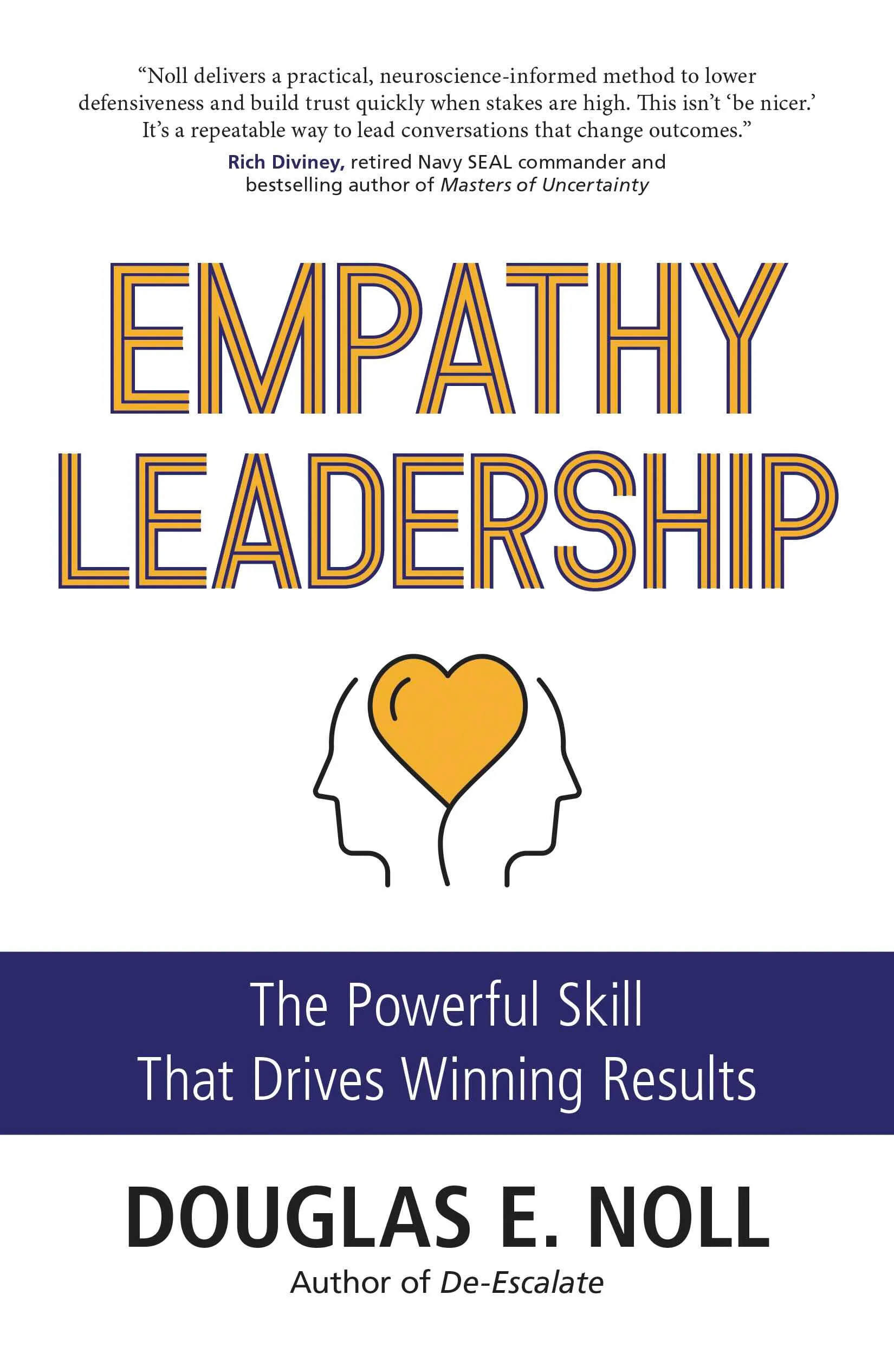
Empathy Leadership: The Powerful Skill That Drives Winning Results is out now. Order on Amazon, or if a 20-minute call would be more useful, Doug's calendar is here.
Emotional Competence Shapes Your Influence as a Leader
This 90-second emotional competence quiz will tell you how your emotions affect the way you are treated at work and how to gain the respect and influence you deserve as a leader.
Take the Free Assessment
Doug’s Books
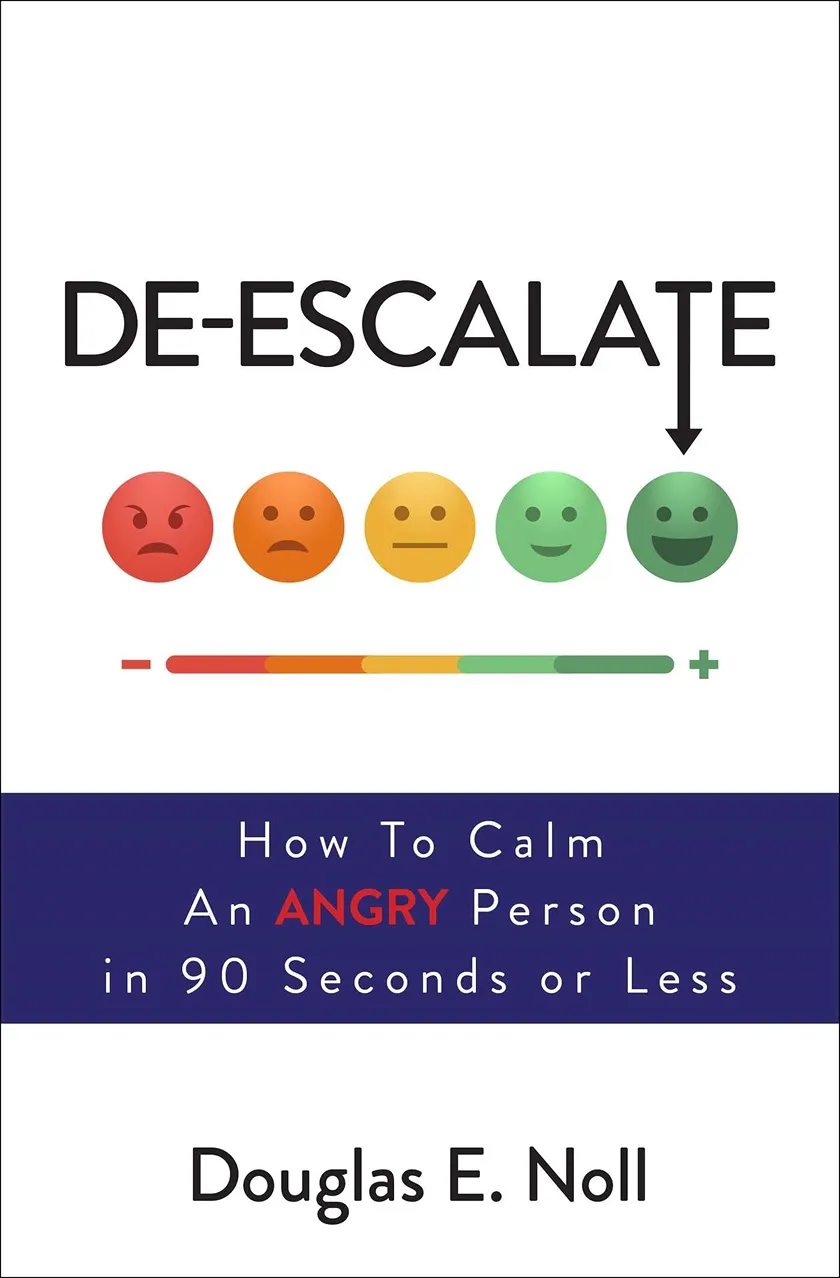
Doug has authored several books on affect labeling and emotional competency, including De-Escalate: How to Calm an Angry Person in 90 Seconds or Less, which won multiple awards and has been adopted by organizations worldwide.