The Most Common Conflict Model: An Operating System for Emotions
%201.avif)

Most workplace conflict follows the same pattern.
Someone feels threatened.
The nervous system activates.
Logic disappears.
Defensiveness takes over.
The argument looks different every time.
The biology does not.
If one recurring leadership conflict consumes 5 executive hours weekly at a blended cost of $300 per hour, that equals $78,000 annually.
If unresolved conflict slows execution across a $20 million division by just 5 percent, the operational drag reaches $1 million.
Most organizations do not have a conflict problem.
They have no operating system for emotional regulation.
The diagnosis
You believe conflict is caused by personality clashes, communication styles, or lack of professionalism.
Those are surface symptoms.
The root system is threat.
Every conflict begins when the amygdala detects danger.
Danger does not have to be physical.
The brain reacts strongly to:
- Disrespect
- Exclusion
- Humiliation
- Loss of control
- Unfairness
- Status threat
Once threat is detected, cortisol rises.
The prefrontal cortex, responsible for reasoning, flexibility, and empathy, loses efficiency.
Now the conversation stops being strategic.
It becomes biological.
People protect identity instead of solving problems.
The operating system behind most conflict
Every escalation follows four predictable stages.
1. Trigger
Something activates emotional threat.
A dismissive tone.
A public correction.
An ignored idea.
A delayed response.
The amygdala fires instantly.
Most leaders miss this stage completely.
2. Interpretation
The brain assigns meaning.
“They do not respect me.”
“I am losing influence.”
“This is unfair.”
Meaning intensifies emotional activation.
Now the conflict becomes personal.
3. Defensive behavior
The nervous system attempts protection.
This can appear as:
- Anger
- Withdrawal
- Sarcasm
- Passive aggression
- Overexplaining
- Stonewalling
Leaders often attack the behavior without addressing the threat underneath it.
That increases escalation.
4. Reinforcement
If the conflict remains unresolved, the brain stores the interaction as future threat memory.
Now the nervous system activates faster next time.
Conflict becomes chronic.
The organization develops emotional scar tissue.
The neuroscience of escalation
The amygdala processes emotional threat milliseconds before conscious reasoning begins.
Once activated:
- Cortisol rises.
- Listening decreases.
- Cognitive flexibility narrows.
- Attribution bias increases.
People assume negative intent automatically.
The prefrontal cortex loses influence under sustained activation.
This is why intelligent people become irrational during conflict.
The nervous system prioritizes survival over strategy.
Without regulation, every conversation becomes emotionally recursive.
The same argument repeats with different wording.
The counterintuitive protocol
Stop solving the issue first.
Interrupt the threat cycle first.
When tension appears, identify the emotional state precisely.
If someone becomes sharp, say:
“You seem frustrated.”
Pause.
If someone withdraws, say:
“You seem disappointed.”
Pause.
If resistance grows, say:
“You are concerned about how this affects you.”
Pause.
Short. Declarative. Precise.
No analysis.
No defense.
No premature solutions.
Accurate emotional labeling reduces amygdala activation. Cortisol declines. The prefrontal cortex regains clarity.
Only after regulation do you move into problem solving:
“What outcome are you trying to protect?”
Or:
“What feels most important here?”
Now the nervous system shifts from defense to collaboration.
That is the operating system.
Not suppression.
Not domination.
Regulation.
If emotional regulation reduces recurring conflict time by just 50 percent across a leadership team spending 10 hours weekly in unresolved tension, the annual savings exceed $150,000 in executive capacity alone.
Most conflict models focus on behavior.
Behavior is downstream.
Threat is upstream.
Regulate the nervous system first.
Everything else moves faster afterward.
Emotional Competence Shapes Your Influence as a Leader
This 90-second emotional competence quiz will tell you how your emotions affect the way you are treated at work and how to gain the respect and influence you deserve as a leader.
Take the Free Assessment
Doug’s Books
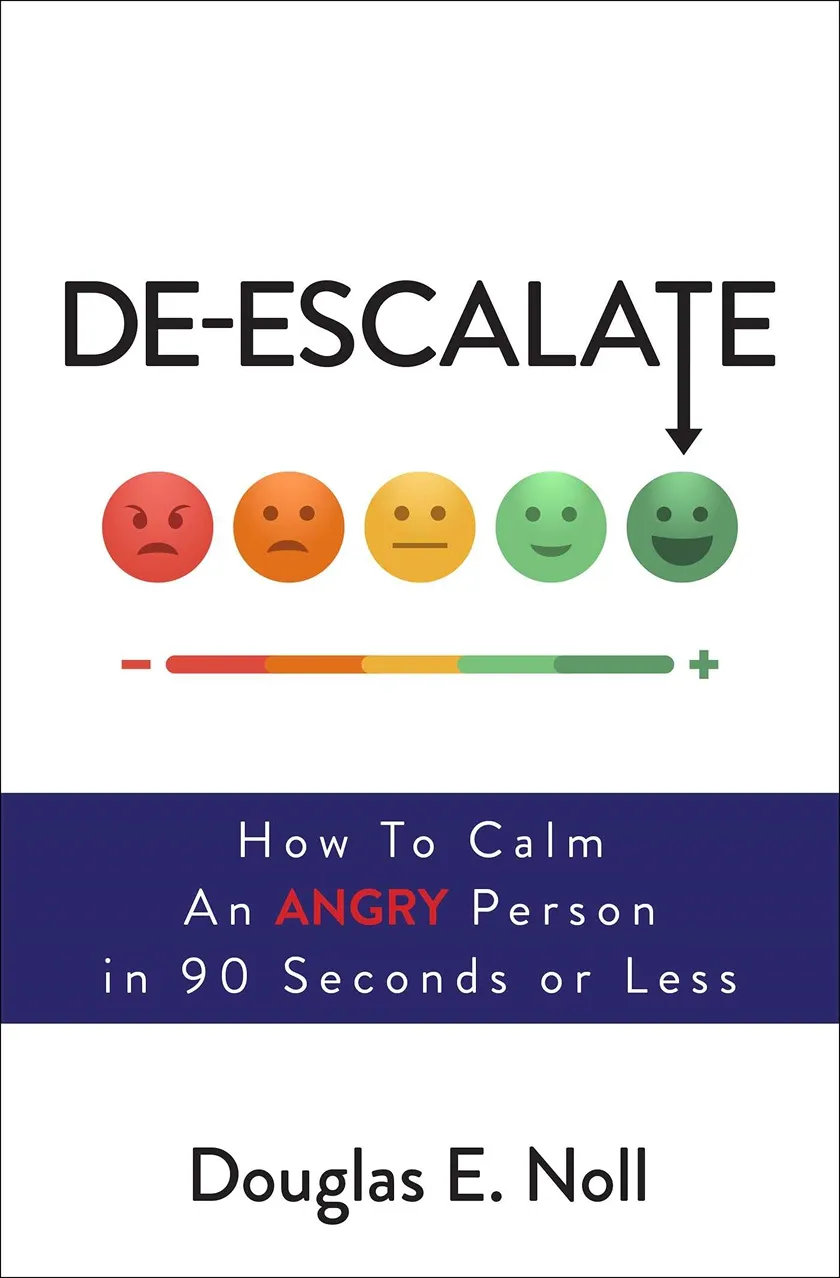
Doug has authored several books on affect labeling and emotional competency, including De-Escalate: How to Calm an Angry Person in 90 Seconds or Less, which won multiple awards and has been adopted by organizations worldwide.

More Blogs
View All

October 23, 2026
6 Powerful Reasons De-Escalation Training for Employees Doesn't Scale (and the Fix)
Read Blog

October 23, 2026
How Executive Dispute Mediation Actually Resolves a Board-Level Rupture
Read Blog

October 22, 2026
4 Critical Failures of Most Corporate Mediation (and the Approach That Works)
Read Blog