Emotional Granularity-7 Words to Stop Office Drama
%201.avif)

One emotionally escalated conflict can consume 10 to 20 executive hours.
At $250 per hour, that is $2,500 to $5,000 per incident.
If your organization experiences just two such escalations per month, you are burning over $100,000 annually in leadership time alone.
Most of that cost comes from one failure.
Vague emotion.
When leaders label everything as “frustration” or “stress,” they miss the real trigger.
Missed triggers keep the amygdala activated.
Activated amygdala equals cortisol.
Cortisol equals drama.
This is where emotional granularity changes ROI.
The diagnosis
You believe acknowledging emotion is enough.
You say, “I can see you are frustrated.”
Sometimes that works.
Often it does not.
Because frustration is not specific.
Specificity reduces threat.
The amygdala responds to precision.
When emotion is accurately labeled, cortisol declines and the prefrontal cortex regains control.
When emotion is mislabeled or generalized, activation persists.
Drama continues.
The seven words that reduce escalation
These seven emotion words stop most workplace escalation when used accurately and calmly.
1. Disappointed
Disappointment signals unmet expectation.
Say:
“You seem disappointed.”
This reframes anger as loss rather than attack.
Loss is easier to process than accusation.
2. Overlooked
Status threat is a primary trigger in office politics.
Say:
“You feel overlooked.”
This reduces the need to fight for recognition.
Recognition lowers amygdala activation.
3. Pressured
Deadlines and performance scrutiny elevate cortisol.
Say:
“You are feeling pressured.”
Pressure named is pressure reduced.
4. Uncertain
Uncertainty activates threat circuitry.
Say:
“You are uncertain about this direction.”
Clarity returns once uncertainty is acknowledged.
5. Concerned
Concern often sits beneath objection.
Say:
“You are concerned about the risk.”
Concern is safer to discuss than resistance.
6. Dismissed
Feeling dismissed triggers strong status response.
Say:
“You feel dismissed.”
This lowers the need to escalate for validation.
7. Overwhelmed
Cognitive overload fuels emotional volatility.
Say:
“You are overwhelmed.”
Overwhelm acknowledged reduces defensive behavior.
The neuroscience of precision
The amygdala scans for social threat constantly.
When emotion is vague, the brain remains in alert mode.
When emotion is labeled precisely, the brain interprets it as understood.
Understanding reduces threat.
Reduced threat lowers cortisol.
Lower cortisol restores prefrontal cortex function.
Restored prefrontal cortex improves reasoning, impulse control, and collaboration.
Emotional granularity is not soft language.
It is neurological regulation.
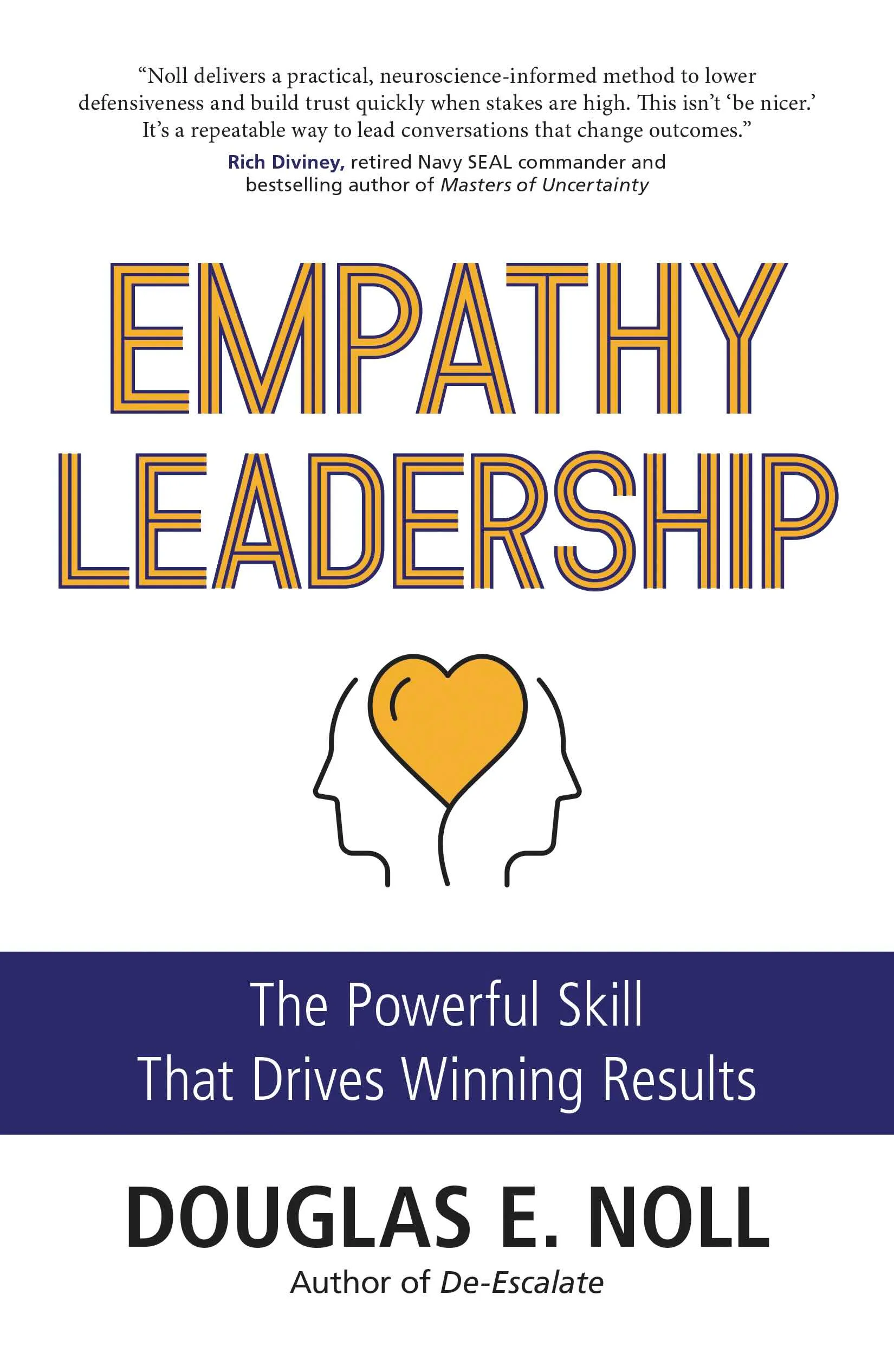
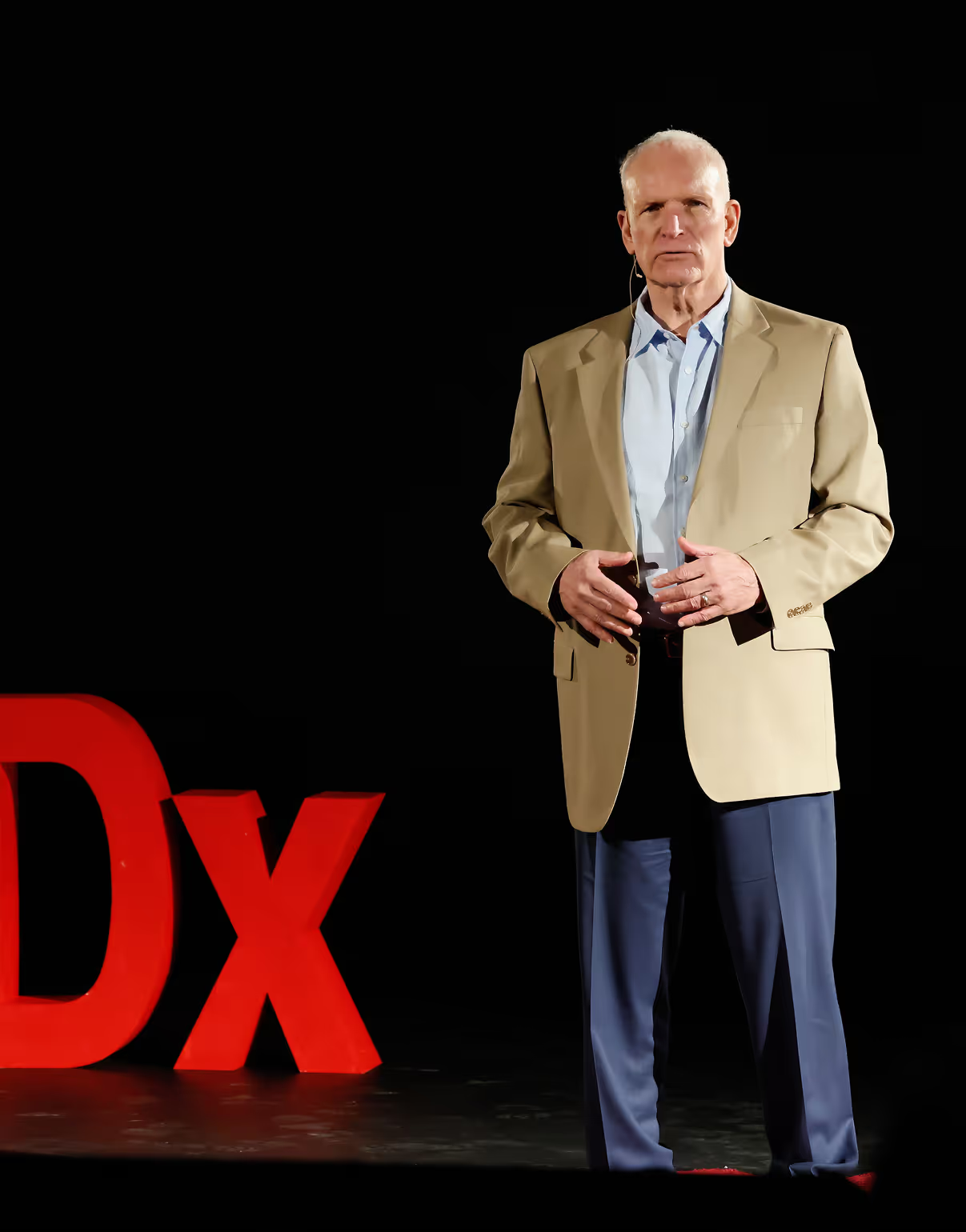
This is the neuroscience at the heart of Doug Noll's new book, Empathy Leadership: The Powerful Skill That Drives Winning Results. Pre-order on Amazon.
The counterintuitive protocol
Do not argue content.
Name emotion precisely.
When voices rise, do not summarize positions.
Say one of the seven words.
Short.
Declarative.
Then pause.
No explanation.
No advice.
No logic.
If the label is accurate, you will see a physical shift.
Shoulders lower.
Tone softens.
Breathing slows.
Now ask:
“What outcome are you trying to protect?”
Precision reduces escalation speed.
If precise emotional labeling prevents even one 5 hour executive conflict per month, at $250 per hour, that is $15,000 annually in preserved leadership time.
Most office drama is not about strategy.
It is about unregulated emotion.
Specific words reduce threat.
Reduced threat restores reason.
Seven words can eliminate six figures of emotional waste.
Emotional Competence Shapes Your Influence as a Leader
This 90-second emotional competence quiz will tell you how your emotions affect the way you are treated at work and how to gain the respect and influence you deserve as a leader.
Take the Free Assessment
Doug’s Books
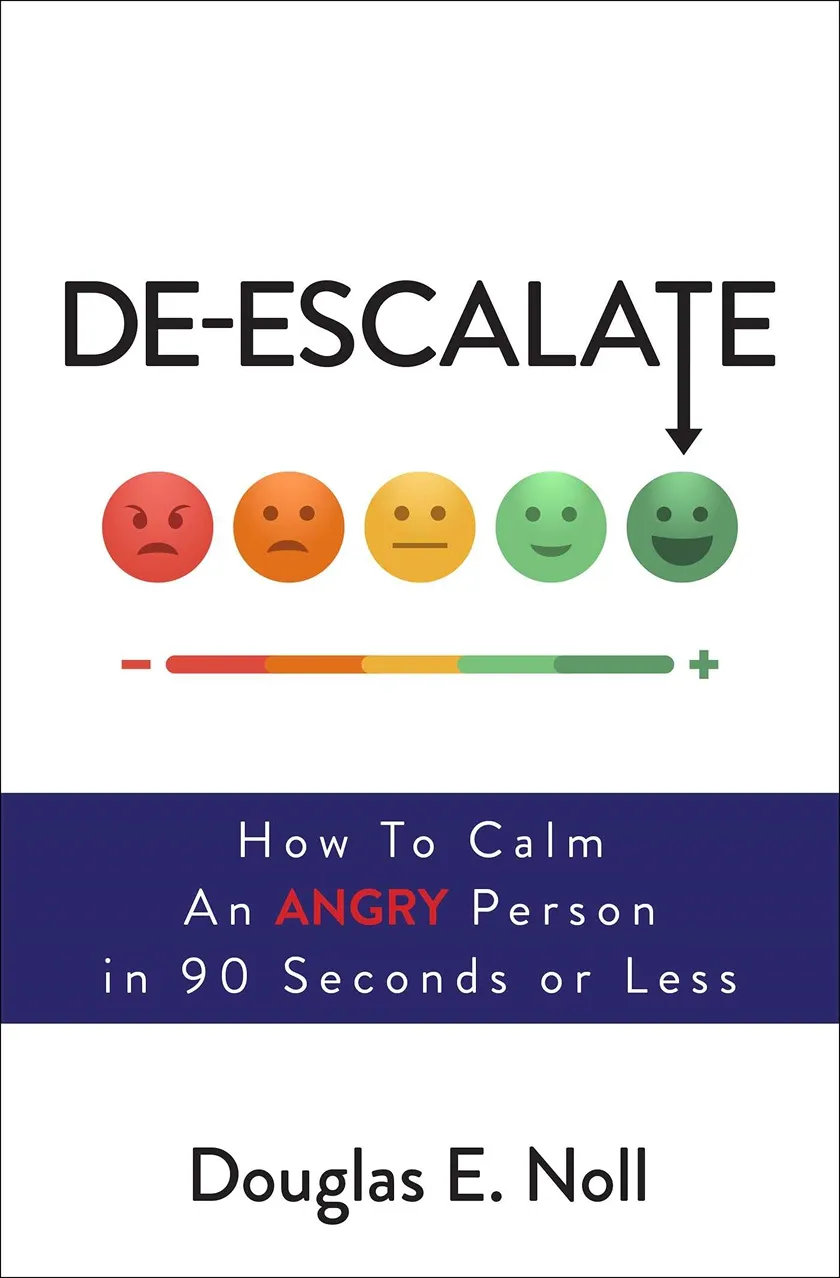
Doug has authored several books on affect labeling and emotional competency, including De-Escalate: How to Calm an Angry Person in 90 Seconds or Less, which won multiple awards and has been adopted by organizations worldwide.