What They Wish They'd Diligenced Instead of EBITDA
%201.avif)

The firm ran post-mortems on every deal that returned under 1.5x. Eleven of them over nine years.
They looked for common factors. Sector concentration was not it. Leverage was not it. Entry multiple was not it, and two of the eleven had been bought unusually cheaply.
The factor that appeared in nine of eleven was in nobody's diligence checklist.
In nine of the eleven, the leadership team had known about the core problem between four and eleven months before the sponsor did.
What that gap costs
A problem identified in month two is an adjustment. The same problem identified in month eleven is a repositioning, and repositioning inside a leveraged structure with a fixed hold period is where returns go to die.
The gap is not a reporting problem. Every one of those companies had monthly reporting, a board pack, and a deal partner who spoke to the CEO weekly.
It is an information-flow problem, and information flows through people according to whether it is safe for them to move it.
In each of the nine, somebody in the organisation had the information early. In each of the nine, it did not travel.
The specific thing they now test
They stopped trying to assess the CEO's leadership style, which is unmeasurable and produces consultant-grade adjectives.
They test one behaviour: what happens when someone brings this person unwelcome information.
The assessment takes about ten minutes and it happens in the second management meeting. A partner asks the CEO a version of this:
"Tell me about the last time somebody on your team told you something you did not want to hear. Who was it, what did they say, and what did you say back?"
Then they ask the follow-up that does the actual work:
"And what happened to that person afterwards?"
What the answers reveal
Three patterns show up.
The CEO cannot produce an example. This is the most common and the most damaging. A leader who cannot recall the last time they received unwelcome news from their own team is not receiving it. They will tell you their door is always open. Everyone says that. The absence of a specific recent example is the finding.
The CEO produces an example in which they were persuaded. This is the good answer, and it is rarer than you would expect. What you are listening for is a concrete change of position with a name attached to it.
The CEO produces an example in which they were right. "One of my guys thought we should have held off on the expansion. I explained the numbers to him." That is not an example of receiving bad news. It is an example of defeating it, and the person who raised it now knows what raising things produces.
The emotional intelligence signal here is not warmth or self-awareness in the abstract. It is whether the organisation has a functioning path for unwelcome information to reach the top.
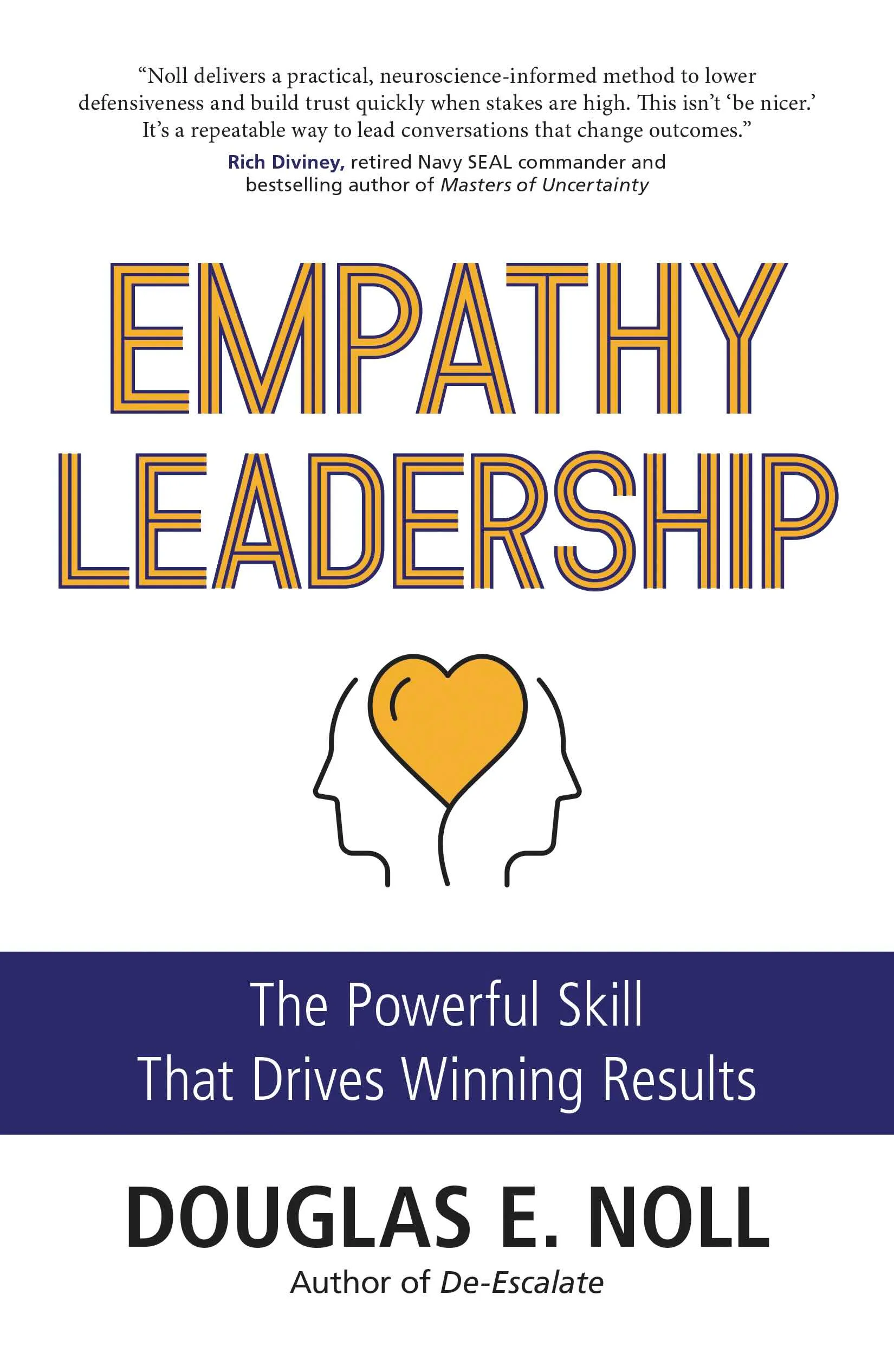
Doug Noll's new book Empathy Leadership: The Powerful Skill That Drives Winning Results covers building organisations where bad news travels fast. Pre-order it on Bookshop.
The second instrument
They added a question for management team members, asked separately, in the confirmatory phase.
"What does the CEO not know about this business that they should?"
Almost every management team member has an answer. Most have never been asked.
In two of the last fifteen deals this question surfaced something material during diligence that had not appeared in any data room. In one case it changed the price. In the other it killed the deal.
The cost of the question is thirty seconds. Nothing else in the diligence process has that return profile.
Why this is not soft
There is an instinct to file this under culture and treat it as secondary to the financial work. That instinct is expensive and the eleven post-mortems are the argument against it.
Every one of those deals had excellent financial diligence. Quality of earnings, working capital, customer concentration, contract review, all of it done properly by good firms.
The variable that determined the outcome was how quickly the sponsor would find out when something went wrong, and nobody had underwritten it.
You are not buying a set of financials. You are buying a set of financials plus an information system made of people, and the second one determines how much time you have to react when the first one starts to move.
The three lines they added to the diligence checklist
Assess how the CEO responds to challenge, with two specific questions to references and one live test in a management session.
Ask every management team member what the CEO does not know.
Map who in the organisation has told the CEO something difficult in the last twelve months, and check whether any of them have left.
Three lines. In this firm's experience they carry more predictive weight than anything else added to the process in the last decade.
For related reads, see The Conflict Model Operating System and Executive Function Beyond Reaction.
If you want to underwrite how fast bad news will reach you, book a no-obligation Zoom call with Doug Noll.
Emotional Competence Shapes Your Influence as a Leader
This 90-second emotional competence quiz will tell you how your emotions affect the way you are treated at work and how to gain the respect and influence you deserve as a leader.
Take the Free Assessment
Doug’s Books
Doug has authored several books on affect labeling and emotional competency, including De-Escalate: How to Calm an Angry Person in 90 Seconds or Less, which won multiple awards and has been adopted by organizations worldwide.
More Blogs
View All

October 23, 2026
6 Powerful Reasons De-Escalation Training for Employees Doesn't Scale (and the Fix)
Read Blog

October 23, 2026
How Executive Dispute Mediation Actually Resolves a Board-Level Rupture
Read Blog

October 22, 2026
4 Critical Failures of Most Corporate Mediation (and the Approach That Works)
Read Blog