5 Shocking Reasons De-Escalation Fails in a Corporate Setting


The de-escalation training programme worked in the call centre and failed in the executive suite.
The CHRO ran the same vendor, with the same content, across both populations. In the call centre, the behavioural data showed meaningful change within three months. In the executive suite, the behavioural data showed essentially nothing after six months. The vendor said this was a maturity issue. The CHRO suspected it was a design issue.
Here are the five shocking reasons de-escalation fails in a corporate setting, with the structural adjustments that make the same protocols land with executives.
1. The stakes are personal in a way they are not in a call centre
A call centre agent de-escalating an angry customer is in a bounded conflict. The customer leaves, the agent moves on, the incident is contained. An executive de-escalating a tense exchange with a peer is in an unbounded conflict. The peer is still there tomorrow. The incident becomes a story in their relationship. The reputational stakes are long-term.
The same de-escalation protocol lands differently in these two environments. The executive cannot deploy the protocol without worrying about how it will read, what it signals about their standing, and whether using it suggests they are not up to the role. The call centre agent has none of these considerations.
The adjustment is to train executives explicitly on the social and reputational mechanics of using de-escalation in a corporate setting. The protocol has to be positioned as high-status behaviour, not as weakness. Without this positioning the protocol does not get used.
2. The audience is always present in a corporate setting
An executive conflict usually has an audience. Direct reports. Peers. Sometimes board members. The de-escalation move is being watched. The social cost of a visible de-escalation move in front of the executive's own team is substantial if the team has not been primed to recognise and value the behaviour.
In a call centre, the de-escalation happens between the agent and the customer with no third-party audience. The social cost is zero.
The adjustment is to make de-escalation moves visible to the executive's team as leadership behaviour, not weakness. This requires training the team to recognise the moves before the executive deploys them. Teams that have been trained in what good de-escalation looks like see their executive using the protocol and interpret it as skilled leadership. Teams that have not been trained see the same behaviour and interpret it as the executive going soft.
3. The vocabulary from standard training sounds strange in an executive setting
Standard de-escalation vocabulary ("I hear that you're feeling frustrated", "Let me reflect back what I'm hearing") lands differently in different settings. In a call centre or a clinical setting, the vocabulary works. In an executive meeting, the same vocabulary reads as a trained response and sometimes triggers more hostility rather than less.
Executives need a different register. "That landed hard for you." "I can tell you have been sitting on this." "I want to make sure I understand before I respond." Same regulation work, different vocabulary.
Any de-escalation programme that uses the same vocabulary across call centre, clinical, and executive populations is producing the executive failure the CHRO was seeing.
If a C-suite is losing eight hours a quarter to executives who cannot de-escalate peer conflicts, that is roughly $500,000 a year at exec hourly rates. The exact number is a two-minute input in Doug's cost of conflict calculator.
4. The physiological rehearsal was not calibrated to executive-level stakes
Executives who go through standard de-escalation training rehearse the protocol in low-stakes role-plays. The protocol works in rehearsal because the stakes are low. In the actual high-stakes executive conflict, the executive's physiological response is substantially higher than anything the training rehearsed, and the protocol becomes inaccessible under the real level of activation.
The adjustment is to rehearse the protocol under conditions that match the actual physiological pressure of executive conflicts. This requires trained actors who can simulate the specific pressure of a hostile board member, a defensive peer, or an aggressive investor. The rehearsal is uncomfortable. It is also what produces the capability that transfers.
5. The programme assumed executives would self-deploy; executives need structural reinforcement
Call centre agents deploy de-escalation protocols because the protocols are built into the workflow. Every call has a specific moment where the de-escalation move is the next required action. The structure of the work carries the protocol.
Executives do not have this structural support. The decision to deploy de-escalation in any given conflict is left to the executive in the moment. Without structural reinforcement (a coach observing meetings, a peer group reviewing behaviour, a quarterly conversation about specific uses), the protocol fades.
The adjustment is to build structural reinforcement into the executive programme. Monthly peer group sessions reviewing specific uses. Quarterly individual coaching focused on behaviour change. Observational data from sampled real meetings. Without these the training does not translate into practice.
Doug Noll teaches Decision-Making Under Stress and Conflict at Pepperdine's Straus Institute, has mediated complex business disputes for 25 years, and co-founded the Prison of Peace Project. His executive de-escalation work explicitly addresses the five adjustments above as structural requirements, not optional features.
If you have de-escalation training that worked in one population and failed in the executive suite, Doug runs a 20-minute diagnostic call to work out whether a different design would translate. Book 20 minutes with Doug.
The CHRO's second rollout
She rebuilt the executive programme with the five adjustments above. The behavioural data at month six started to show meaningful change for the first time. The CEO was one of the first to see the protocol work in a specific high-stakes conversation and reported the result unprompted in a board meeting.
For related reads, see why de-escalation training for employees doesn't scale and what emotion regulation for executives actually looks like.
De-escalation fails in corporate settings for five specific structural reasons. Address them in the design and the same protocols that work in call centres start working in boardrooms.
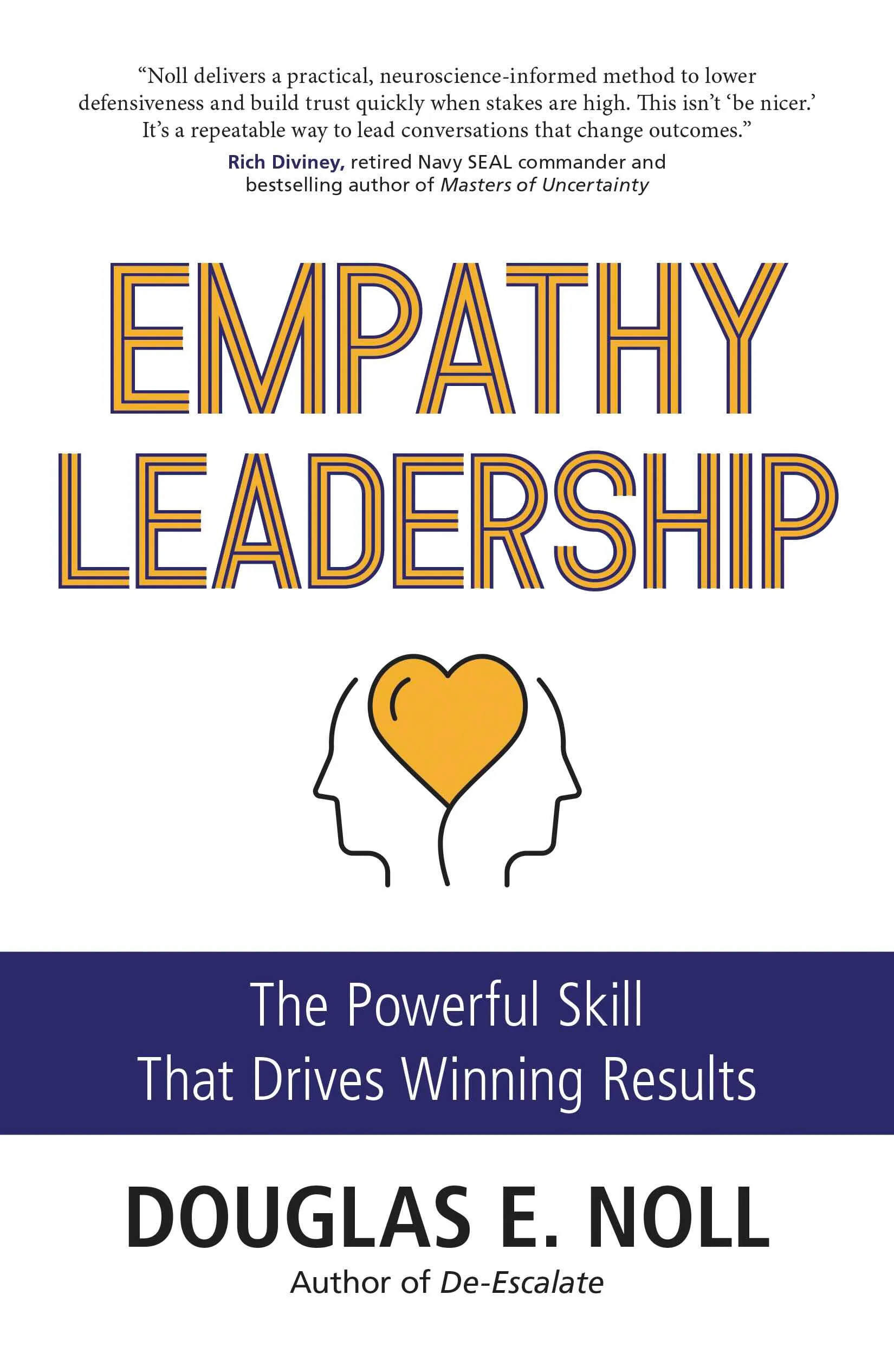
Empathy Leadership: The Powerful Skill That Drives Winning Results is out now. Order on Amazon, or if a 20-minute call would be more useful, Doug's calendar is here.
Emotional Competence Shapes Your Influence as a Leader
This 90-second emotional competence quiz will tell you how your emotions affect the way you are treated at work and how to gain the respect and influence you deserve as a leader.
Take the Free Assessment
Doug’s Books
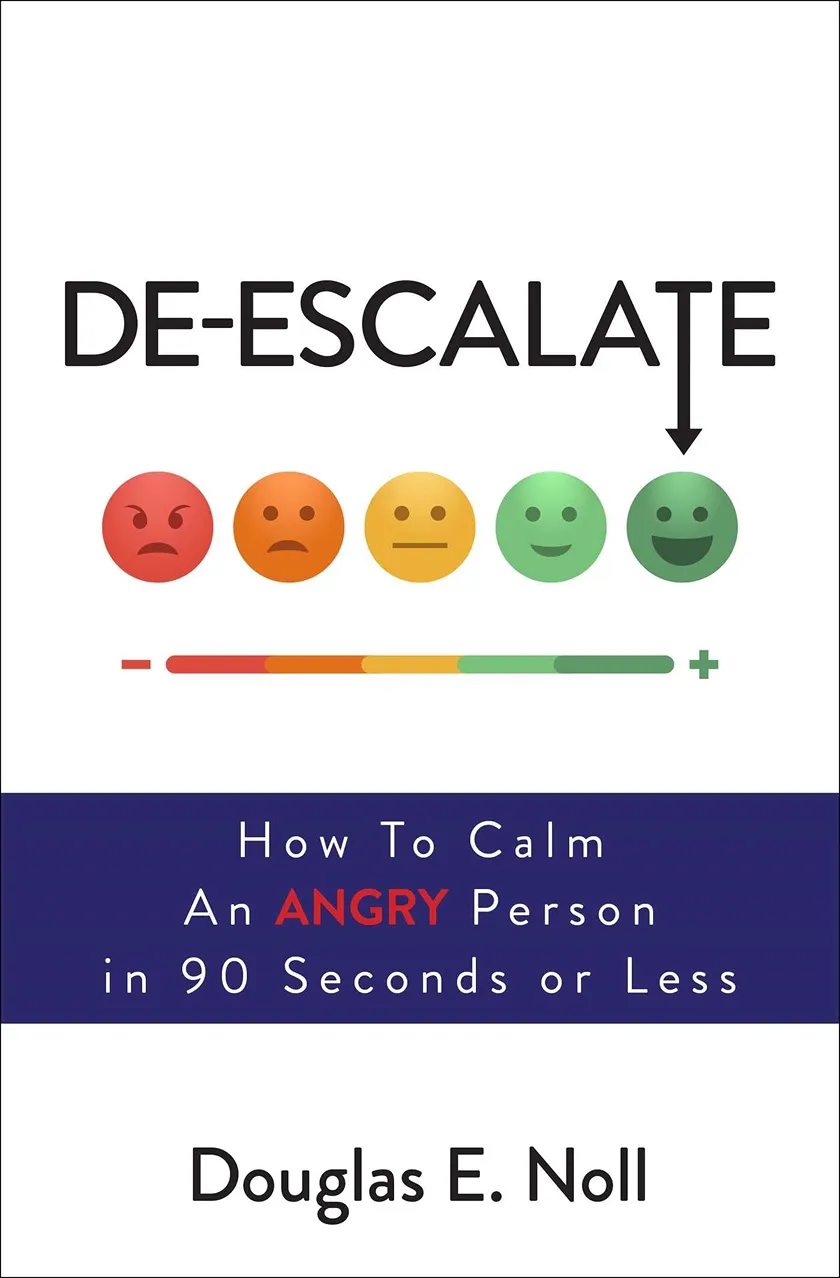
Doug has authored several books on affect labeling and emotional competency, including De-Escalate: How to Calm an Angry Person in 90 Seconds or Less, which won multiple awards and has been adopted by organizations worldwide.