Innovation Drag How Low EQ Slows Product Launch by 30%
%201.avif)

If your product team runs a 9 month development cycle, a 30 percent delay adds nearly 3 months.
If projected first year revenue is $5 million, a 3 month delay defers roughly $1.25 million.
If your burn rate is $400,000 per month, 3 extra months cost $1.2 million.
That is a $2 million swing created by one variable.
Low emotional regulation.
This is Innovation Drag.
It does not show up in sprint retros as “EQ failure.” It appears as rework, friction, passive resistance, slow decisions, and endless alignment meetings.
You do not have a technical bottleneck.
You have a nervous system bottleneck.
The diagnosis
You believe innovation slows because of complexity, market shifts, or resource gaps.
Those matter.
But the hidden delay comes from unregulated threat responses inside the team.
When engineers feel dismissed by product.
When product feels blocked by compliance.
When marketing feels ignored by development.
The amygdala activates.
Cortisol rises.
The prefrontal cortex, responsible for creativity, systems thinking, and long range planning, loses bandwidth.
Innovation requires cognitive flexibility.
Threat reduces flexibility.
Every defensive interaction slows momentum.
The four sources of innovation drag
Low EQ does not mean lack of empathy.
It means leaders fail to regulate threat in high stakes collaboration.
1. The meeting shutdown effect
A senior leader critiques an idea sharply.
Silence follows.
The room looks calm.
It is not calm.
The team’s amygdala has activated. Cortisol increases. Risk tolerance drops.
New ideas decrease by volume and boldness.
If idea generation drops 20 percent in early stage design, downstream iterations increase.
Rework extends timelines.
2. The cross functional tension loop
Engineering says a feature is unrealistic.
Product insists it is required.
Voices sharpen.
Each side defends identity and competence.
Threat narrows perspective.
Instead of collaborative problem solving, teams entrench.
One unresolved tension can stall a sprint by 1 to 2 weeks.
Multiply that across 6 major decision points and the delay becomes months.
3. The defensive roadmap revision
When mistakes surface, leaders look for accountability.
Tone tightens.
Teams protect themselves by adding layers of approval and documentation.
Approval layers increase cycle time.
A process that required 3 signatures now requires 6.
Velocity drops by 15 to 25 percent.
4. The quiet disengagement pattern
High performers who feel unheard stop contributing aggressively.
They comply.
Compliance maintains output.
It kills innovation.
If discretionary effort drops 10 percent across a 20 person product team earning an average of $150,000, that represents $300,000 in lost creative capacity annually.
Innovation does not die dramatically.
It erodes.
The neuroscience of stalled innovation
Creativity requires an active prefrontal cortex.
The prefrontal cortex enables abstraction, pattern recognition, and strategic synthesis.
When the amygdala detects social threat, cortisol increases and blood flow shifts away from the prefrontal cortex.
In threat mode:
- Risk tolerance decreases.
- Idea generation narrows.
- Collaboration weakens.
- Defensive thinking dominates.
You cannot demand innovation from a brain in survival mode.
Low EQ leadership increases micro threats daily.
Micro threats accumulate.
Accumulated threat equals slower execution.
The $60K Fixing Tax: Why Executives Waste Time Correcting Teams
The counterintuitive protocol
Do not begin with alignment frameworks.
Begin with emotional regulation.
When tension rises in a product meeting, do not push for resolution immediately.
Say:
“You are frustrated this feels unrealistic.”
Pause.
To the other side:
“You are concerned we will miss the market window.”
Pause.
Short, declarative emotion labels.
No analysis.
No defense.
Accurate labeling reduces amygdala activation. Cortisol declines. The prefrontal cortex reengages.
Once regulated, ask:
“What constraint are we solving for?”
Or:
“What trade off are we willing to accept?”
Now the conversation moves from identity defense to problem solving.
If emotional regulation reduces decision friction by even 10 percent across a 9 month cycle, you reclaim nearly 1 month.
If it reduces rework by one major sprint, you save weeks.
On a $5 million launch, that is seven figures preserved.
Innovation is not slowed by lack of intelligence.
It is slowed by unmanaged threat.
Regulate the room, and velocity returns.
Join Our Free Skool Community Connect with other visionary leaders and gain access to exclusive resources, training videos, and live sessions on leadership empathy. Our Skool Community is dedicated to helping you master the A.R.A. Framework and build a world class team culture. [Click here to join the Empathy Leadership Skool Community for FREE]
Emotional Competence Shapes Your Influence as a Leader
This 90-second emotional competence quiz will tell you how your emotions affect the way you are treated at work and how to gain the respect and influence you deserve as a leader.
Take the Free Assessment
Doug’s Books
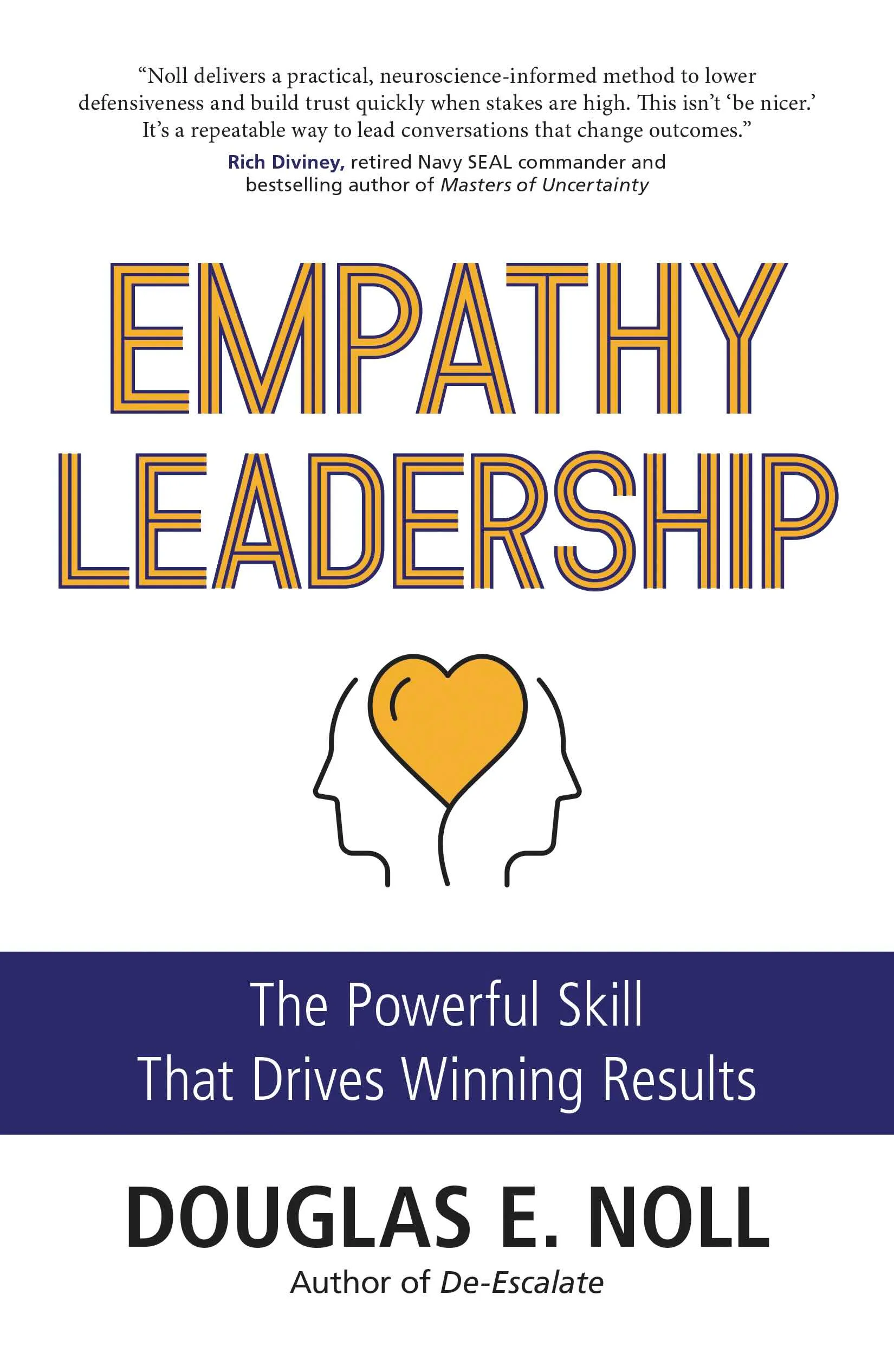
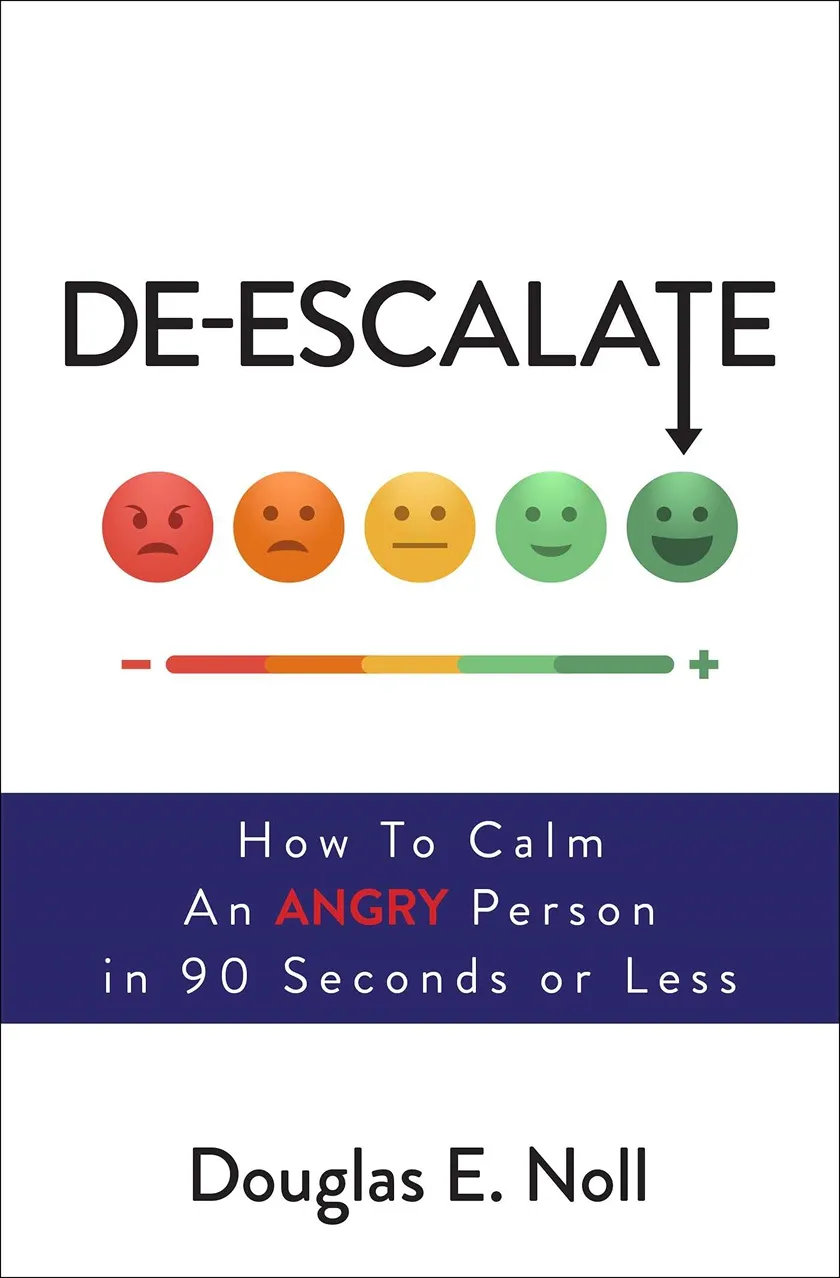
Doug has authored several books on affect labeling and emotional competency, including De-Escalate: How to Calm an Angry Person in 90 Seconds or Less, which won multiple awards and has been adopted by organizations worldwide.



More Blogs
View All

October 23, 2026
6 Powerful Reasons De-Escalation Training for Employees Doesn't Scale (and the Fix)
Read Blog

October 23, 2026
How Executive Dispute Mediation Actually Resolves a Board-Level Rupture
Read Blog

October 22, 2026
4 Critical Failures of Most Corporate Mediation (and the Approach That Works)
Read Blog